Liver protein lowered cholesterol in mouse experiments
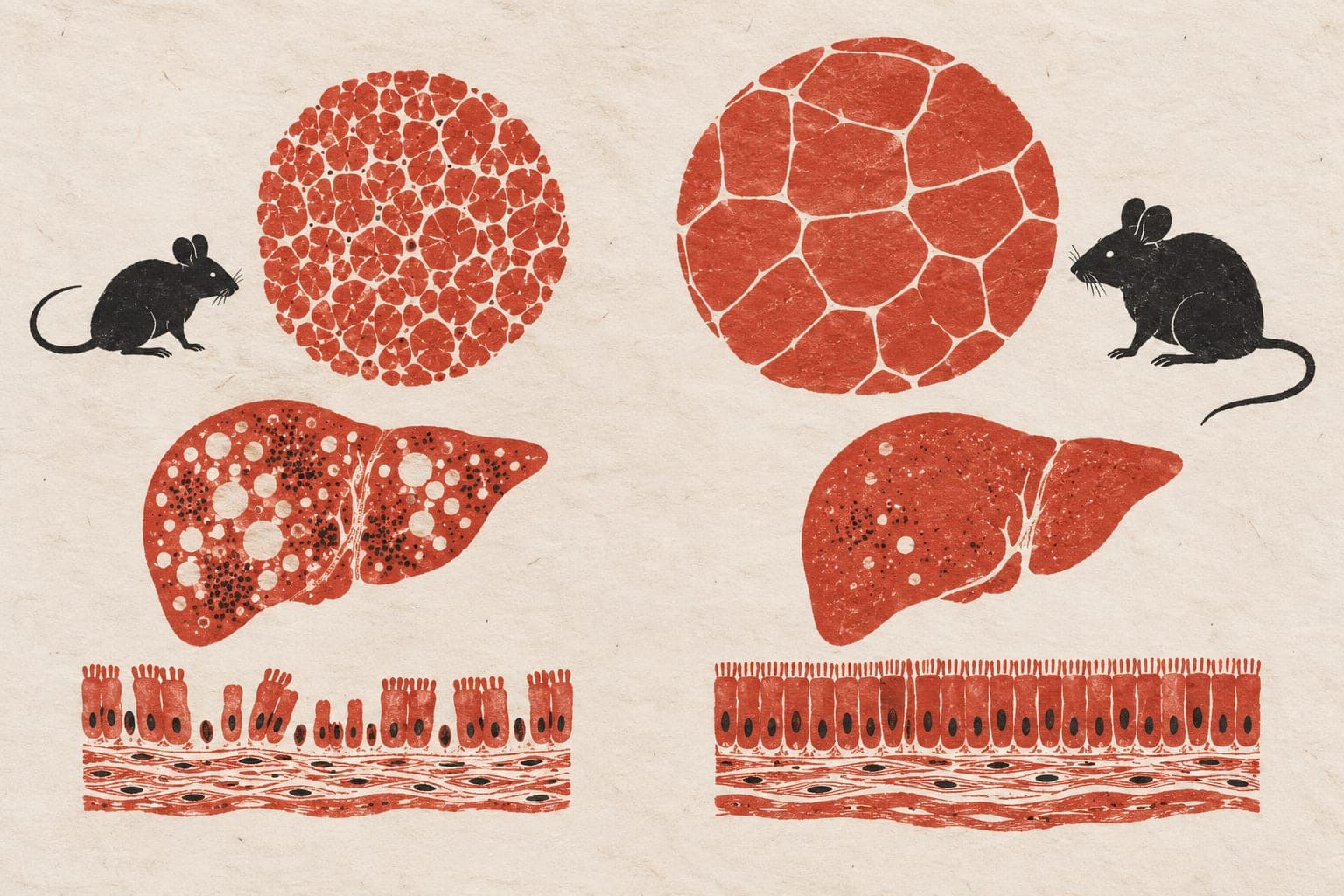
Increasing the protein’s levels in mouse livers lowered blood cholesterol and liver fat, while removing it worsened cholesterol levels and fat buildup.

Our read
Mechanisms- Studied:
- Experiments in mice with high cholesterol or fatty liver disease
- What changed:
- Increasing liver KRT18 lowered circulating cholesterol in mice
- The catch:
- The conference abstract does not give group sizes or doses
- In the record:
- One of 24 papers on KRT18 on record: none yet with results in people, 2 in animals.
Editor of record: Boris Djordjevic · AgingResearch.News
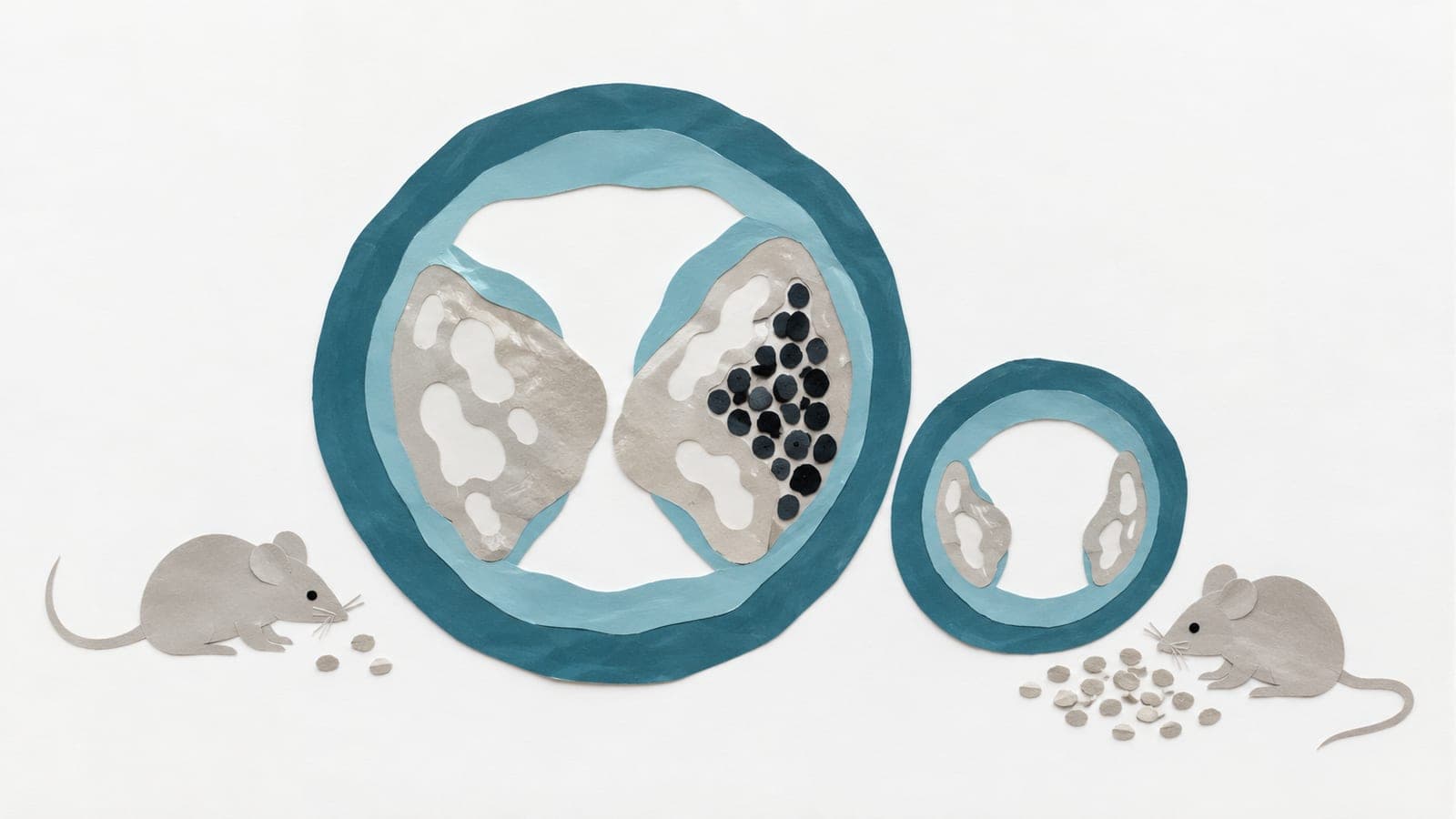
Mice with high cholesterol, fatty liver disease or atherosclerosis underwent experiments that increased or removed KRT18, a protein present in the liver. Increasing liver KRT18 lowered circulating cholesterol and reduced liver fat. Its absence worsened high cholesterol, liver fat accumulation and metabolic dysfunction. In mice lacking apolipoprotein E, a protein involved in transporting fats, increasing liver KRT18 also reduced the development of fatty artery lesions.
Mechanistic experiments found that KRT18 bound PCSK9, a protein that reduces cholesterol-clearing receptors on liver cells. KRT18 limited PCSK9’s movement through the cell and promoted its breakdown. This reduced PCSK9 release and preserved the receptors. A manufactured version of KRT18 and a short protein fragment derived from it also reduced circulating cholesterol in mice.
Why it matters
Atherosclerosis is an age-related disease involving fatty deposits in arteries. The authors highlighted KRT18-derived protein fragments as potential treatment candidates for linked liver and cardiovascular disease.
Caveats
The intervention results came from mice, not people. The conference abstract does not give group sizes or doses.
The paper
Beijing Anzhen Hospital
AHA Scientific Sessions 2026 Abstract, Nov 2, 2026
Presented at AHA Scientific Sessions 2026, abstract 10110

Comments
Be the first to comment.