Higher estimated blood sugar use linked to lower dementia risk
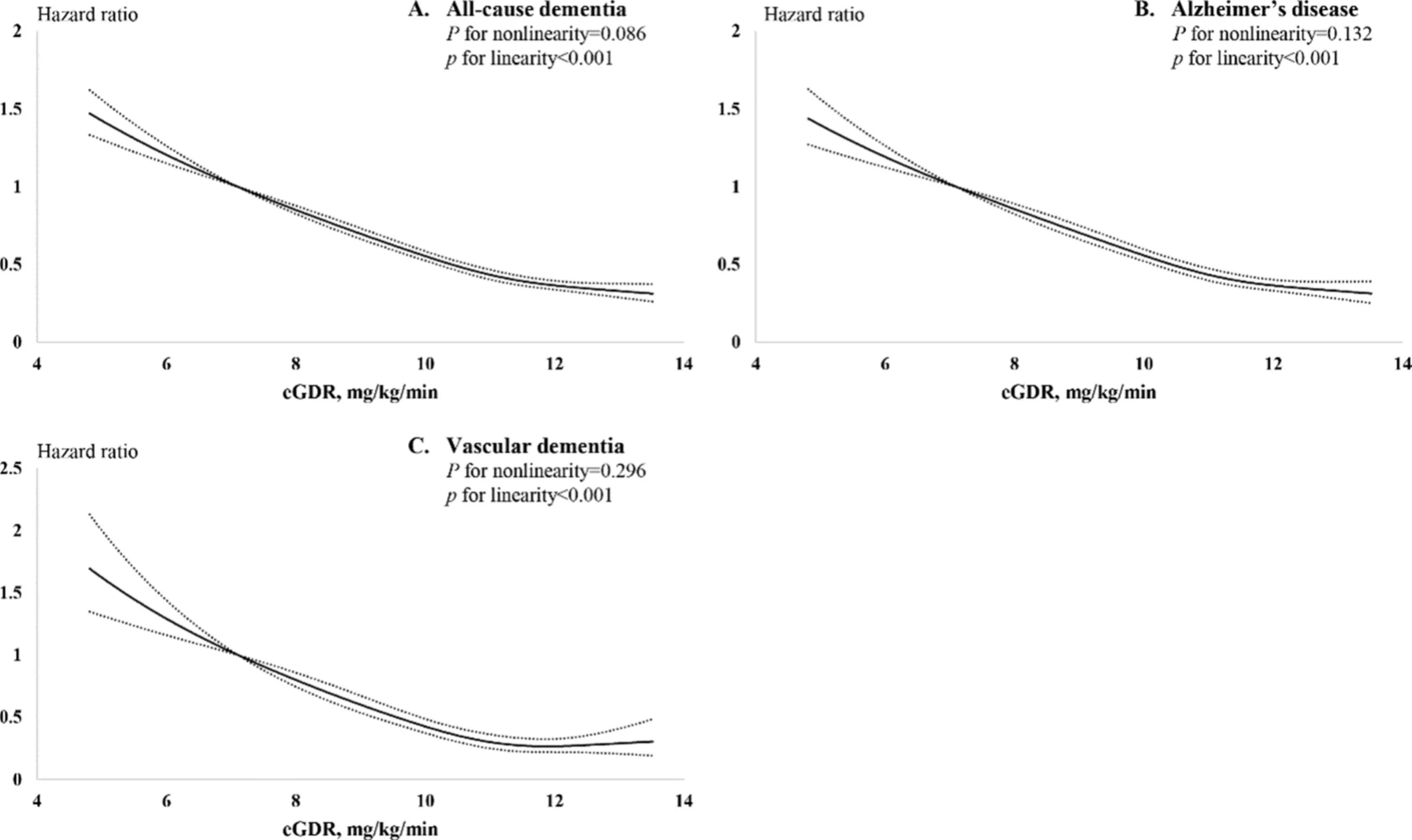
Persistently high versus persistently low estimates of blood sugar use were linked to a dementia hazard ratio of 0.47—a measure of relative risk over time.
Our read
Populations- Studied:
- Cohort study of 12,723 UK Biobank participants without dementia measured twice
- What changed:
- Dementia risk was lower with persistently high versus persistently low estimated blood sugar use (hazard ratio 0.47)
- The catch:
- Underlying health differences could affect both estimated blood sugar use and dementia risk
- In the record:
- The 97th paper on estimated glucose disposal rate with results in people; 134 on record in all. Its result on cognitive function agrees with all 3 other findings on record.
- Why it’s aging research:
- It bears on staying healthy in midlife and later life.
Editor of record: Boris Djordjevic · AgingResearch.News
UK Biobank participants without dementia at enrollment—440,295 people, including 12,723 with two measurements—were analyzed in an observational study. Researchers examined estimated glucose disposal rate, an estimate of how efficiently the body uses blood sugar. They tracked new dementia diagnoses until November 2022.
Higher starting values were associated with lower dementia risk. Among participants measured twice, those whose values stayed high or declined from a high level had lower dementia risk than those whose values stayed low. Higher starting values and persistently high values were also associated with better thinking abilities and more favorable brain structure. The findings linked both starting levels and changes in this blood sugar measure to later dementia risk.
Why it matters
Dementia is an age-related disease. Understanding how blood sugar handling relates to its risk may help researchers investigate differences in brain health as people age.
Caveats
Underlying health differences may have influenced both estimated blood sugar use and dementia risk. The findings concern people without dementia at enrollment, not people already diagnosed with it.
The paper
Jiangnan University; Soochow University
Geriatrics & Gerontology International, Nov 4, 2026

Comments
Be the first to comment.