Frailty and insulin resistance linked to multiple chronic diseases
The highest versus lowest third of a cumulative combined score had higher relative risk of multiple diseases, with a hazard ratio of 6.52.
Our read
Populations- Studied:
- Cohort study of 5,171 middle-aged and older Chinese adults
- What changed:
- Multiple chronic diseases were more likely with highest versus lowest cumulative combined frailty and insulin-resistance scores (hazard ratio 6.52)
- The catch:
- Participant-reported disease diagnoses could misclassify who developed multiple chronic diseases
- In the record:
- One of 7 papers on cumulative estimated glucose disposal rate on record: 6 with results in people.
- Why it’s aging research:
- It measures an outcome that worsens with age.
Editor of record: Boris Djordjevic · AgingResearch.News
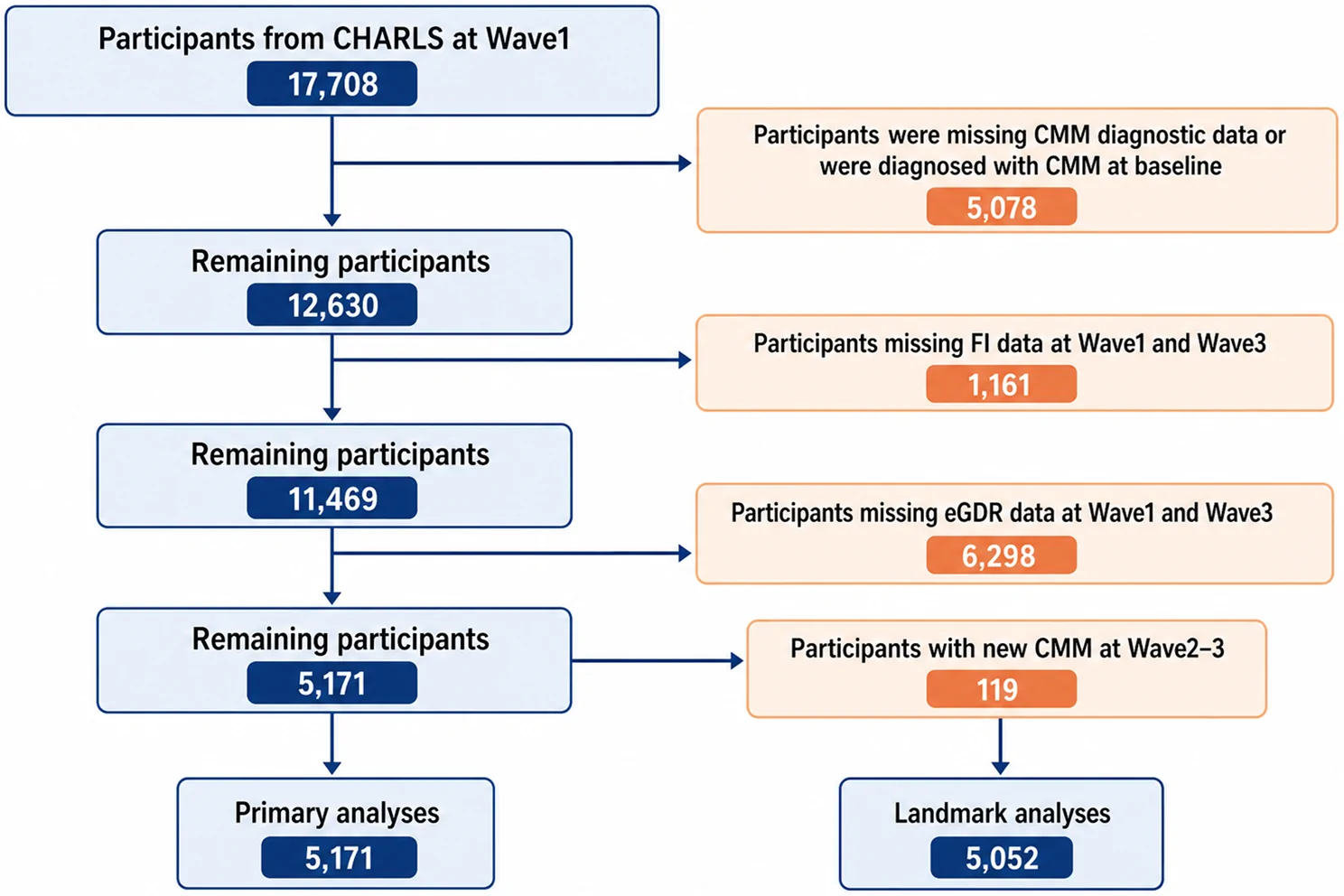
The 5,171 middle-aged and older Chinese women and men in a prospective observational cohort study initially had no more than one of three conditions: diabetes or high blood sugar, heart disease, and stroke. During follow-up, 441 developed at least two.
Researchers scored frailty using 28 health deficits. They estimated insulin sensitivity—how well the body responds to insulin—from waist size, high blood pressure status and a blood sugar marker. They calculated a ratio of frailty to estimated insulin sensitivity and used measurements from 2011 and 2015 to assess cumulative exposure. Lower estimated insulin sensitivity, greater frailty and a higher ratio were each linked to developing multiple conditions after adjustment for other measured factors. Cumulative measures and patterns across the two assessments provided additional information beyond a single initial measurement.
Why it matters
The buildup of diabetes, heart disease and stroke is linked to functional difficulties and long-term care needs. Tracking frailty and metabolic health together may help characterize adults at increased risk.
Caveats
Disease outcomes relied on participants’ reports, and existing illness or other health differences could partly account for the links. The findings concern middle-aged and older Chinese adults without these multiple conditions at enrollment; the exploratory risk measures need validation before clinical use.
From the paper
- Participants
This prospective cohort study included 5171 participants from the China Health and Retirement Longitudinal Study who were free of CMM at baseline.
- Result
… and FI/eGDR were associated with HRs of 0.57 (95% CI, 0.51–0.64), 1.29 (95% CI, 1.19–1.40), and 1.39 (95% CI, 1.29–1.48), respectively; corresponding HRs for cumulative measures were 0.52 (95% CI, 0.46–0.59), 1.51 (95% CI, 1.40–1.64), and 1.52 (95% CI, 1.43–1.60).
- Limitation
First, observational associations cannot establish causality, and residual or unmeasured confounding remains possible.
Quoted word for word from the full text on link.springer.com.
- Insulin resistance
- Diabetes mellitus
- Heart disease
- Stroke
- Cumulative estimated glucose disposal rate
- Humans
The paper
Nanchang University
Cardiovascular Diabetology, Oct 1, 2026, Open access


Comments
Be the first to comment.