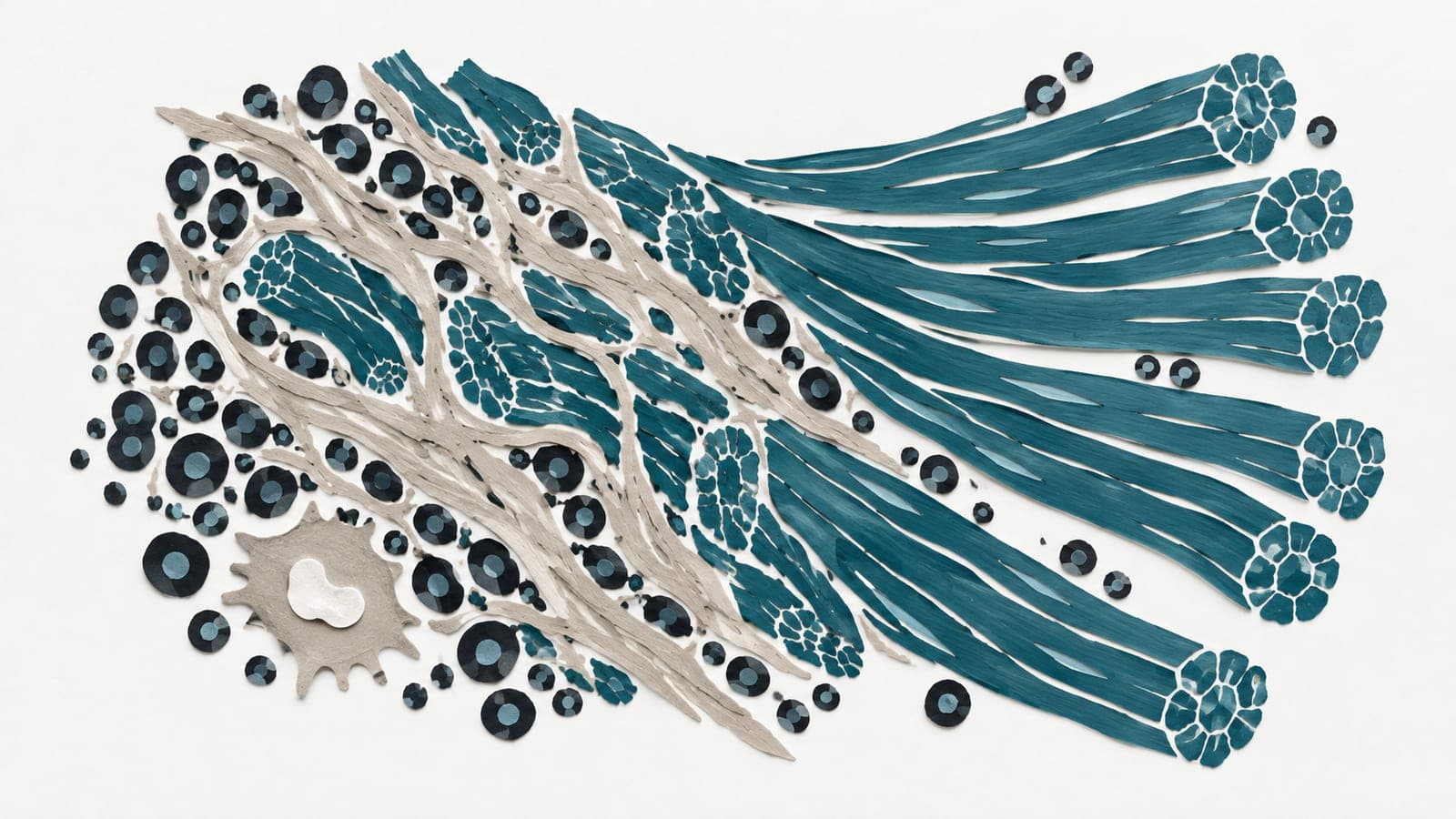
Aging strains immune tolerance to red blood cells in mice
Experiments in a mouse model of autoimmune anemia found partly weakened immune restraint with aging and reduced suppression by regulatory immune cells from adult females.
Limit: The abstract leaves the ages labeled young and adult unspecified
Edited by Boris Djordjevic · AgingResearch.News
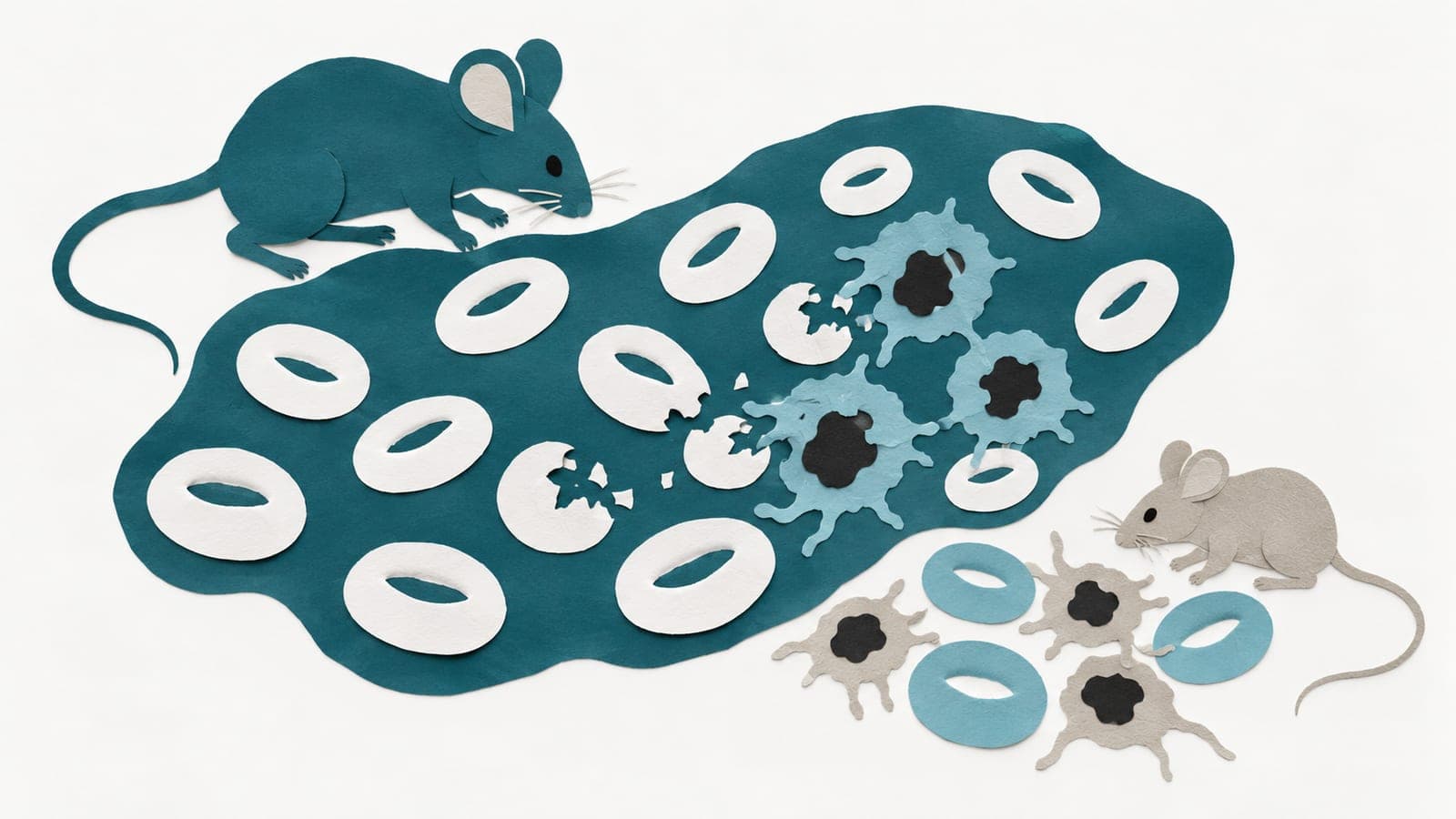
In a mouse model of primary autoimmune hemolytic anemia, a disease involving immune attacks on red blood cells, researchers tested how aging and sex affected immune restraint.
As mice aged, their B and T cells, two types of immune cells, changed. Some B-cell groups expanded, while T cells shifted toward inflammation-promoting types. The share of regulatory T cells, which suppress immune responses, declined with age. In adult female mice, regulatory T cells showed reduced suppressive ability around the time antibodies targeting the body’s own cells emerged. Functional experiments found that young hosts effectively restrained T cells capable of attacking the body’s own cells. Aging brought a partial weakening of this control that differed by sex.
Why it matters
Warm autoimmune hemolytic anemia disproportionately affects older people and females. The work addresses how age-related changes in immune restraint might contribute to that pattern.
Caveats
These experiments used a mouse disease model and do not establish the same changes in people. The abstract does not report sample sizes or specify the ages described as young and adult.
- Inflammation
- Immune response
- Primary autoimmune hemolytic anemia
- Warm autoimmune hemolytic anemia
- Age-associated B cell abundance
- Mice
The paper
Laboratory of Transfusion Biology Columbia University Irving Medical Center New York New York USA
British Journal of Haematology, Oct 30, 2026