Drug-carrying particles improve plaque structure in mice
In a 16-week experiment with six male mice per group, membrane-coated particles carrying matrine reduced fatty buildup and thickened the plaques’ outer caps.
Our read
Interventions- Studied:
- Experiments in male atherosclerosis-prone mice, 16 weeks, against mice receiving unloaded particles (Randomized, blinded, sample size calculated, dose-response)
- What changed:
- Mice given drug-carrying membrane-coated liposomes had thicker plaque caps than mice given unloaded particles
- The catch:
- Only 6 mice per group contributed to the plaque-structure comparisons
- In the record:
- One of 3 papers on matrine on record: none yet with results in people, 2 in animals.
Editor of record: Boris Djordjevic · AgingResearch.News
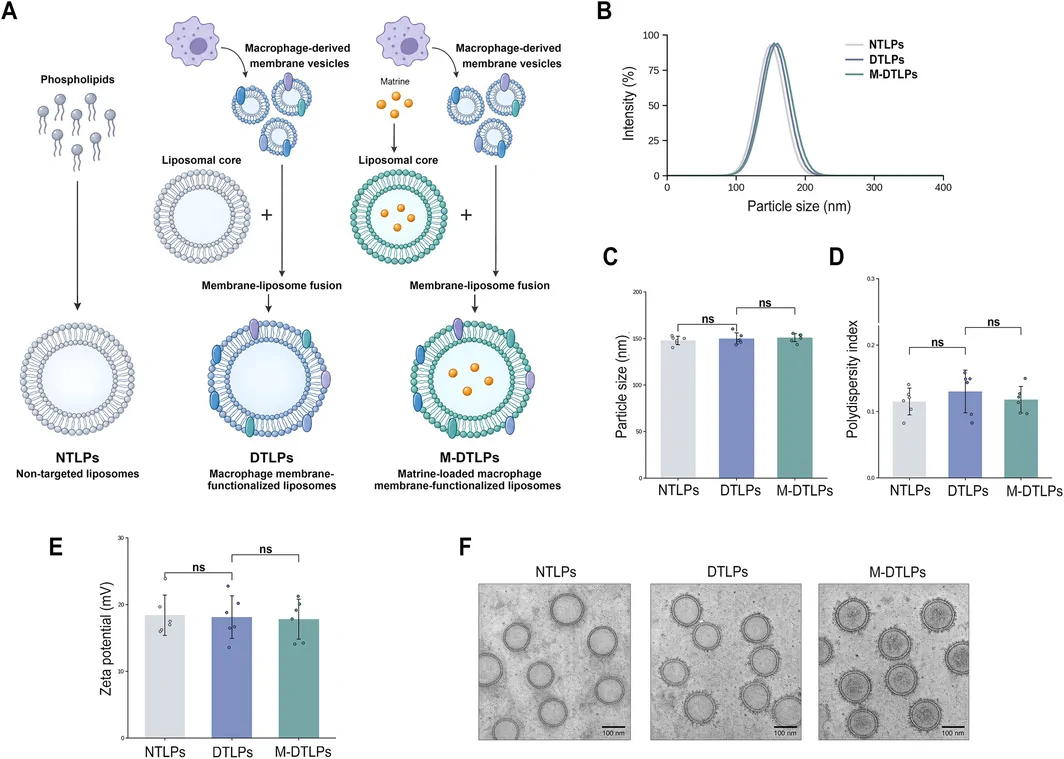
Male mice genetically prone to artery plaque buildup ate a high-fat diet for 16 weeks in a randomized animal experiment, with six mice per group. Matrine-containing groups received 0.5 milligrams per kilogram of body weight by injection at weeks 4, 8 and 12. The tested formulation packaged matrine in fat-based particles coated with membranes from macrophages, immune cells.
These particles reduced plaque and fat buildup, increased collagen, a structural protein, and thickened plaque caps. A smaller share of plaque smooth muscle cells carried a marker of senescence, a state in which cells stop dividing. In mouse cells grown in the lab, experiments supported a contribution from Dll4, a macrophage signaling protein, to the particles’ reduction of senescence. Tests in mice found no overt organ injury or blood-chemistry safety signals.
Why it matters
Cell senescence contributes to plaque vulnerability in atherosclerosis, an age-related artery disease. Targeting communication between immune cells and artery-wall cells offers a potential way to address this process.
Caveats
The authors note that they did not measure plaque rupture or blood-clot formation. The structural changes therefore do not show that these events were prevented.
From the paper
- Limitation
The membrane-fusion platform is supported by retention of macrophage membrane-associated proteins and preferential plaque-macrophage localization …
Quoted word for word from the full text on onlinelibrary.wiley.com.
The paper
Shaanxi Provincial People's Hospital; Northwestern Polytechnical University
Aging Cell, Nov 17, 2026, Open access, CC BY


Comments
Be the first to comment.