Ovarian cancer grew and spread more in older mice
Experiments compared female mice aged 6–8 and 60–65 weeks; blocking a cell-signaling pathway in aged mice reduced cancer growth and spread.
Our read
Interventions- Studied:
- Preprint: experiments in aged female mice, against young mice
- What changed:
- Aged mice had higher tumor burden, metastasis, and ascites than young mice
- The catch:
- The difference in ovarian tumor weights was not statistically significant
- Why it’s aging research:
- It studies organisms or tissues that aged naturally.
Editor of record: Boris Djordjevic · AgingResearch.News
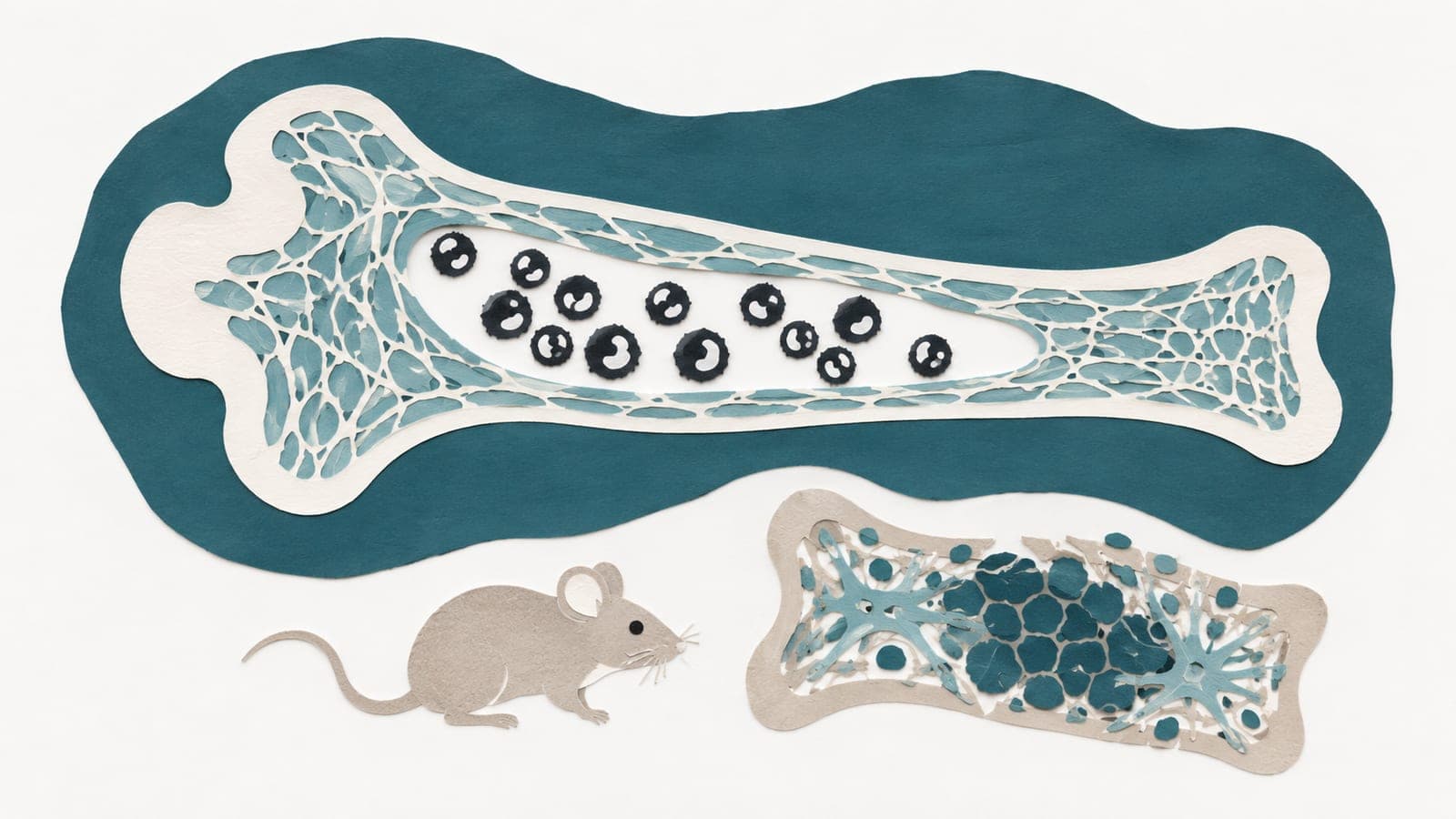
Female C57BL/6 mice aged 6–8 or 60–65 weeks received ovarian cancer cells in animal experiments. Researchers used two models, with cells originating from the ovarian surface or fallopian tube. Older mice developed greater tumor burdens, more spread and more abdominal fluid. Depleting ovarian follicles, which contain immature eggs, in young mice did not reproduce these effects.
Immune cells in tumors from older mice showed greater activity of genes associated with Hedgehog, a cell-signaling pathway. Researchers gave 65-week-old mice vismodegib, which inhibits Hedgehog, at 100 milligrams per kilogram three times weekly, starting 48 hours after cancer-cell injection. Compared with vehicle alone, the drug reduced tumor growth and spread.
Why it matters
Ovarian cancer becomes more common and deadly with age, raising questions about how aging changes the immune environment around tumors. The authors propose Hedgehog inhibition as an immune-modifying strategy for ovarian cancer with an active pathway or after menopause.
Caveats
The drug experiments used implanted tumors in mice, not people, and the difference in ovarian tumor weights was not statistically significant. This preprint has not been peer-reviewed.
The paper
University of Alabama at Birmingham; University of Alabama
bioRxiv, Jul 1, 2026, Open access, Preprint, not yet peer-reviewed

Comments
Be the first to comment.