Brain tumors grew faster in older than younger mice
An experiment comparing 3-month-old and 22-month-old mice also found diminished age-related gene activity patterns on the tumor-bearing side of the brain.
Our read
Mechanisms- Studied:
- Experiments in mice
- In the record:
- One of 159 papers on glioblastoma on record: 12 with results in people, 4 in animals.
Editor of record: Boris Djordjevic · AgingResearch.News
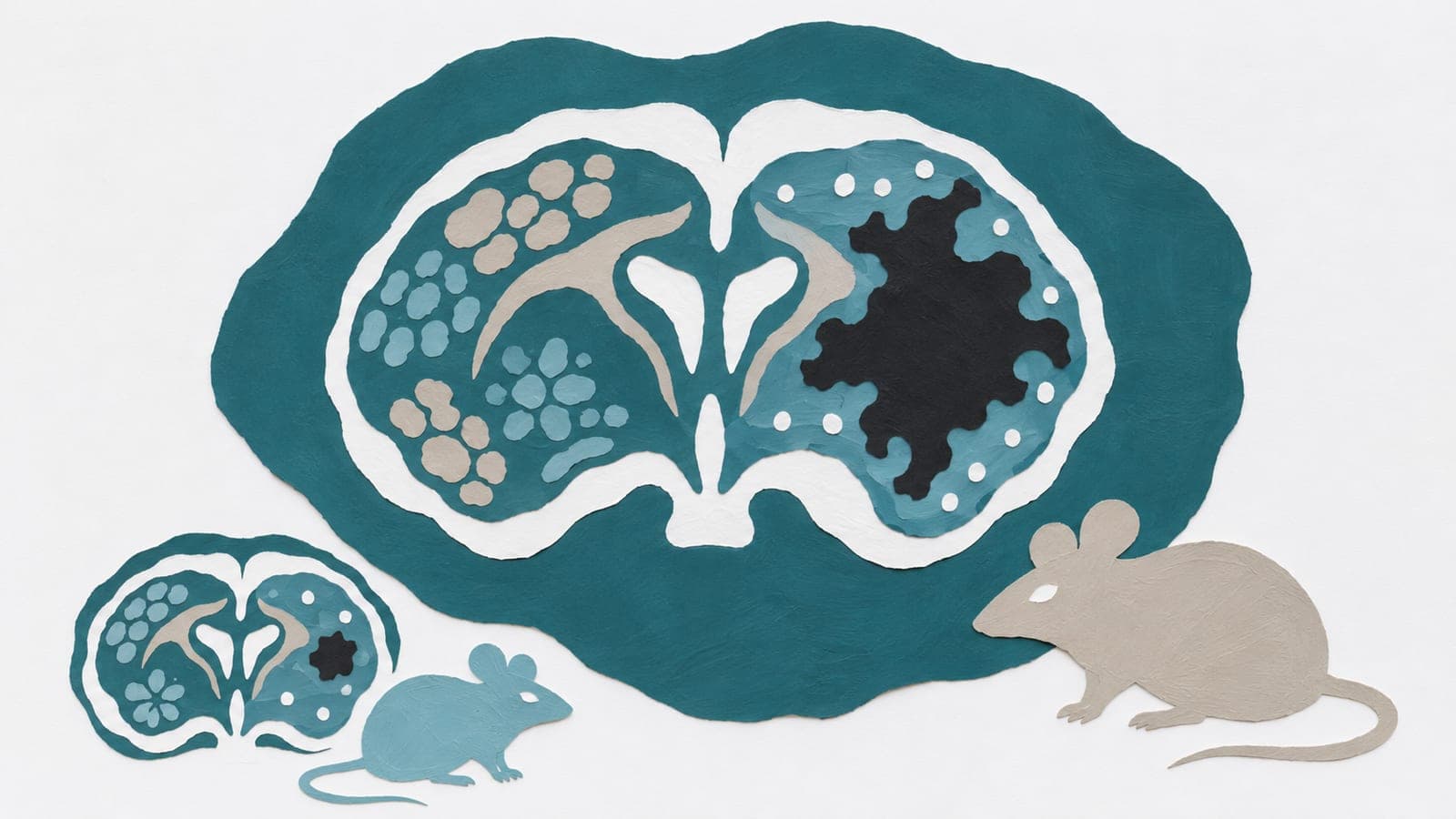
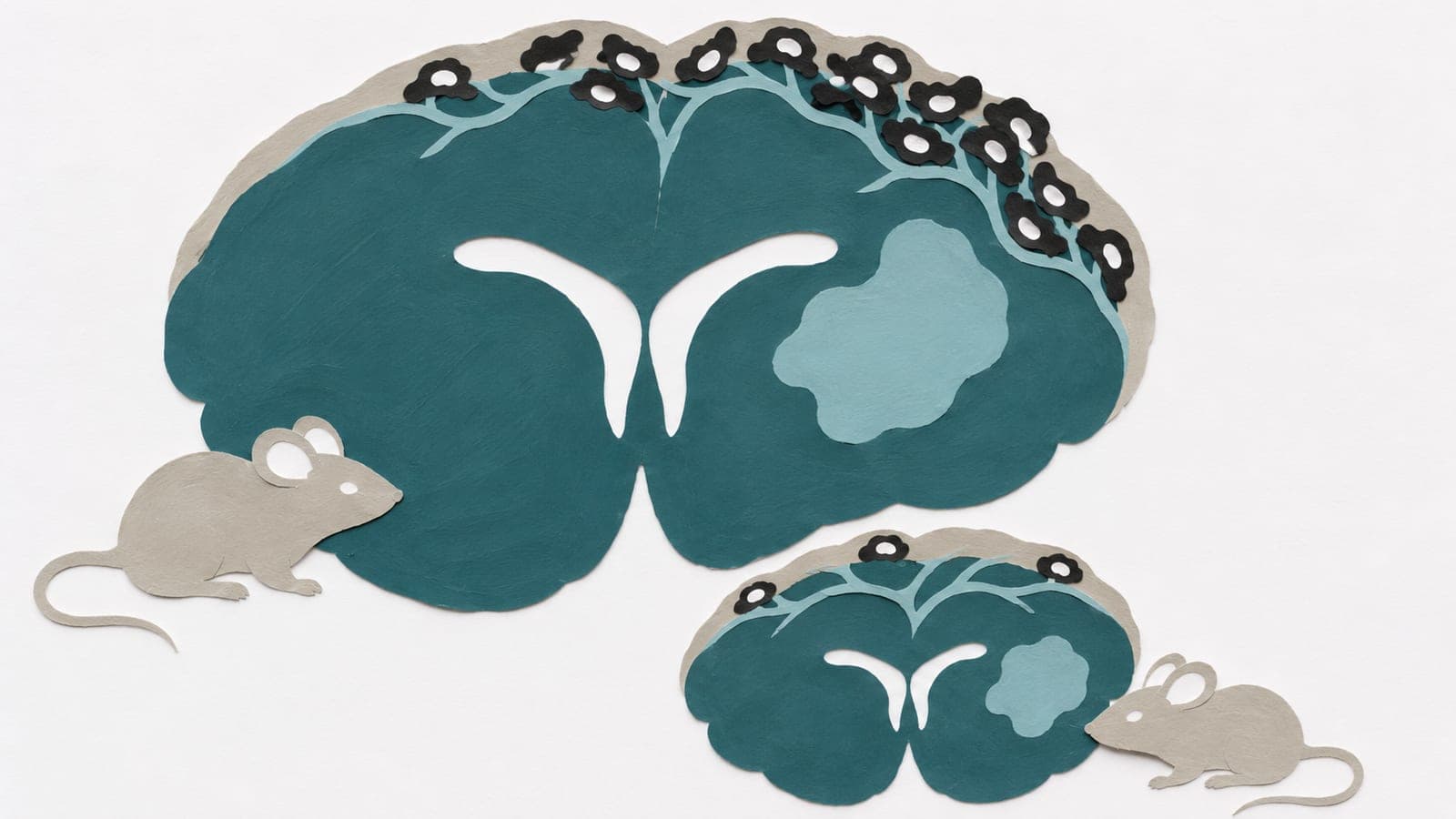
Mice aged 3 or 22 months with tumors implanted inside the brain were compared in an animal experiment on glioblastoma, an aggressive brain cancer. The team measured and mapped gene activity across brain tissue. Imaging showed that tumors grew faster in older mice. Age-related patterns of gene activity were pronounced on the tumor-free side of the brain but substantially diminished on the tumor-bearing side.
A separate analysis of human gene activity data found age-related differences in normal brain tissue but not in surgically removed glioblastoma tumors. Together, the findings suggest that glioblastoma masks age-related patterns of gene activity in the environment around the tumor. The authors highlighted the limits of studying surgically removed tumors to understand aging’s influence on this cancer.
Why it matters
The authors suggest that age-related brain changes outside the tumor core contribute to worse outcomes in older patients with glioblastoma.
Caveats
The growth comparison came from implanted tumors in mice; the human analysis compared gene activity, not tumor growth.
The paper
The Jackson Laboratory for Genomic Medicine
Neuro-Oncology, Nov 2026
Comments
Be the first to comment.