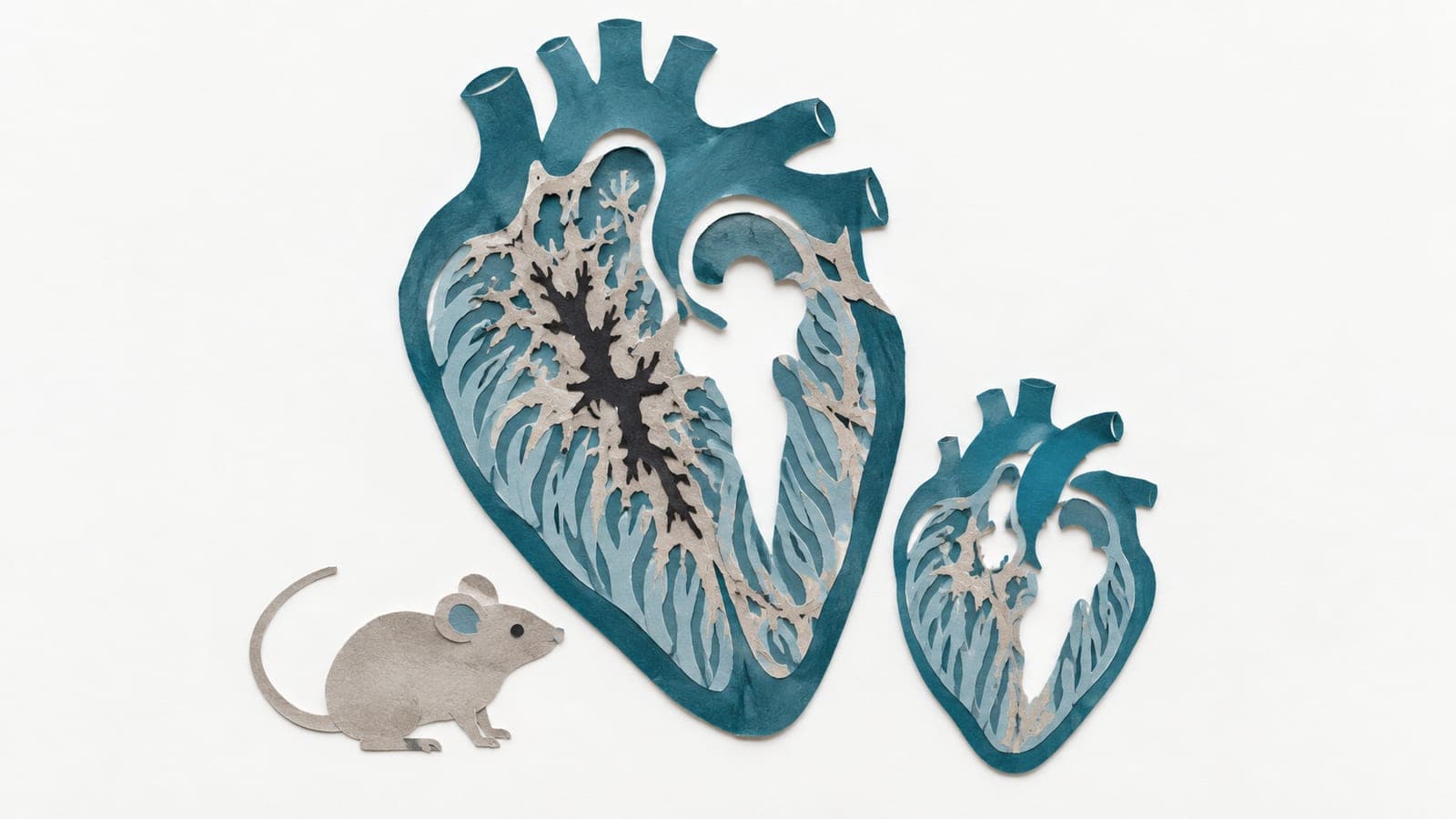
Early-life stress impaired mouse hearts across generations
Heart dysfunction emerged at 12–18 months in mice exposed to early-life stress and appeared in two generations of offspring.
Limit: The study included no unexposed control group of mice
Edited by Boris Djordjevic · AgingResearch.News
In a mouse experiment, pups were separated from their mothers for three hours daily on days 1–14 after birth, while the mothers underwent forced swimming or restraint. Researchers assessed heart structure and function at 6, 12 and 18 months in exposed mice and two generations of offspring.
Heart problems emerged at 12–18 months, including enlargement, impaired relaxation between beats and scarring. These changes appeared across generations. Mouse hearts showed increased activity of the gene for BMP10, a signaling protein. In heart muscle cells grown in the lab, reducing BMP10 production weakened stress-hormone-induced increases in gene activity linked to enlargement and scarring. In mice, larger cages with mazes reduced heart enlargement and impaired relaxation and normalized BMP10 levels.
Why it matters
The study addresses how stress early in life may contribute to heart problems that emerge with age. The findings suggest BMP10 could be a stress-related biological marker and treatment target in this setting.
Caveats
Mouse and laboratory-cell experiments cannot establish whether the same effects occur in people. The conference abstract did not report sample sizes or numerical effect sizes.
The paper
Center for Translational and Experimental Cardiology (CTEC)
ESC Congress 2026 Abstract, Oct 26, 2026
Presented at ESC Congress 2026