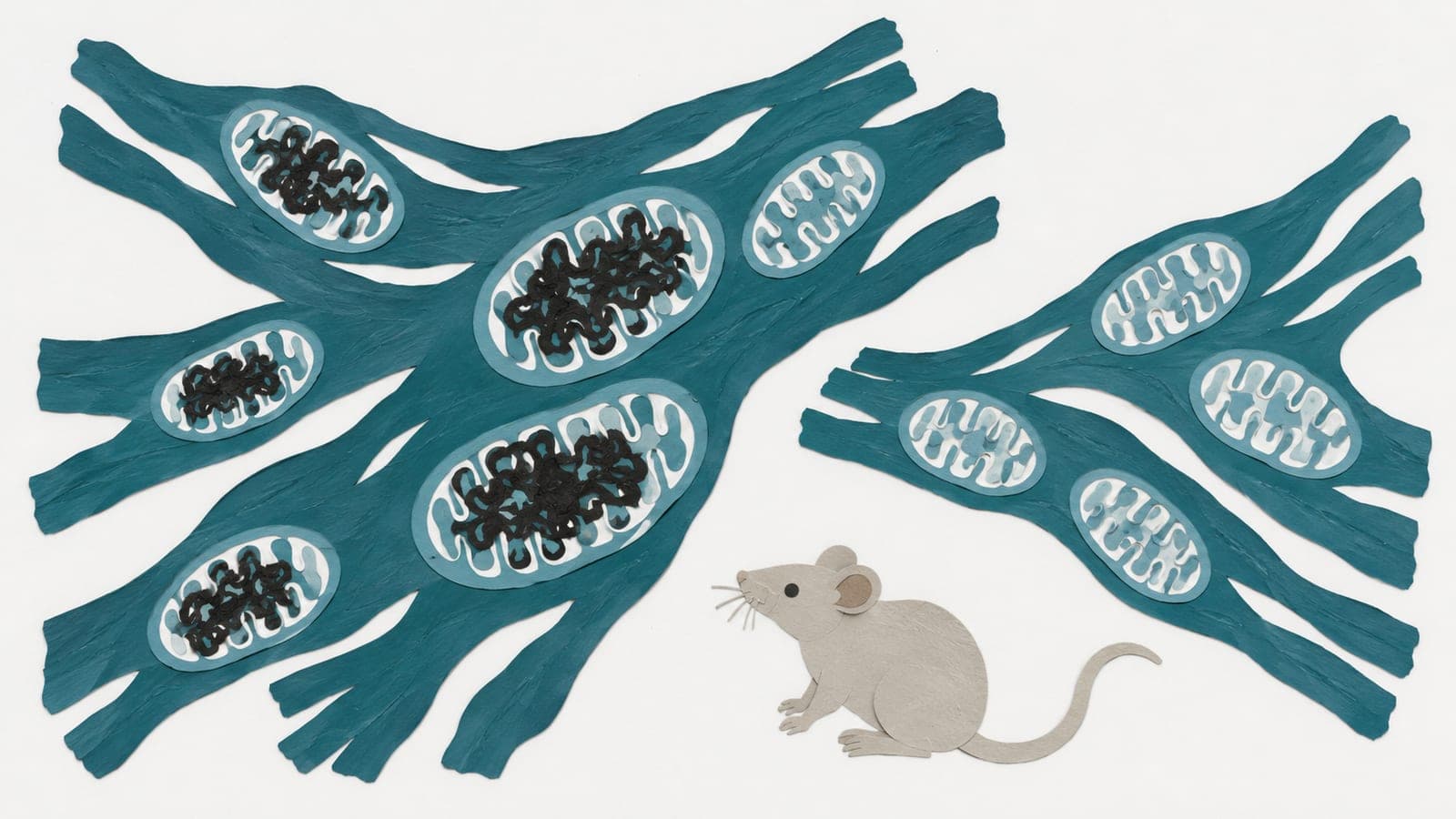
Mice lacking a protein fragment develop weaker hearts with age
Mouse experiments found the fragment in heart muscle cells’ DNA-containing centers, near genes involved in heart structure and stress responses.
Edited by Boris Djordjevic · AgingResearch.News
In a mouse experiment, researchers followed animals engineered to lack a fragment of vascular endothelial growth factor A, a protein involved in blood vessel formation. They tracked heart function with ultrasound and recordings of electrical activity.
The mice developed progressively weaker heart contractions as they aged, along with prolonged parts of the heart’s electrical signal. Heart development and the structure of arteries supplying the heart were preserved. The researchers also found the fragment in the nuclei, the DNA-containing centers, of heart muscle cells. It bound at sites near genes involved in heart cell development, structural changes and stress responses. The pattern of binding sites changed after a heart attack.
Why it matters
The work addresses how different products from the same gene might contribute to age-related changes in the heart.
Caveats
These were mouse experiments, not human studies. The conference abstract did not report animal numbers, ages or the length of follow-up.
The paper
Shanghai Childrens Medical Center
ESC Congress 2026 Abstract, Oct 26, 2026
Presented at ESC Congress 2026