Older adults’ pointing suggests less reliance on feedback
In an observational brain-scan study, older adults’ movements suggested greater reliance on advance plans, particularly when targets were highly uncertain.
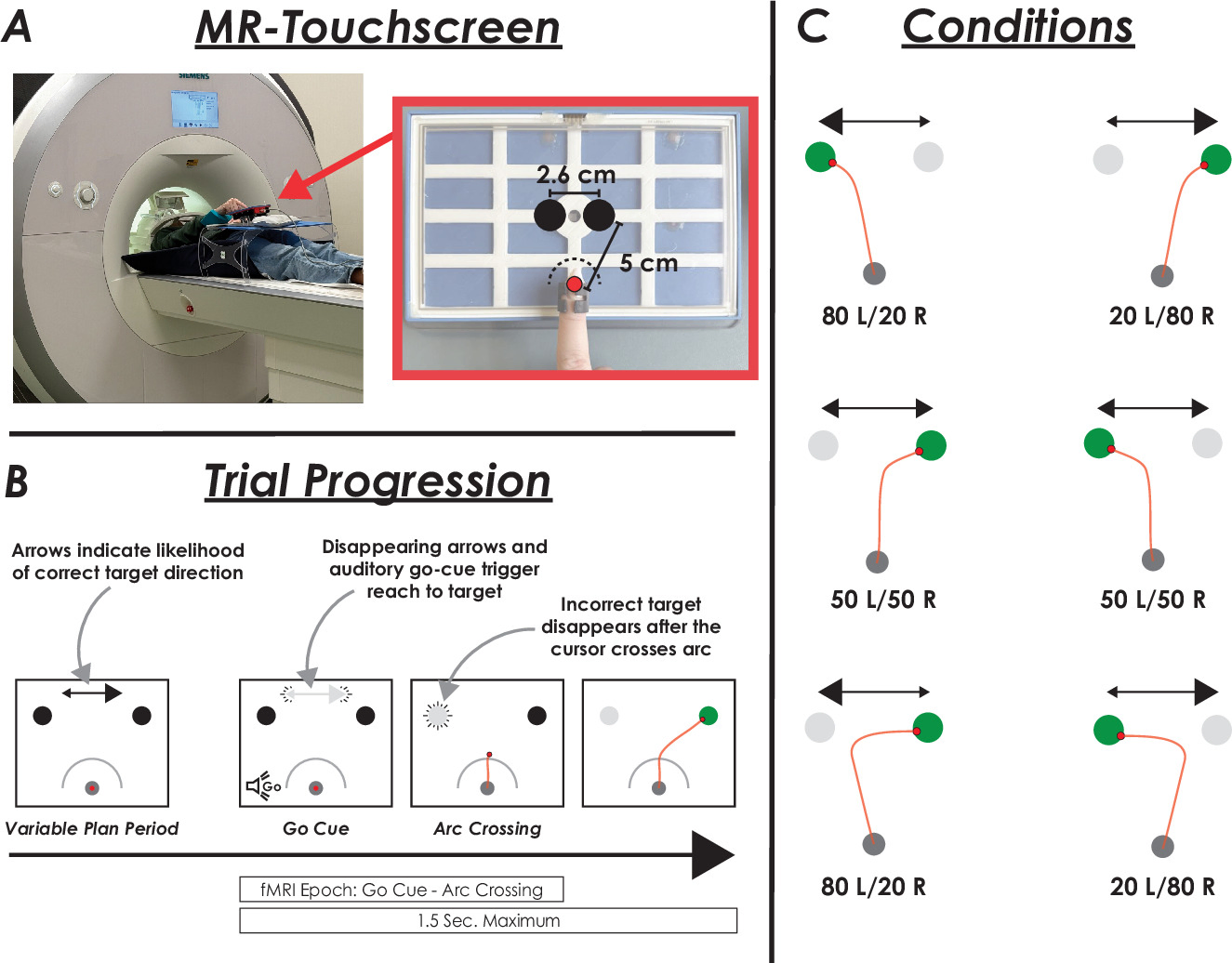
Young and older adults completed a pointing task during brain scans in an observational study of movement under uncertainty. Participants started moving before they knew which target to reach. Young adults directed their movements towards the more likely target under low uncertainty and between possible targets under high uncertainty. This pattern was consistent with adjusting movements using incoming information.
Older adults relied less on the between-target strategy, particularly under high uncertainty. This suggested greater reliance on movement plans prepared in advance rather than ongoing adjustments. In young adults, brain regions involved in sensation and movement also carried stronger signals about task uncertainty and movement direction than in older adults.
Why it matters
Everyday actions involve uncertainty about where to move. The work addresses how aging may affect the flexibility needed to plan and adjust those actions.
Caveats
This observational comparison cannot establish that aging caused the differences. The abstract did not report participant numbers or age ranges.
The paper
Age-related shift towards feedforward motor control under uncertainty
University of North Carolina at Greensboro; University of Oregon
Communications Biology, 15 Oct 2026, Open access, CC BY-NC-ND