Belly-fat measure over time linked to multiple diseases
Each standard-deviation rise in cumulative scores was associated with relative rates of developing multiple conditions of 1.28, 1.11 and 1.31 across three aging cohorts.
Our read
Populations- Studied:
- Cohort study of middle-aged and older adults
- What changed:
- Risk of multiple heart or metabolic conditions rose with cumulative belly-fat scores: relative rates 1.28, 1.11 and 1.31 per standard-deviation increase
- The catch:
- Abdominal fat was estimated from a body-shape index rather than measured directly
Editor of record: Boris Djordjevic · AgingResearch.News
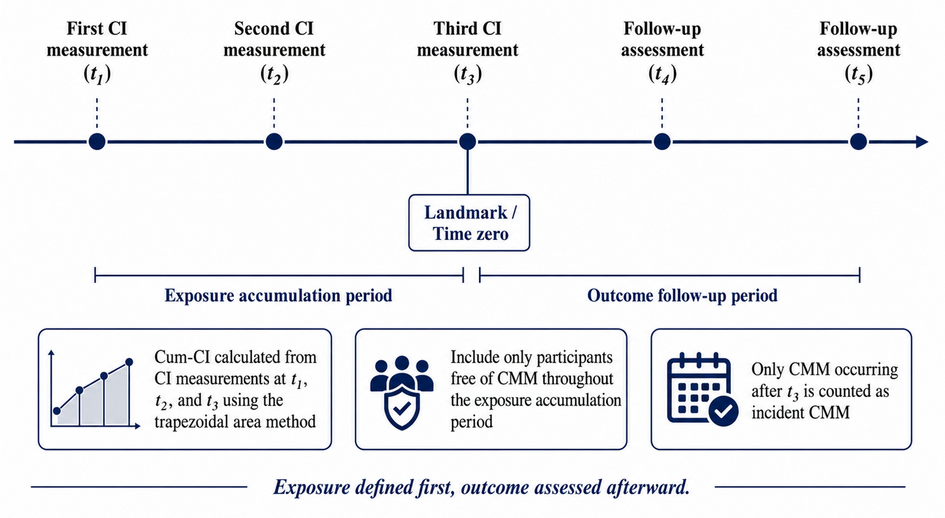
Middle-aged and older adults in the English Longitudinal Study of Ageing (1,700), Health and Retirement Study (1,620) and China Health and Retirement Longitudinal Study (3,526) were included in a cohort analysis using a landmark design. Researchers combined three survey waves of the conicity index, a body-shape measure of abdominal fat. Follow-up began at the third wave, excluding people who had already developed cardiometabolic multimorbidity—multiple heart or metabolic conditions.
Higher cumulative scores were associated with higher subsequent rates of developing multiple conditions in all three cohorts after statistical adjustment. The relative rates were 1.28, 1.11 and 1.31, respectively, per standard-deviation increase—a step reflecting how widely scores varied within each cohort.
Why it matters
Repeated body-shape measurements may help identify middle-aged and older adults at higher risk of developing several heart or metabolic conditions, the authors suggest.
Caveats
Other health differences between people with higher and lower scores could have contributed to their later disease rates despite statistical adjustment. The findings concern middle-aged and older adults, not younger people.


Comments
Be the first to comment.