Health score linked to multiple diseases in older Chinese adults
Higher starting scores were linked to 57% higher relative disease risk per standard deviation, a measure of variation, over approximately nine years.
Our read
Biomarkers- Studied:
- Preprint: study in people
Editor of record: Boris Djordjevic · AgingResearch.News
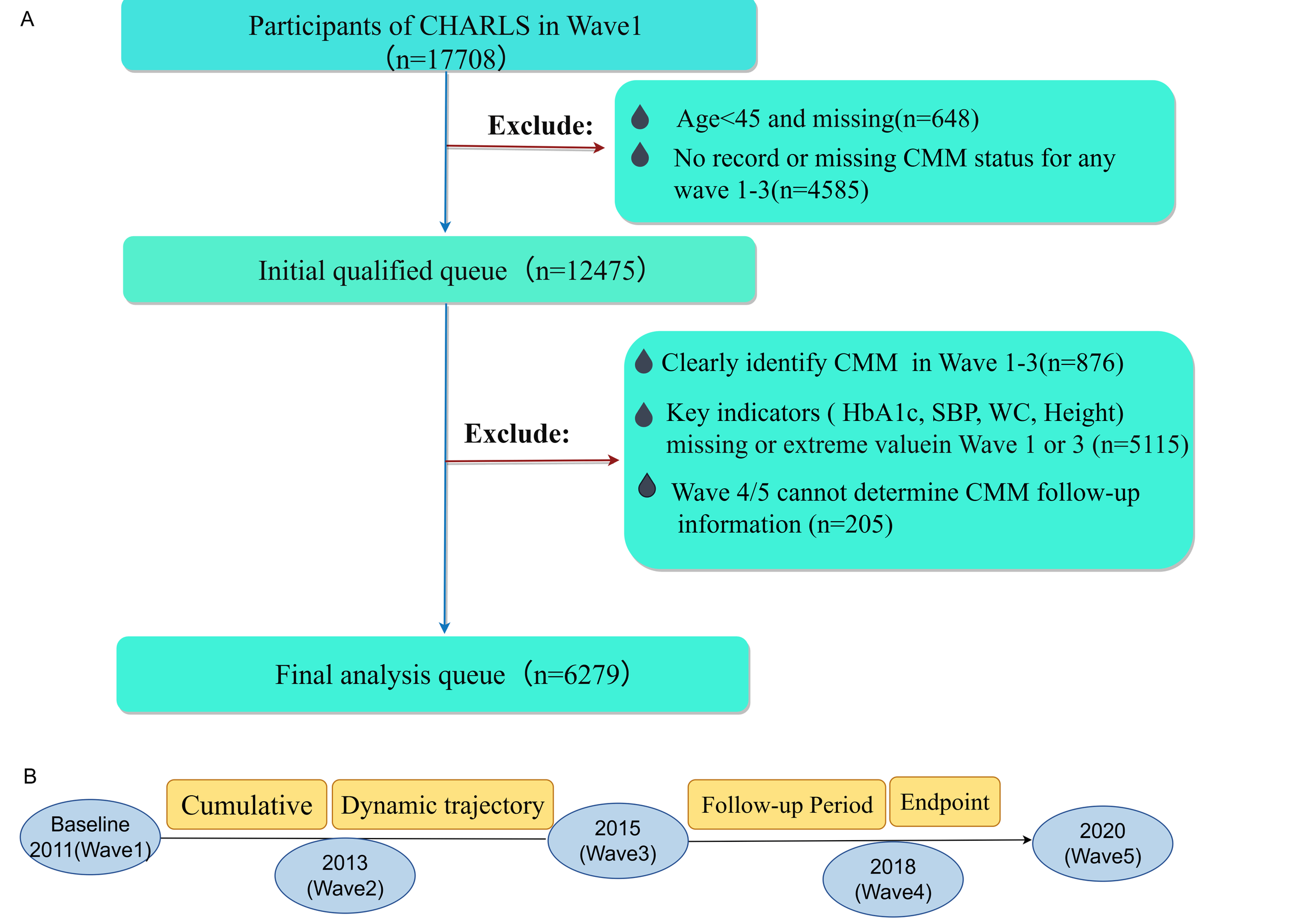
Among 6,279 middle-aged and older Chinese adults without multiple cardiometabolic diseases at enrollment, a prospective cohort study examined a combined health score. Participants averaged 58.60 years of age, and 45.1% were male. The score combined hemoglobin A1c, a measure of longer-term blood sugar, systolic blood pressure, the top blood pressure number, and waist-to-height ratio.
Over a median of approximately nine years, 410 participants (6.5%) developed cardiometabolic multimorbidity, meaning at least two heart or metabolic diseases. Higher starting scores were associated with higher risk after adjustment for demographic factors, smoking, drinking and body mass index, a weight-for-height measure. Cumulative scores, calculated from repeated measurements and the time between them, had a stronger association. People with high and rising scores had approximately fourfold the risk of those with low, stable scores.
Why it matters
Multiple heart and metabolic diseases pose a growing challenge in aging populations. The authors suggest jointly monitoring blood sugar, blood pressure and abdominal fat may help identify people at higher risk.
Caveats
Differences in underlying health could have contributed to the associations in this observational cohort, and self-reported physician diagnoses may have misclassified cases. Participants were middle-aged and older Chinese adults, and the preprint has not been peer-reviewed.
From the paper
- Participants
This prospective cohort study included 6,279 participants free of CMM at baseline from the China Health and Retirement Longitudinal Study (2011–2020).
- Follow-up
During a median follow-up of approximately 9 years, 410 incident CMM cases occurred.
- Result
Each 1-SD increment in baseline HSI×WHtR was associated with a 57% higher risk (HR 1.57, 95% CI 1.43–1.72), and the corresponding HR for cuHSI×WHtR was 1.83 (95% CI 1.67–2.00).
Quoted word for word from the full text on researchsquare.com.
The paper
Southwest Medical University; The First People's Hospital of Yibin
Research Square, Nov 5, 2026, Open access, Preprint, not yet peer-reviewed


Comments
Be the first to comment.