Blood-sugar index linked to progression toward multiple diseases
Each standard-deviation increase in the index was linked to a transition-rate ratio of 1.215 for developing a first condition—diabetes, heart disease or stroke.
Limit: Disease accumulation covered only diabetes, heart disease, and stroke, not other chronic conditions
Edited by Boris Djordjevic · AgingResearch.News
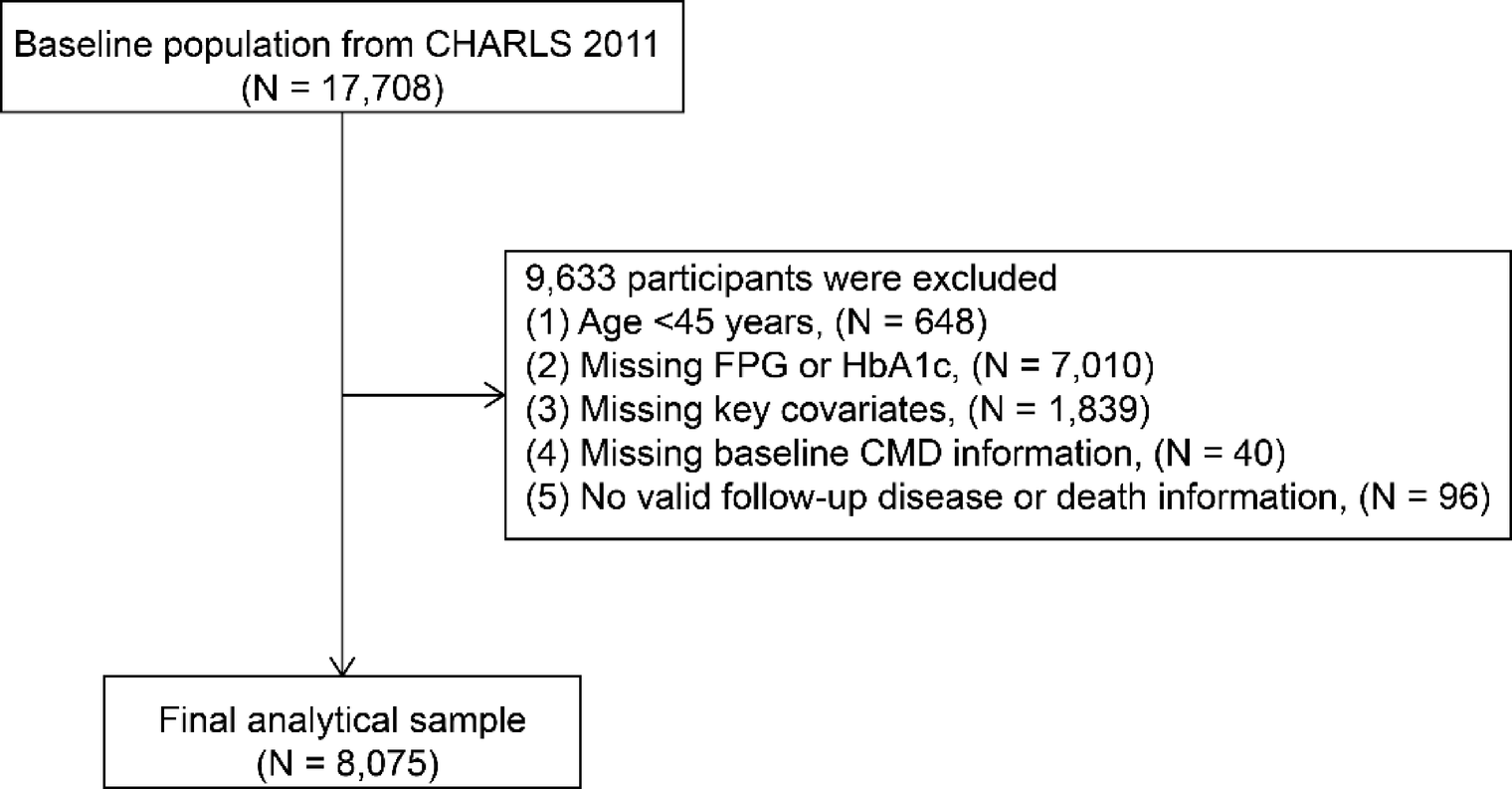
An observational study followed 8,075 middle-aged and older adults in the China Health and Retirement Longitudinal Study from 2011 to 2018. Researchers calculated the hemoglobin glycation index by subtracting the value predicted from fasting blood sugar from measured glycated hemoglobin, a measure of longer-term blood sugar. A standard deviation described how spread out index values were. Transition-rate ratios compared modeled rates of moving between health states.
The states were no disease, one disease, at least two diseases, and death. The diseases were diabetes, heart disease and stroke. Higher index values were associated with progression from no disease to one or multiple diseases, and from one to multiple diseases. The links with disease accumulation persisted after researchers also accounted for fasting blood sugar.
Why it matters
The study addressed how diabetes, heart disease and stroke accumulate in middle and older age, rather than treating multiple illnesses as a single endpoint.
Caveats
This observational study cannot establish that the index caused disease progression. The findings came from middle-aged and older adults in China.
The paper
Wannan Medical College
Scientific Reports, Oct 20, 2026, Open access, CC BY-NC-ND


