Myocardial extracellular volume reduction is associated with improved cardiac function after SGLT2 inhibitor therapy in HFpEF
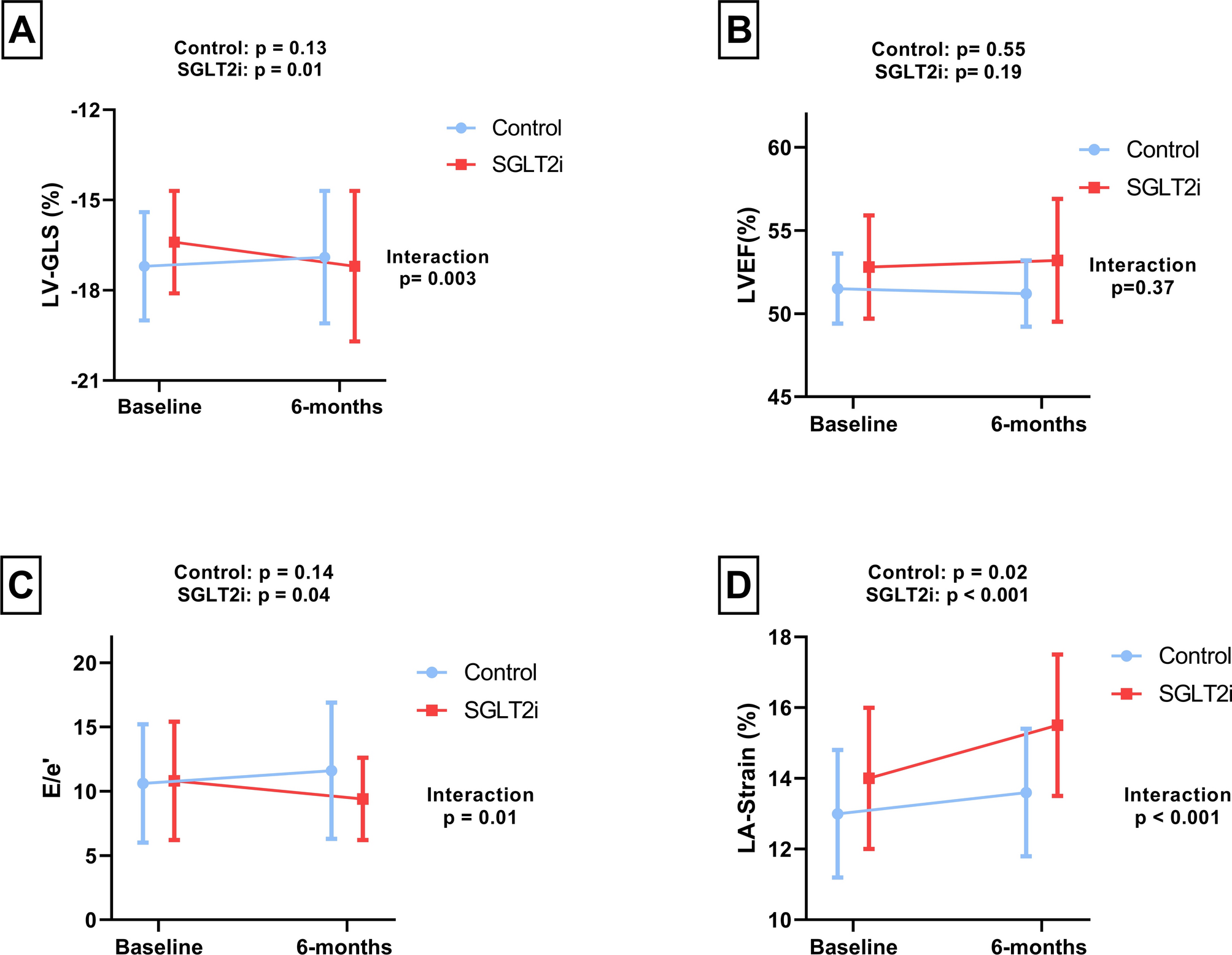
6 months, controlled
Abstract
In patients with heart failure with preserved ejection fraction (HFpEF), sodium-glucose co-transporter 2 inhibitors (SGLT2i) improve prognosis and symptoms. To evaluate the short-term effects of SGLT2i on myocardial extracellular volume (ECV) and left ventricular (LV) function in patients with HFpEF and diabetes mellitus (DM). Patients with HFpEF and DM (32 subjects) received either SGLT2i (treatment group) or not (control group) in addition to standard care. Assessments were conducted at baseline and after six months. LV ejection fraction (LVEF) and global longitudinal strain (LVGLS) were measured to assess systolic function, left atrial strain (LAstrain) was used to evaluate diastolic function. Cardiac magnetic resonance imaging (CMR) was performed to measure ECV. C-reactive protein (CRP) and N-terminal pro B-type natriuretic peptide (NTproBNP) levels were also measured. The mean age of the participants was 67 ± 9 years (62% male). No significant differences were observed between groups at baseline. In comparison to the control group, the SGLT2i group demonstrated improved LVGLS (SGLT2i: from − 16.4 (1.7)% to − 17.2 (2.5)%, p = 0.01 vs. Control group: from − 17.2 (1.8)% to − 16.9 (2.2)%, p = 0.13), LAstrain (SGLT2i: 14.0 (2.0)% to 15.5 (2.0)%, p = < 0.001 vs. Control group: 13.0 (1.8)% to 13.6 (1.8)%, p = 0.02), ECV (SGLT2i: 28.3 (1.9) % to 27.3 (1.8) %, p < 0.001; Control: 26.9 (2.4) % to 27.1 (2.3) %, p = 0.16) along with reductions in CRP and NT-proBNP. In patients with HFpEF and DM, SGLT2i treatment improves ECV along with systolic and diastolic echocardiographic parameters. These findings highlight the underlying mechanisms contributing to the cardioprotective effects of SGLT2i in this patient population.
- SGLT2 inhibitors
- SLC5A2
- Myocardial extracellular volume
- Diabetes mellitus
- Heart failure with preserved ejection fraction
- Humans
The paper
Sotiria General Hospital; Hippocration General Hospital
Scientific Reports, Oct 14, 2026, Open access, CC BY-NC-ND


