Physical activity and incident hypertension in relation to anthropometric and liver-related indices during 5-year follow-up in the Azar Cohort Study
Abstract
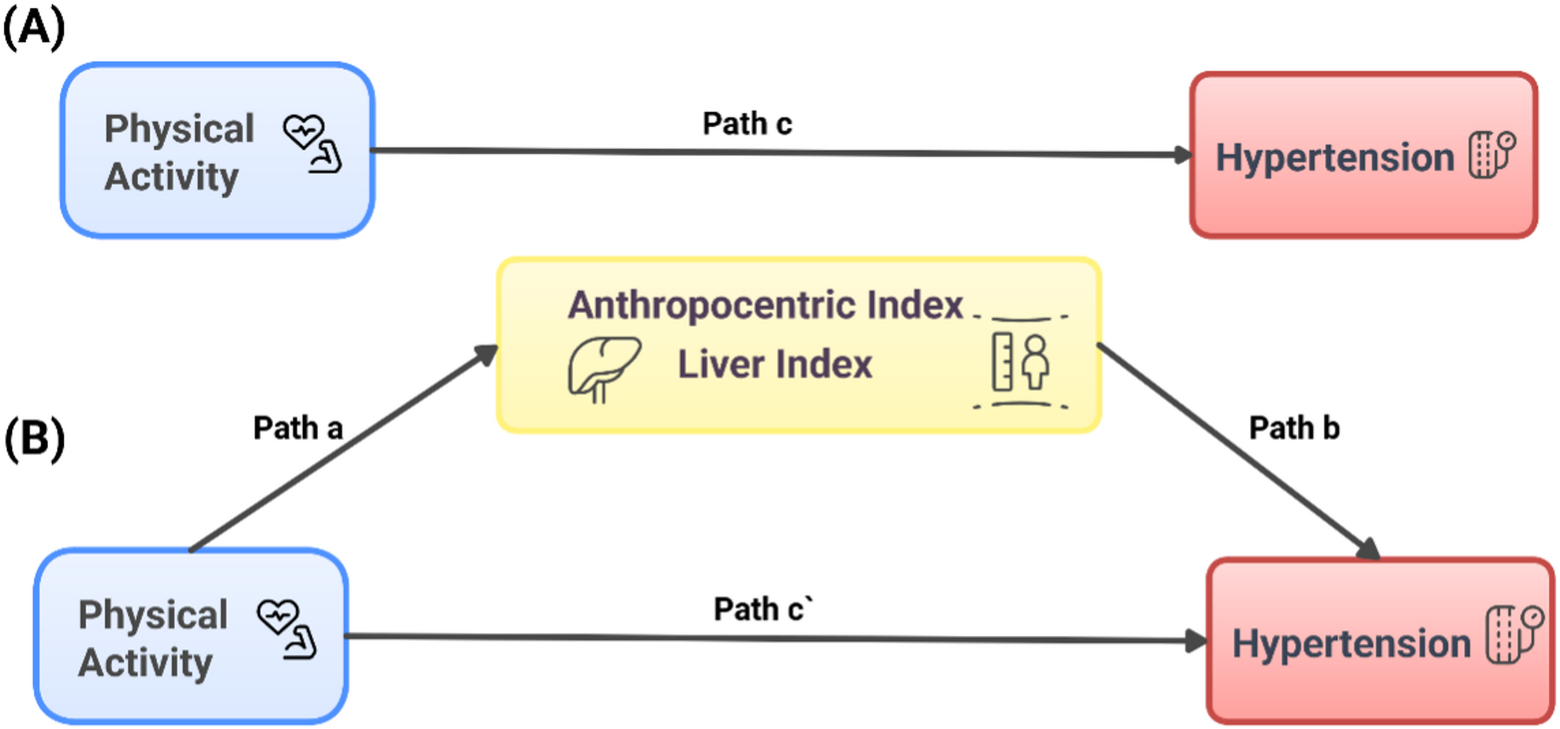
Hypertension (HTN) is a major global public health concern. This study examined the association between physical activity (PA) and incident HTN, focusing on the mediating roles of anthropometric (AI) and liver-related indices (LI) in the Azar cohort. Data from 11,754 adults without baseline HTN were analyzed. Fifteen anthropometric and nine liver-related indices were assessed using standard protocols. PA was measured via a validated questionnaire based on metabolic equivalent of task (MET). Generalized Structural Equation Modeling (GSEM) was applied to evaluate direct and indirect associations. Results Individuals with HTN were older and had higher anthropometric and liver-related measures, while PA levels were lower (P < 0.001). Higher PA was associated with a lower risk of HTN (RR = 0.91, 95% CI:0.89–0.94), whereas higher AI (RR = 1.92, 95% CI:1.81–1.99) and LI (RR = 1.21, 95% CI:1.19–1.23) were associated with a higher risk of HTN. AI and LI accounted for part of the observed PA–HTN association, with a stronger contribution from AI than LI (53.64% vs. 34.95%). After accounting for the mediators, the association between PA and HTN remained significant (RR = 0.94, 95% CI:0.91–0.96). The association remained significant after adjustment; each one-unit increase in MET was linked to a 6% lower HTN risk (RR = 0.94, 95% CI: 0.91–0.96). PA was inversely associated with HTN risk, with anthropometric factors accounting for a greater proportion of the observed association than liver-related factors. The partial mediation suggests that other factors may also contribute to this association.
The paper
Scientific Reports, 11 Oct 2026, CC BY