Systemic lupus erythematosus is associated with age-related macular degeneration risk in a nationwide Korean cohort
Abstract
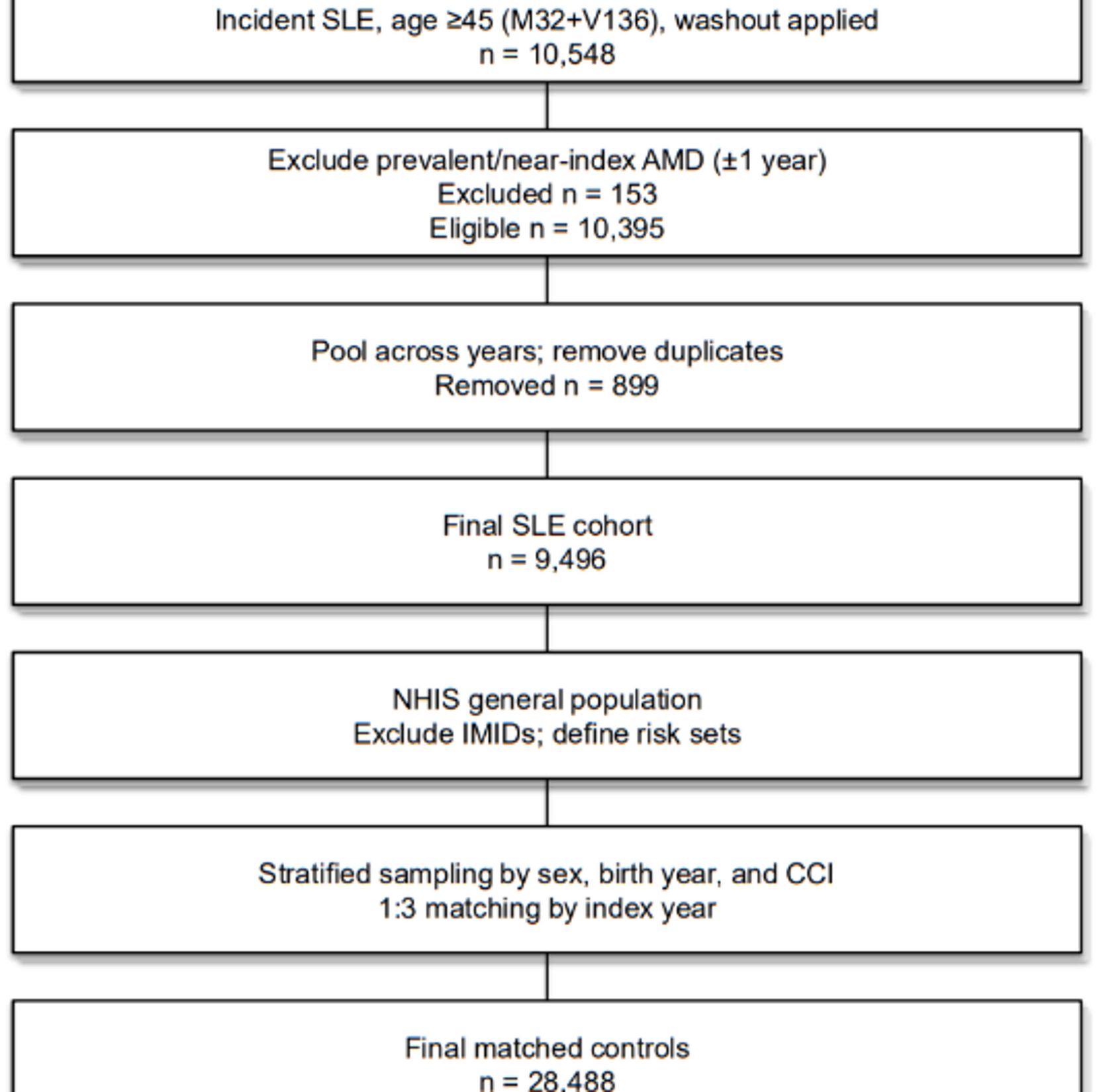
Using nationwide Korean claims data, we examined whether systemic lupus erythematosus (SLE) is associated with age-related macular degeneration (AMD), whether associations differ for dry versus neovascular AMD, and whether risk varies by treatment-defined SLE severity. This retrospective cohort study used National Health Insurance Service data (indexed 2011–2020). Incident SLE was defined by ICD-10 M32.x plus rare-disease registration (V136), and individuals with AMD within 12 months before or after index date were excluded. AMD subtypes were classified using Korean diagnosis and copayment codes. We included 9,496 SLE patients and 28,488 matched controls. Over 63,696 person-years, 313 AMD events occurred in SLE. SLE showed higher incidence of any AMD (49.1 vs. 26.7 per 10,000 person-years; IRR 1.84, 95% CI 1.60–2.12), dry AMD (IRR 1.65, 95% CI 1.41–1.93), and neovascular AMD (IRR 3.17, 95% CI 2.26–4.46). In hydroxychloroquine duration-stratified Cox models, neovascular AMD HRs were 2.71 (< 5 years) and 4.00 (≥ 5 years) versus controls. Severe SLE was not associated with higher AMD hazards after adjustment. SLE was associated with higher AMD incidence, particularly neovascular AMD.
From the paper
- Participants
The incident SLE cohort included 9,496 individuals; women accounted for 85.9% and the mean age was 57.7 ± 9.9 years.
- Result
Pooled IRs were higher in SLE than in matched controls for any AMD (49.1 vs. 26.7, IRR 1.84, 95% CI 1.60–2.12), dry AMD (38.6 vs. 23.4, IRR 1.65, 95% CI 1.41–1.93), and neovascular AMD (10.5 vs. 3.3, IRR 3.17, 95% CI 2.26–4.46) (Supplementary Table S1).
Quoted word for word from the full text on nature.com.
- Hydroxychloroquine
- Systemic lupus erythematosus
- Age-related macular degeneration
- Dry age-related macular degeneration
- Neovascular age-related macular degeneration
- Humans
The paper
Konkuk University; Massachusetts Eye and Ear Infirmary
Scientific Reports, Oct 16, 2026, Open access, CC BY-NC-ND

