Gut microbe patterns linked lifestyle to health and disease
An observational analysis of 6,803 adults in Japan found opposing patterns linking lifestyle, gut microbes, general health and 15 chronic diseases.
Our read
Populations- Studied:
- Cross-sectional study of 6,803 Japanese adults (Independent replication, multicenter)
- What changed:
- Gut microbe patterns linked plant-based diets to health and refined carbohydrates and sedentary behavior to disease
- The catch:
- Socioeconomic status, sleep quality, and psychosocial stress could confound the lifestyle–microbiome–disease links
- In the record:
- The 954th paper on alcohol with results in people; 2,766 on record in all.
- Why it’s aging research:
- It bears on staying healthy in midlife and later life.
Editor of record: Boris Djordjevic · AgingResearch.News
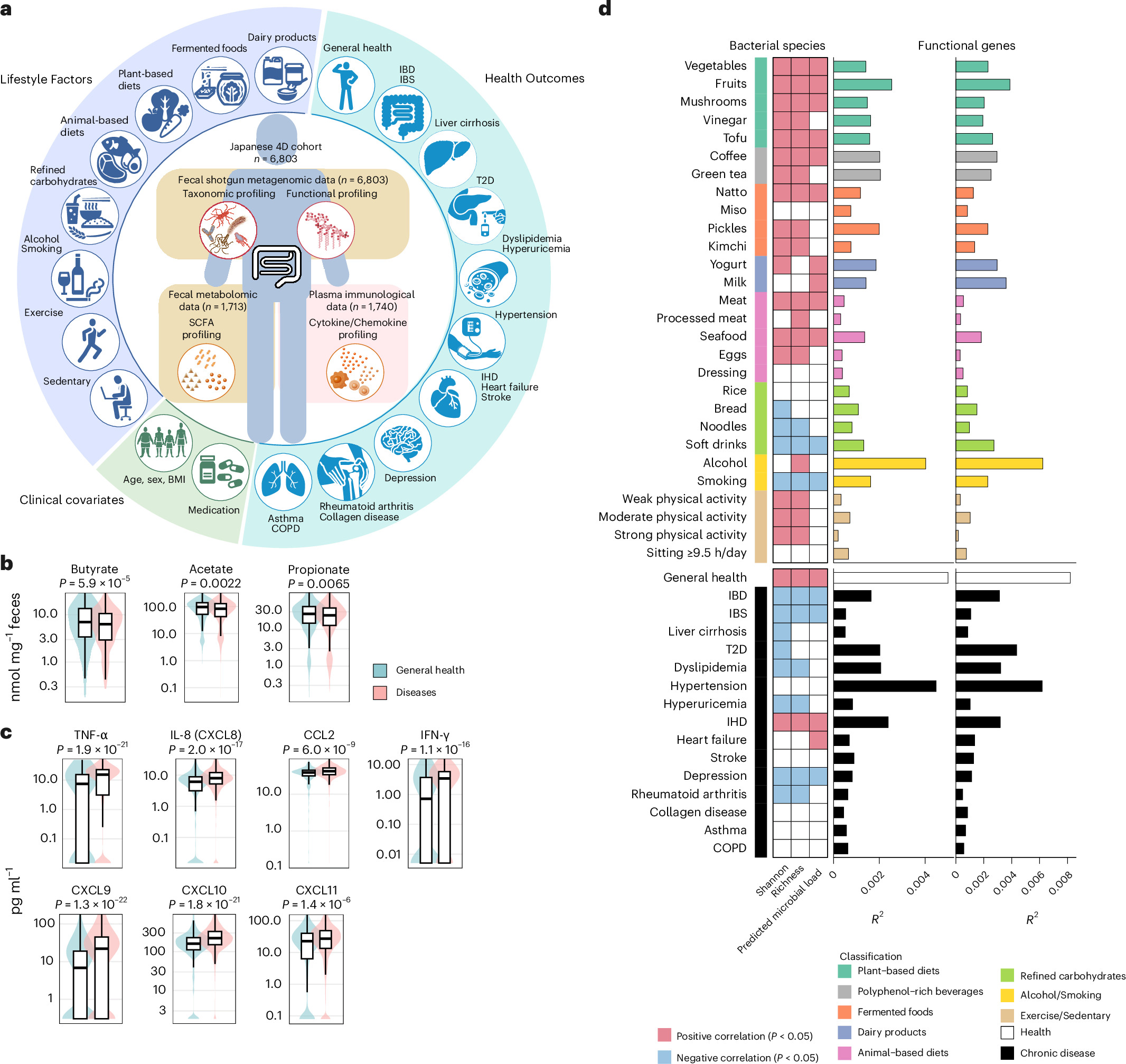
The 6,803 adults in the Japanese 4D cohort averaged 60.9 years of age; 58.2% were male. In a cross-sectional observational analysis, researchers compared stool microbial DNA with 28 lifestyle factors, general health and 15 chronic diseases.
Plant-based foods, soy and dairy intake were linked to a health-associated pattern rich in microbial functions for processing dietary components. Refined carbohydrates and sedentary behavior were linked to a disease-associated pattern rich in bacteria normally found in the mouth and bacteria with disease-causing potential. The analysis found no statistically significant evidence that microbes used to ferment foods helped explain those foods’ health associations. Microbe-based scores also distinguished diseases across 13 independent cohorts in five countries.
Why it matters
Chronic disease prevention is part of maintaining health in later life. The authors propose using gut microbe patterns to help guide lifestyle changes aimed at promoting health and preventing disease.
Caveats
The main analysis measured lifestyle, microbes and disease at the same time, so disease-related changes in gut microbes could still account for some patterns. Lifestyle habits were self-reported.

Comments
Be the first to comment.