Higher diet scores linked to lower fatty liver disease risk
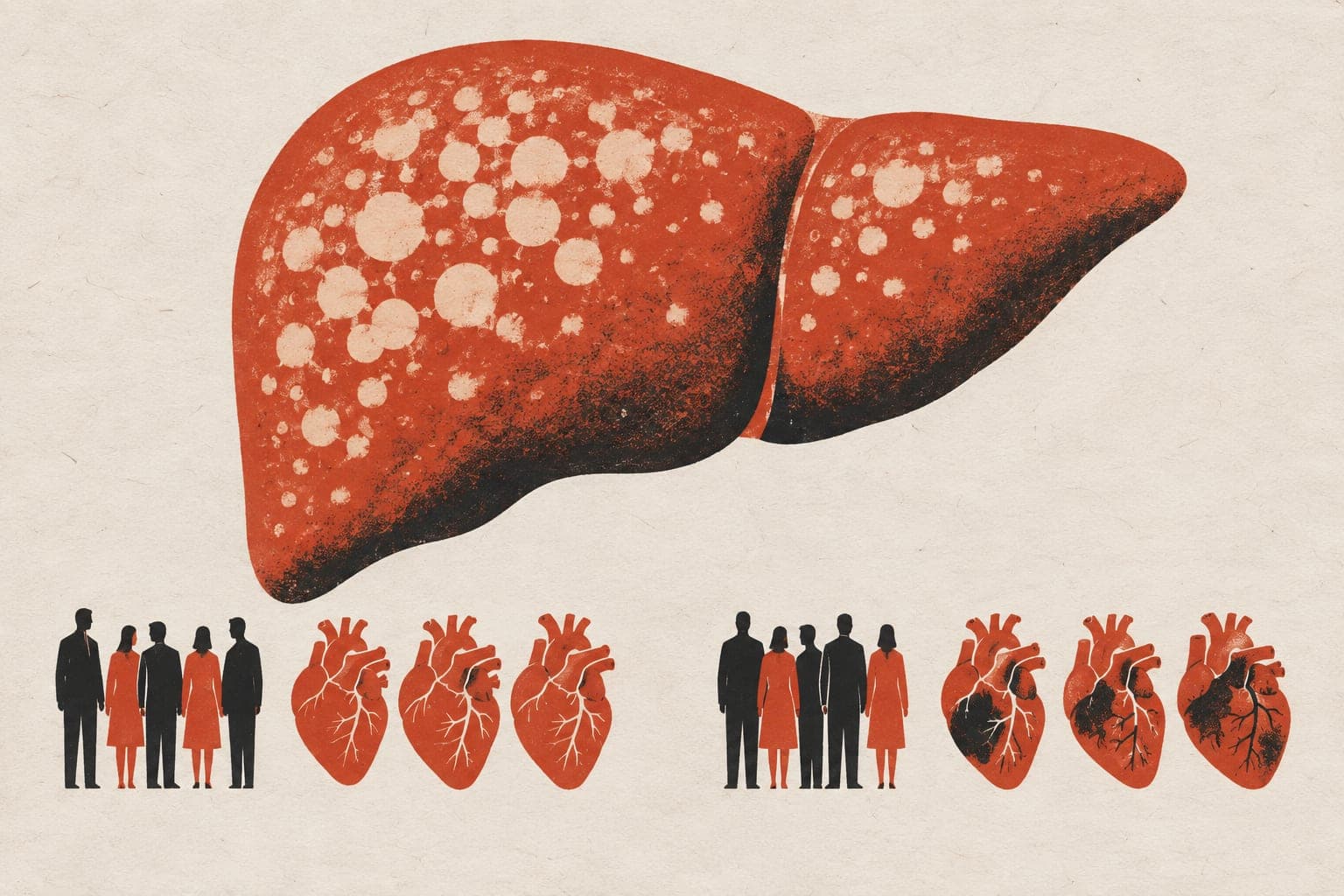
People scoring at least 6 on a diet index focused on gut microbes had 22% lower relative risk than those scoring 0–3.
Our read
Populations- Studied:
- Cohort study of 168,456 UK Biobank participants, against participants with DI-GM scores of 0-3
- What changed:
- Fatty liver disease risk was 22% lower among participants with higher diet scores than those with lower scores
- The catch:
- Diet quality was measured using self-reported diets
- In the record:
- The 43rd paper on dietary index for gut microbiota with results in people; 55 on record in all.
- Why it’s aging research:
- It bears on staying healthy in midlife and later life.
Editor of record: Boris Djordjevic · AgingResearch.News
A prospective observational study followed 168,456 UK Biobank participants without diagnosed cancer or liver disease at baseline. They included 91,751 women and 76,705 men, with a mean age of 55.90 years. Researchers scored self-reported diets using an index based on 12 foods and nutrients linked to gut microbes.
Over a median 12.4 years, researchers recorded 1,519 cases of metabolic dysfunction-associated steatotic liver disease, which involves fat buildup in the liver and metabolic problems. Scores of at least 6 were associated with 22% lower relative risk than scores of 0–3. Higher scores were also linked to lower risks of cirrhosis, or liver scarring, liver cancer and liver-related death. Associations persisted across genetic risk levels. Statistical analyses suggested that measures of biological aging, obesity, inflammation and metabolism partly accounted for the diet–fatty liver association.
Why it matters
The authors proposed that diets beneficial to gut microbes may lower fatty liver risk partly by slowing biological aging. They called for intervention studies to test whether diets aligned with the index can reduce liver disease risk.
Caveats
This observational study relied on self-reported diets and cannot establish that changing diet prevents liver disease or slows aging. The findings do not address treatment of existing liver disease, since participants with liver disease at baseline were excluded.
- Dietary index beneficial to gut microbiota
- Dietary index for gut microbiota
- Inflammation
- Microbiome composition
- Metabolic dysfunction-associated steatotic liver disease
- Humans
The paper
Guangzhou Medical University; First Affiliated Hospital of Guangzhou Medical University
Nutrition & Metabolism, Jun 19, 2026, Open access


Comments
Be the first to comment.