Blood-cell clones linked to complications after lymphoma therapy
An observational study in patients with lymphoma linked expanding blood-cell clones to poorer immune recovery and treatment-related blood cancers after engineered immune-cell therapy.

Edited by Boris Djordjevic · AgingResearch.News
In an observational study, researchers compared patients with lymphoma receiving engineered immune-cell therapy targeting the CD19 protein with matched patients given transplants of their own blood-forming stem cells. Patients receiving the immune-cell therapy had poorer immune recovery and more infections.
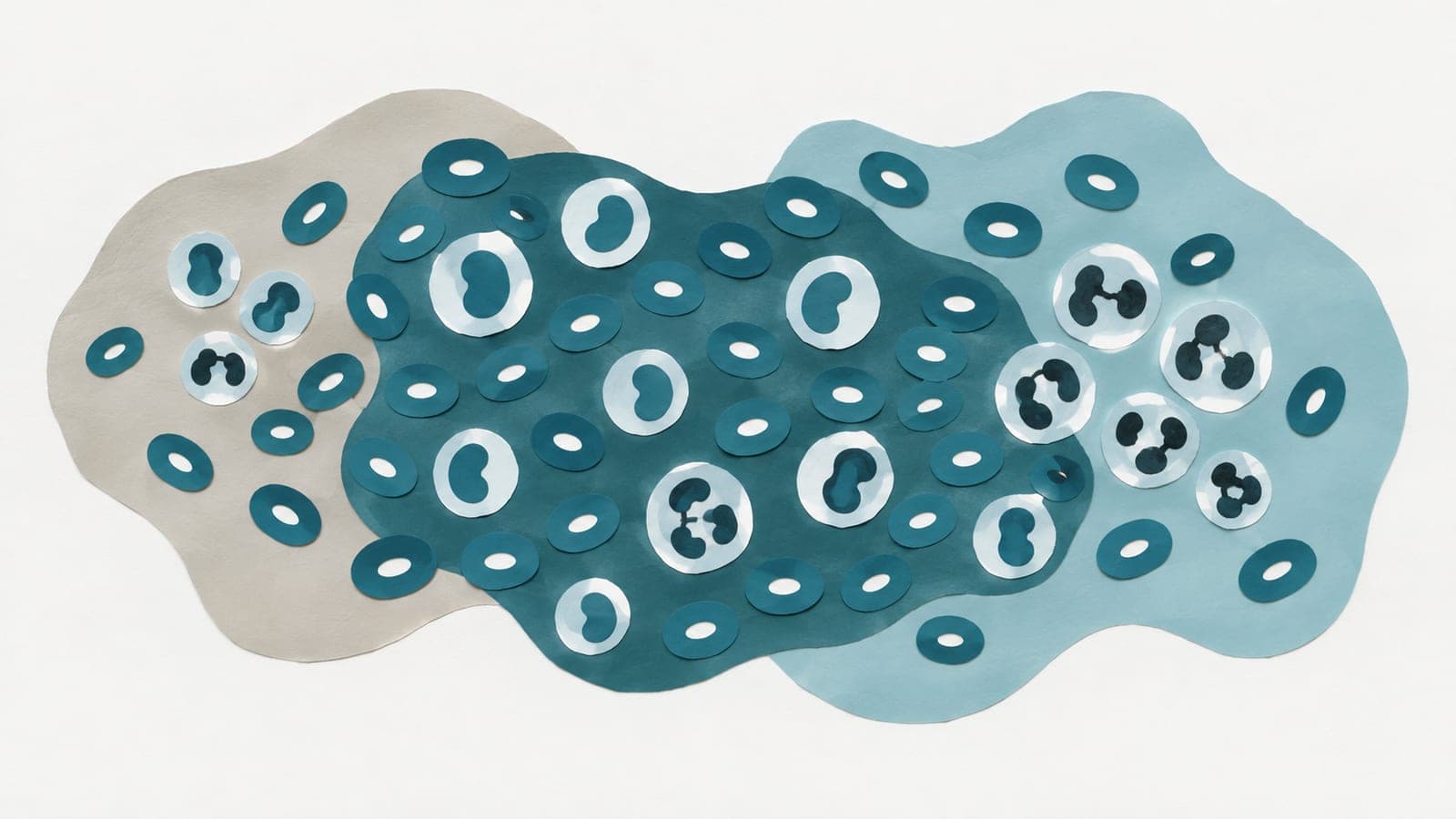
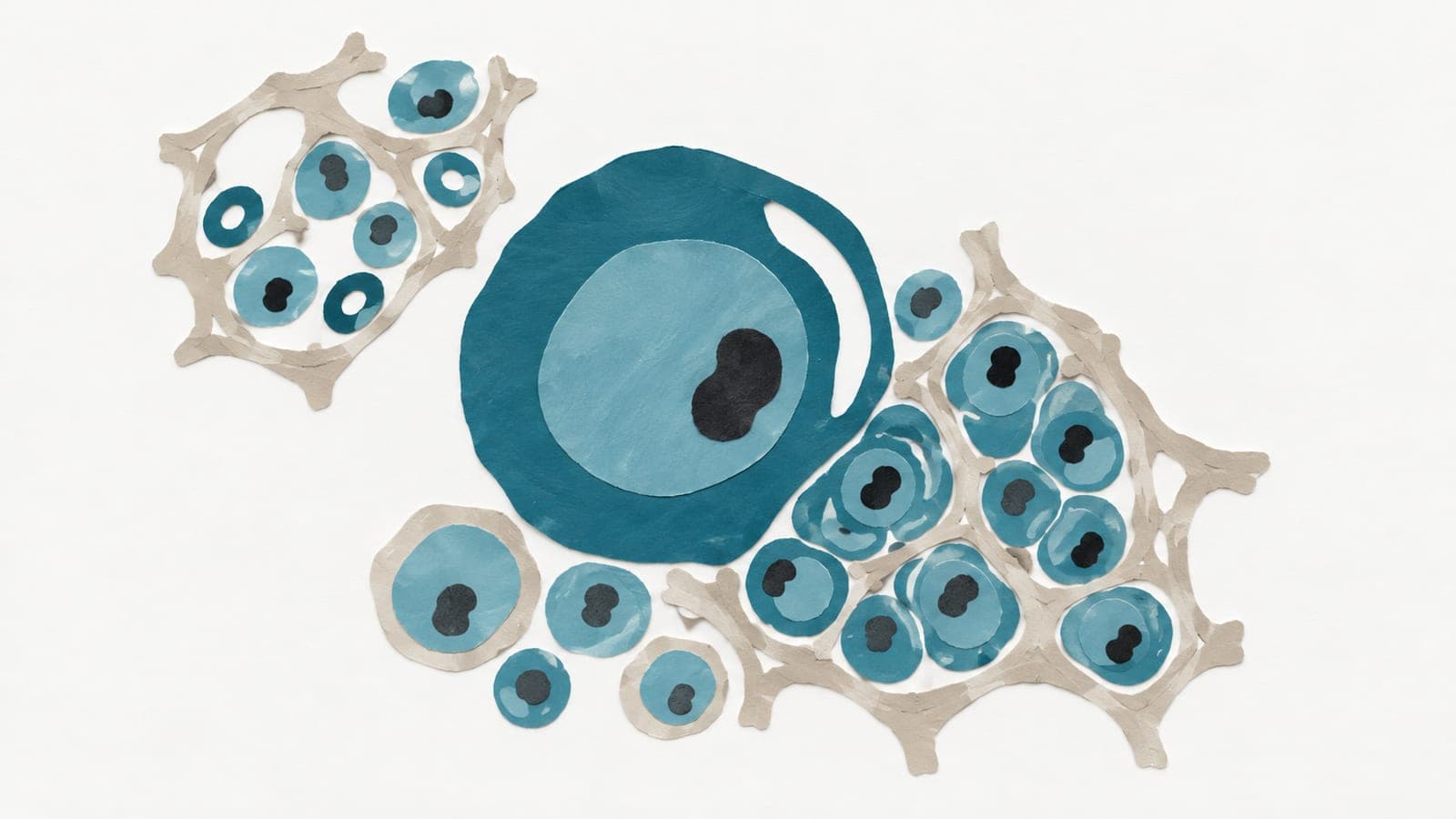
Blood-cell clones—groups descended from genetically altered cells—commonly expanded after the immune-cell infusion. This process, called clonal hematopoiesis, was associated with poorer immune recovery and treatment-related myeloid cancers, which affect blood-forming cells. Bone marrow analysis also linked prolonged low blood-cell counts to inflammation involving interferons, immune-signaling proteins. The authors implicated clone expansion and marrow inflammation in key complications of the immune-cell therapy.
Why it matters
Recovery of the blood and immune systems matters for long-term health after lymphoma therapy. This work points to questions about how altered blood-cell populations relate to immune recovery and secondary blood cancers.
Caveats
The observational comparison cannot establish that expanding clones caused these complications. The abstract does not report patient numbers or follow-up duration.
Where the evidence stands
CD19
- 1 lab in 1 country
- 18 trials
- 2 of 2 findings with company ties
- 18 of 18 trials sponsored by developers of drugs on it
Inflammation
- 1,002 independent labs in 74 countries
- 189 findings against
- Funders: National Institutes of Health and others
- 363 of 4,322 findings with company ties
From the paper
- Participants
To globally profile tMN in our patient cohort, we next screened 533 post-CAR-treated patients treated for NHL at Stanford and found a total of 17 patients with tMN (Fig. 3b).
Results, Post-CAR tMN is similar to post-autoHCT tMN and derives from CH
- Events by group
CAR19 was detected at higher levels in the two product controls (60.38% and 100% of cells; Fig. 6e) and was not detected in one untreated control.
- Limitation
This study has limitations, including pandemic-era COVID-19 exposure, excellent outcomes in the autoHCT cohort and potentially elevated tMN risk due to CD22-targeting CAR T cells in many relapsed patients at Stanford.
Quoted word for word from the full text on nature.com.
Comments
Be the first to comment.