Two proteins reshape DNA marks similarly in mouse cells
Mouse embryonic stem cells reprogrammed with either of two gene-control proteins developed similar cancer-like marking patterns, despite activating different sets of genes.
Our read
Mechanisms- Studied:
- Experiments in mouse embryonic stem cells, against CDX2-reprogrammed mouse embryonic stem cells
- What changed:
- GATA6-reprogrammed mouse cells developed DNA methylation patterns similar to those in CDX2-reprogrammed cells
- The catch:
- The experiment tracked cell-identity changes rather than DNA methylation changes during aging
- In the record:
- One of 7 papers on CDX2 on record: none yet with results in people, 2 in animals.
Editor of record: Boris Djordjevic · AgingResearch.News
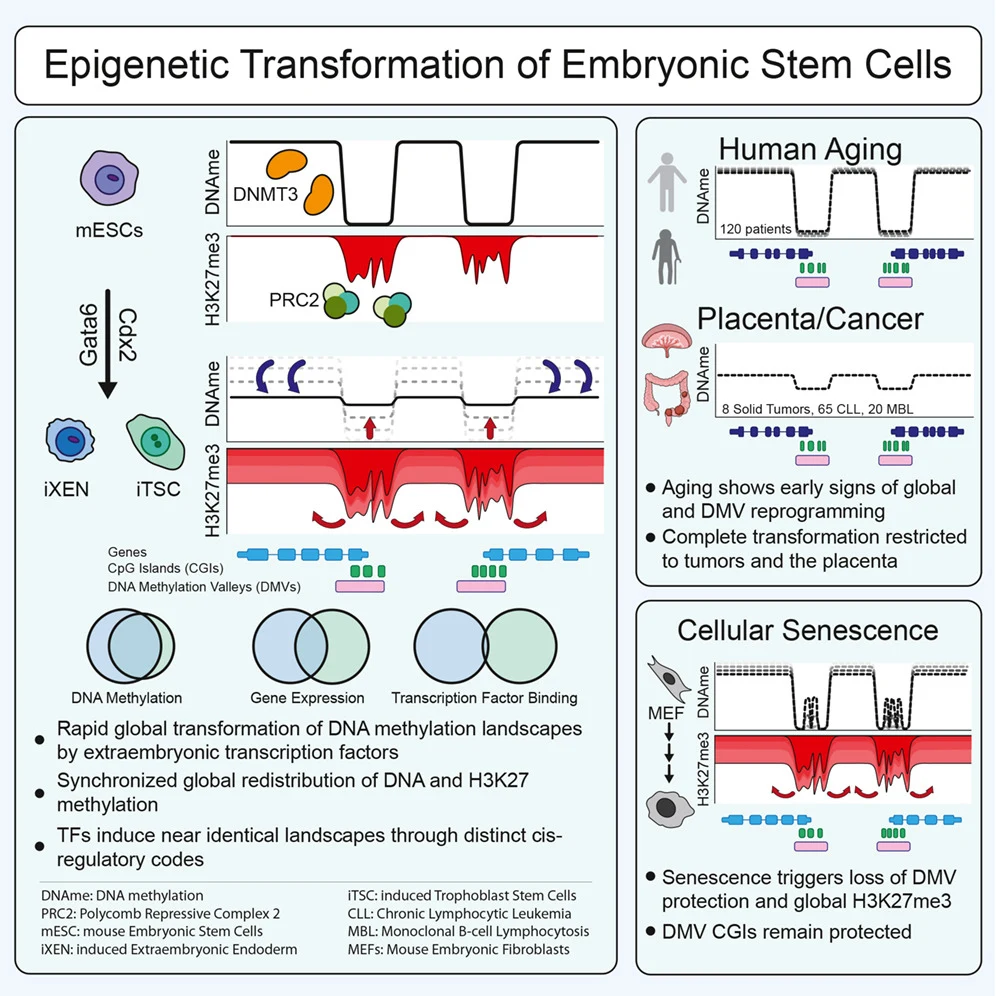
Mouse embryonic stem cells developed similar cancer-like patterns of DNA methylation, chemical marks attached to DNA, when researchers reprogrammed them with either of two gene-control proteins in a laboratory experiment. The proteins, GATA6 and CDX2, pushed the cells toward identities found in tissues outside the embryo. They acted at different DNA sites and activated different sets of genes.
Both proteins nevertheless triggered rapid, coordinated changes across the genome. DNA methylation fell overall, while new methylation appeared in regions regulated by Polycomb proteins, which help control gene activity. Marks on DNA-packaging proteins also shifted. Experiments modeling senescence, a state in which cells stop dividing, and analyses of human aging and cancer groups revealed related, progressively more extensive disruptions of boundaries between differently marked regions.
Why it matters
The authors present this cell system as a way to investigate coordinated changes in DNA and its packaging, including patterns related to those seen in aging and cancer.
Caveats
The mouse-cell experiment changed cell identity rather than following cells as they aged. It did not show whether the same proteins produce the related patterns seen in human aging.
Where the evidence stands
DNA methylation
- 205 independent labs in 39 countries
- 19 findings against
- Funders: National Institutes of Health and others
- 44 of 410 findings with company ties
GATA6
- 5 independent labs in 3 countries
- Funders: National Institute of Arthritis and Musculoskeletal and Skin Diseases and others
Comments
Be the first to comment.