Some age-linked DNA marks in organoids did not rely on DNA copying
A cell experiment using mouse colon organoids linked gains in certain DNA marks to biological aging rather than activation of a cancer-linked mutation.
Limit: The reported comparison manipulated a cancer-linked mutation rather than DNA copying directly
Edited by Boris Djordjevic · AgingResearch.News
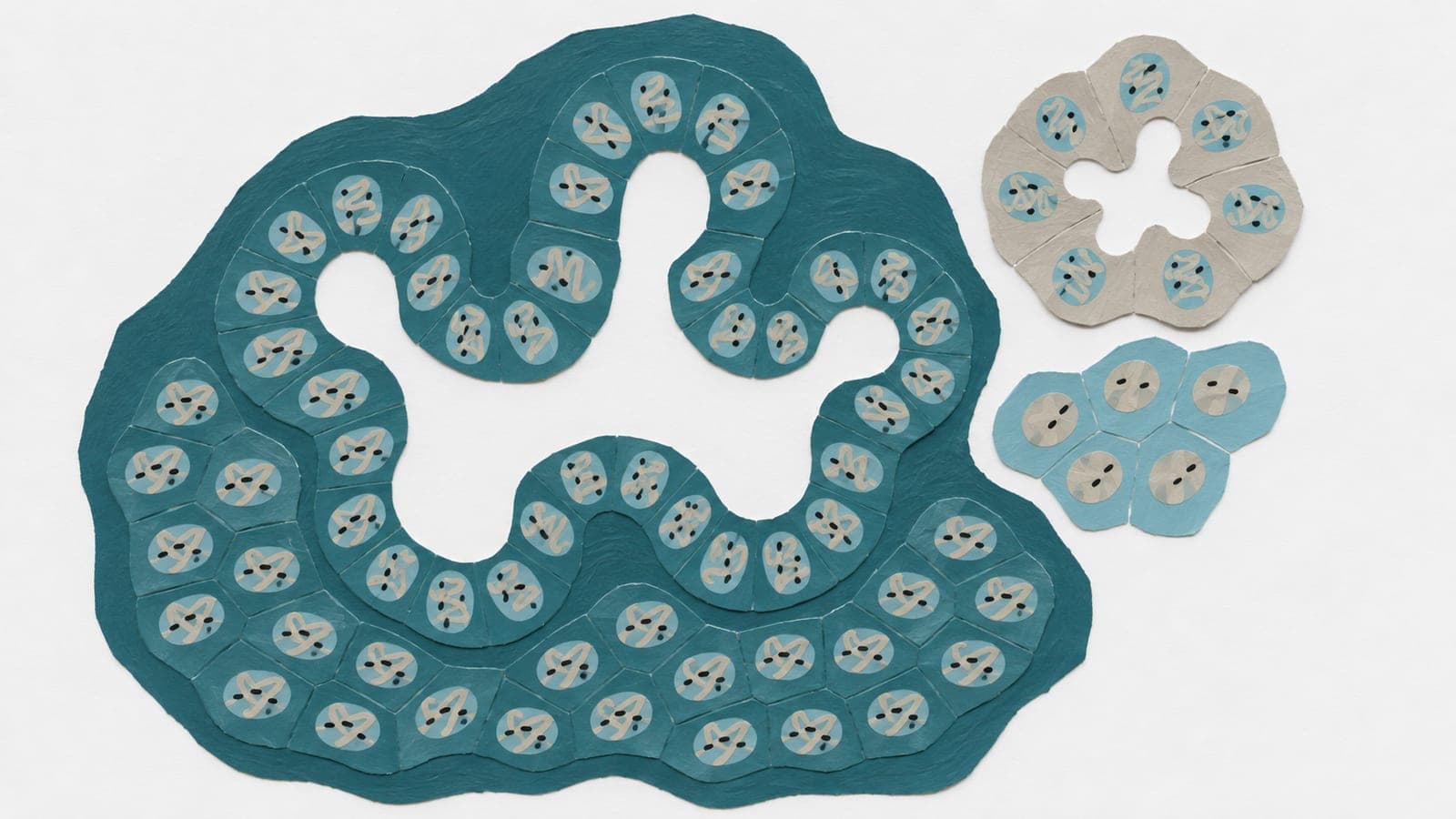
In an experiment in mouse colon organoids, miniature tissue models grown in the lab, researchers tracked DNA methylation, chemical marks on DNA, in cell groups descended from individual stem cells. They compared groups with and without activation of a cancer-linked mutation.
Activating the mutation produced stepwise changes in DNA methylation, while controls changed gradually. But it did not trigger or accelerate methylation gains at certain promoters, gene-control regions marked by Polycomb, a group of gene-silencing proteins. These gains instead tracked with “biological aging” independently of DNA copying. Analyses of separate aging, cancer and cell-line datasets supported this finding. The authors concluded that cancer-linked signaling primarily selected and expanded cell groups with pre-existing, age-associated changes in DNA marking, rather than instructing new methylation.
Why it matters
DNA methylation changes occur early in cancer. The authors say understanding their origins has implications for interpreting cancer biomarkers and identifying aging-associated processes to target for early intervention.
Caveats
The central experiment used mouse organoids grown in the lab, not people. The work is a preprint and has not been peer-reviewed.
Where the evidence stands
DNA methylation
- 193 independent labs in 37 countries
- 18 findings against
- Funders: National Institutes of Health and others
- 41 of 380 findings with company ties
BRAF
- 15 independent labs in 8 countries
- 1 finding against
- 39 trials, 16 with no results posted
- Funders: National Cancer Institute and others
- 1 of 30 findings with company ties
- 39 of 39 trials sponsored by developers of drugs on it
The paper
Polycomb Marked Promoter Methylation Gains in Aging and Cancer are Independent of Replication
Johns Hopkins University (School of Medicine)
bioRxiv, Nov 3, 2026, Open access, CC BY-NC, Preprint, not peer-reviewed

Comments
Be the first to comment.