Atlas maps reproductive maturation and aging in male monkeys
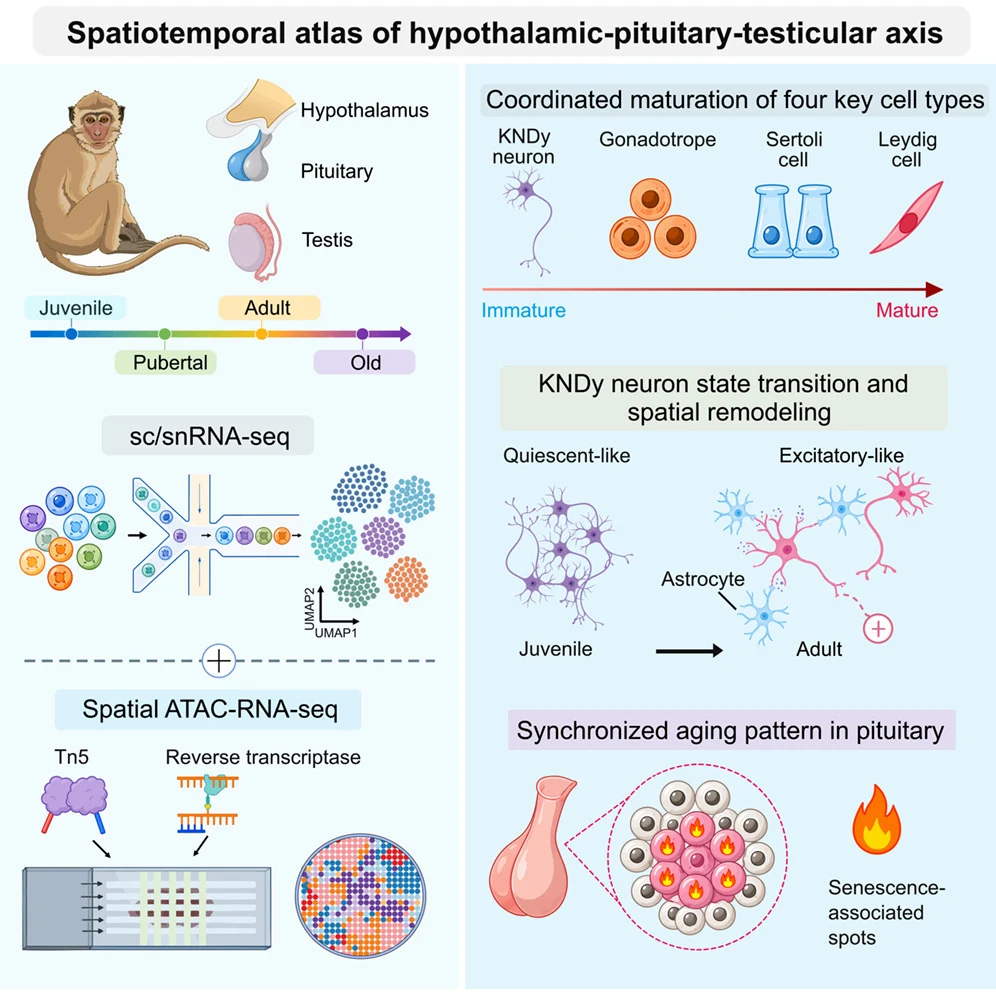
The atlas mapped gene activity and cell locations in male monkeys’ reproductive hormone system at juvenile, pubertal, adult and old stages.
Our read
AI & data- Studied:
- Cross-sectional study of male cynomolgus monkeys
- What changed:
- Gene activity and cell locations differed across maturation and aging stages in male monkeys’ reproductive hormone system
- The catch:
- Effects of molecular changes on reproductive maturation and aging were not measured
Editor of record: Boris Djordjevic · AgingResearch.News
Male cynomolgus monkeys at juvenile, pubertal, adult and old stages showed differences across their reproductive hormone system in an atlas study. The atlas covered the hypothalamus, a brain region, the pituitary gland and the testes. Researchers combined several sequencing methods to map gene activity and cell locations.
The atlas identified stage-associated changes in cell populations across these organs. Some hypothalamic neurons showed gene-activity states resembling either quiet or excited states. Their spatial arrangement with supporting cells also changed, which may correlate with reproductive maturation. During aging, the hypothalamus and testes showed changes associated with senescence, a state in which cells stop dividing. In the pituitary, different groups of hormone-producing cells shared age-associated changes in gene activity.
Why it matters
Male reproductive maturation depends on coordination among the brain, pituitary gland and testes. The atlas provides a resource for investigating how this system changes with age and in related diseases.
Caveats
Mapping molecular patterns and cell locations does not show which changes control reproductive maturation or aging. The atlas covered male cynomolgus monkeys, not people.

Comments
Be the first to comment.