Food deserts linked to higher death rates in UK Biobank
For each standard-deviation increase in area food-desert scores, the death-rate ratio was 1.06 after initial adjustments; the association weakened with fuller adjustment.
Limit: Area-level food-desert scores do not measure each participant’s food access
Edited by Boris Djordjevic · AgingResearch.News
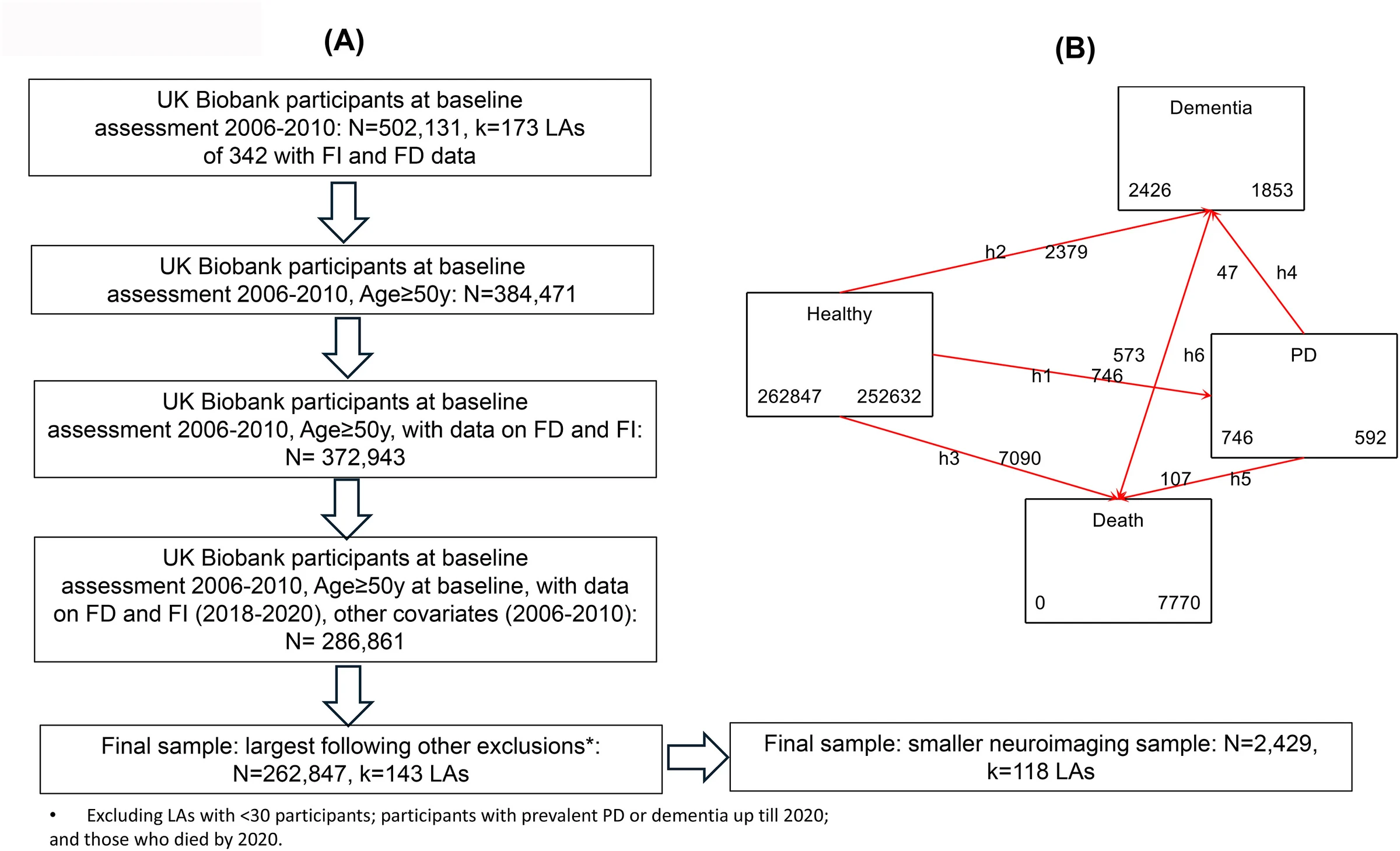
An observational study included 262,847 UK Biobank participants aged 50 or older at enrollment in 2006–2010. Researchers assessed food deserts—areas with limited access to healthy food—at the local-authority level. They tracked deaths from January 1, 2020, to January 1, 2024.
Higher food-desert scores were linked to higher mortality after accounting for demographics and deprivation, but the association weakened after fuller adjustment. Score increases were measured in standard deviations, which describe how widely scores varied. A death-rate ratio above one indicates a higher rate. In a brain-scan subgroup of 2,429 participants, higher scores were also linked to faster decline in white matter structure, particularly among women. White matter is the brain tissue that connects different regions.
Why it matters
The study addresses whether local food environments are linked to differences in brain health and survival as people age.
Caveats
This observational analysis cannot establish cause and effect, and area-level scores do not measure each participant’s food access. The brain-scan associations did not remain statistically significant after correction for multiple comparisons.


Comments
Be the first to comment.