Physical and mental deficits linked to diabetes progression
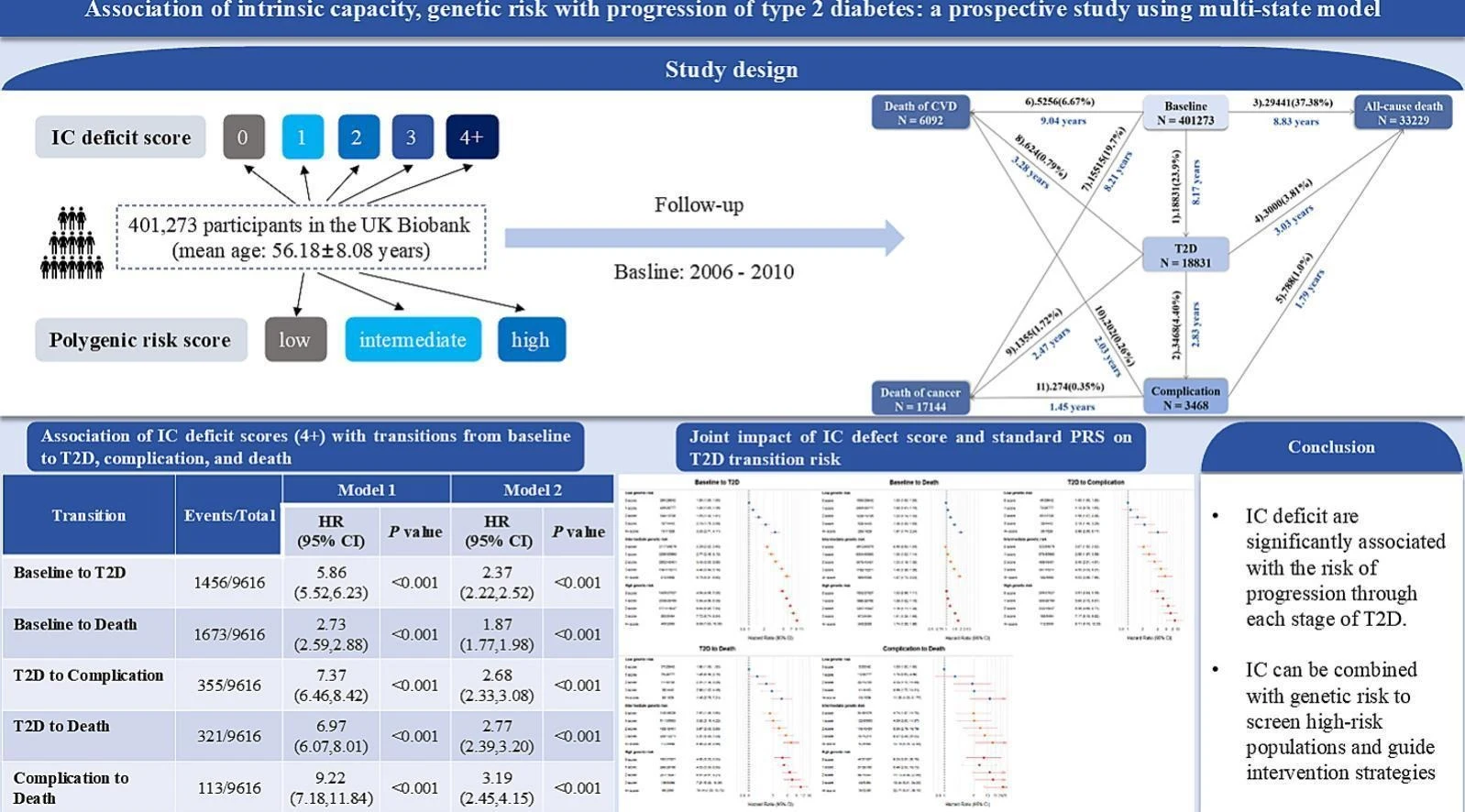
Four or more physical and mental deficits were linked to higher diabetes risk than none over 13.63 years’ median follow-up (hazard ratio 2.37).
Our read
Populations- Studied:
- Cohort study of 401,273 UK Biobank participants without type 2 diabetes, median 13.63 years
- What changed:
- Diabetes risk was higher with ≥4 physical and mental deficits than with none (hazard ratio 2.37)
- The catch:
- Poorer health at enrollment could explain both capacity deficits and later diabetes risk
Editor of record: Boris Djordjevic · AgingResearch.News
Among 401,273 UK Biobank participants without type 2 diabetes at enrollment, a prospective cohort study linked deficits in intrinsic capacity—a person’s combined physical and mental abilities—to diabetes onset and progression. Researchers grouped participants by deficit scores of zero, one, two, three, or at least four. They followed participants for a median of 13.63 years, using models to track diabetes, related complications and death.
Compared with no deficits, at least four deficits were associated with greater risk of developing diabetes and progressing from diabetes to complications (hazard ratio 1.36 for the latter). Higher deficit scores were also associated with higher risks of death before and after diabetes developed. Participants with at least four deficits and high genetic risk had the greatest risk of developing diabetes.
Why it matters
Physical and mental abilities are central to healthy aging. The authors suggest that assessing them alongside genetic risk may improve early identification of people at high risk of diabetes and support personalized prevention.
Caveats
Poorer health at enrollment could have contributed both to capacity deficits and to later diabetes risk. Findings on progression came from participants who developed diabetes during follow-up, not people who already had it at enrollment.
Comments
Be the first to comment.