Stopping statins linked to more hospital stays in older adults
Stopping statins was linked to a hospitalization risk 37.6 per 1,000 patients higher at one year than continuing them.
Edited by Boris Djordjevic · AgingResearch.News
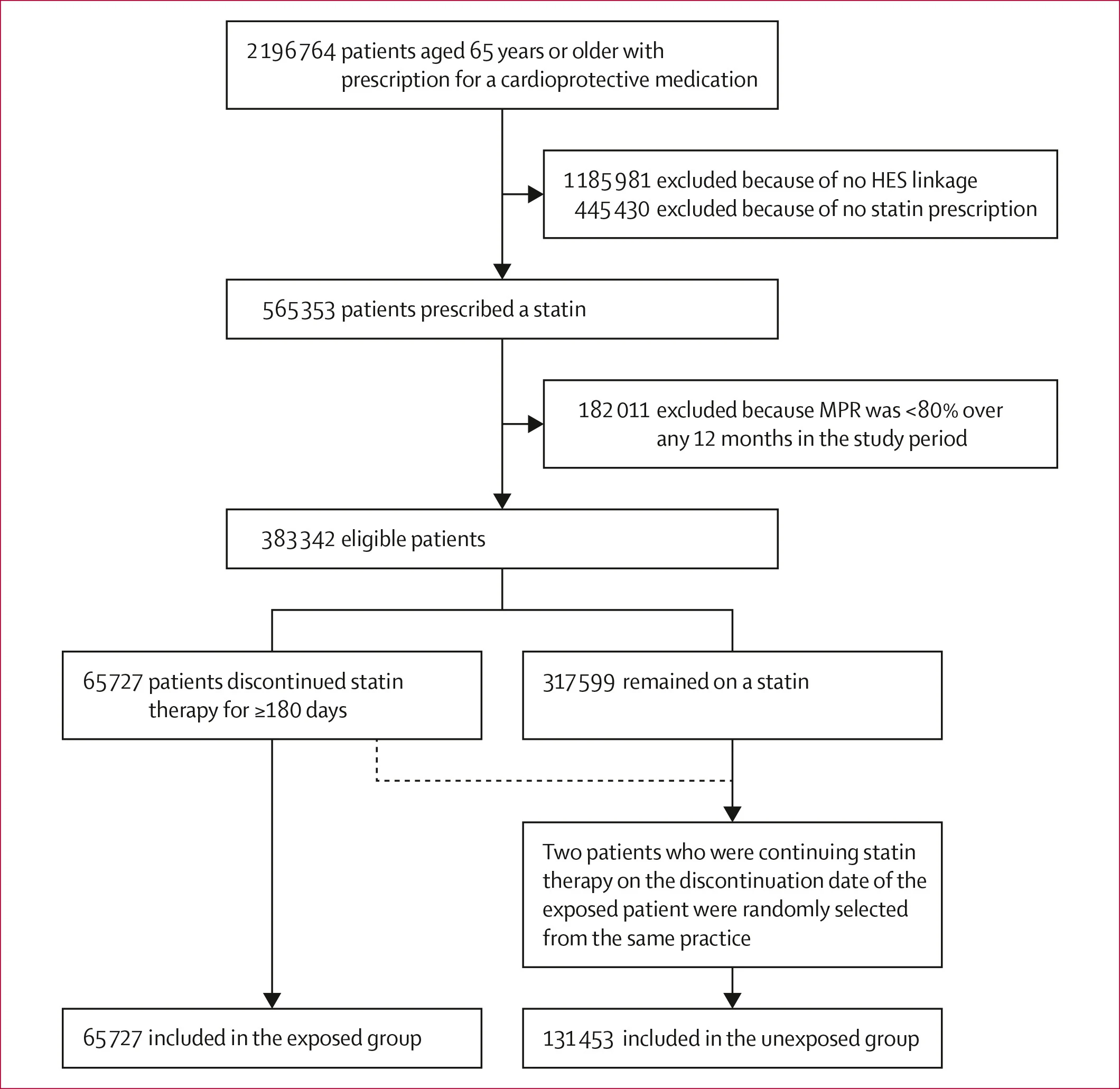
In an English retrospective observational cohort study, researchers compared 65,727 persistent users of statins, cholesterol-lowering medicines, aged 65 or older who stopped with 131,453 who continued. Participants averaged 75.9 years of age; 49.9% were female. Stopping meant no new prescription within 180 days after the last prescription expired. Follow-up averaged 4.1 years.
The study counted hospital admissions for any cause lasting at least 24 hours. At five years, stopping was associated with a hospitalization risk 36.9 per 1,000 patients higher than continuing. The relative association weakened with increasing frailty, a reduced ability to withstand illness or other stress, at both one and five years. Stopping was not associated with increased hospitalization risk among people with severe frailty or dementia at either time point.
Why it matters
Statins are often stopped as people age or become frail. The authors said these findings could inform individualized decisions about stopping them.
Caveats
Other differences between people who stopped and continued statins could have influenced the results, so this observational study cannot establish cause and effect. The findings concern persistent statin users aged 65 or older, not younger adults or people starting statins.



Comments
Be the first to comment.