Hip fractures linked to higher one-year death rates than pelvic ones
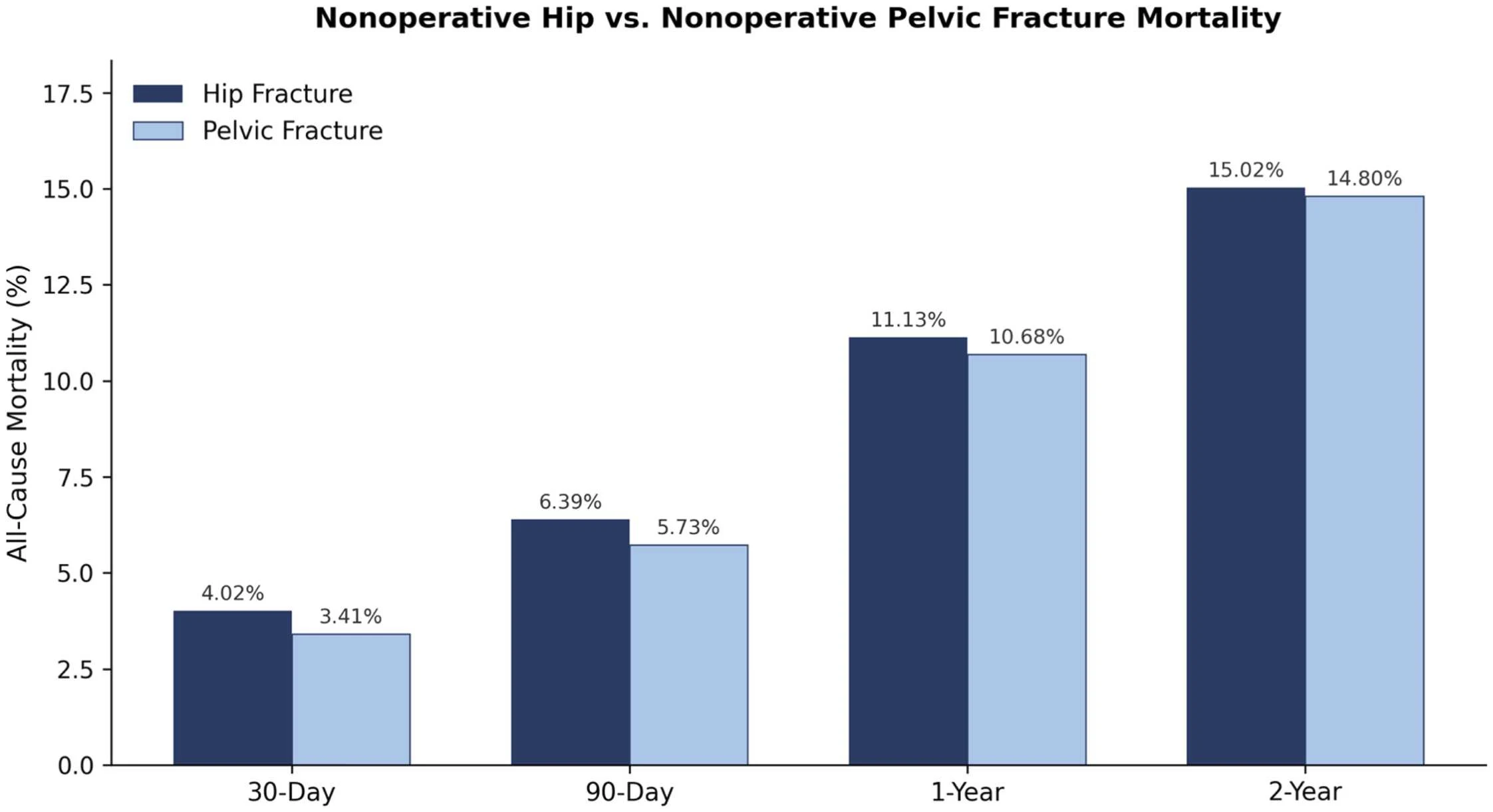
Among adults 55 and older managed without surgery, 11.13% died within a year after hip fractures, compared with 10.68% after pelvic ring fractures.
Our read
Populations- Studied:
- Cohort study of 255,202 people (2 years)
- In the record:
- The 634th paper on hip fracture with results in people; 2,831 on record in all.
- Why it’s aging research:
- It measures an outcome that worsens with age.
Editor of record: Boris Djordjevic · AgingResearch.News
Adults aged 55 and older with hip or pelvic ring fractures were compared in a retrospective cohort study using the TriNetX network. Researchers matched patients on demographic and clinical characteristics. Each fracture group included 255,202 patients managed without surgery and 11,448 managed with surgery.
Among patients managed without surgery, one-year deaths from any cause reached 11.13% after hip fractures versus 10.68% after pelvic fractures. Among patients managed with surgery, the corresponding rates were 8.84% and 5.94%. The early pattern differed: at 30 days, mortality among surgical patients was higher after pelvic fractures than hip fractures, at 3.11% versus 2.49%. Male sex, older age, diabetes and chronic kidney disease were also associated with higher mortality.
Why it matters
Care approaches for pelvic fractures in older adults remain less defined than those for hip fractures. The authors called for further evaluation of standardized care for these high-risk injuries.
Caveats
The retrospective comparison may still reflect differences in health or injury severity not fully accounted for by matching. The findings concern adults aged 55 and older, not younger fracture patients.
Where the evidence stands
Surgery
- 130 independent labs in 34 countries
- 28 findings against
- Funders: National Institute on Aging and others
- 22 of 227 findings with company ties

Comments
Be the first to comment.