Pelvic fracture surgery linked to lower two-year mortality
An observational study of 5,314 matched older adults per group linked surgery to more complications; mortality associations did not persist after further adjustment.
2 years
Edited by Boris Djordjevic · AgingResearch.News
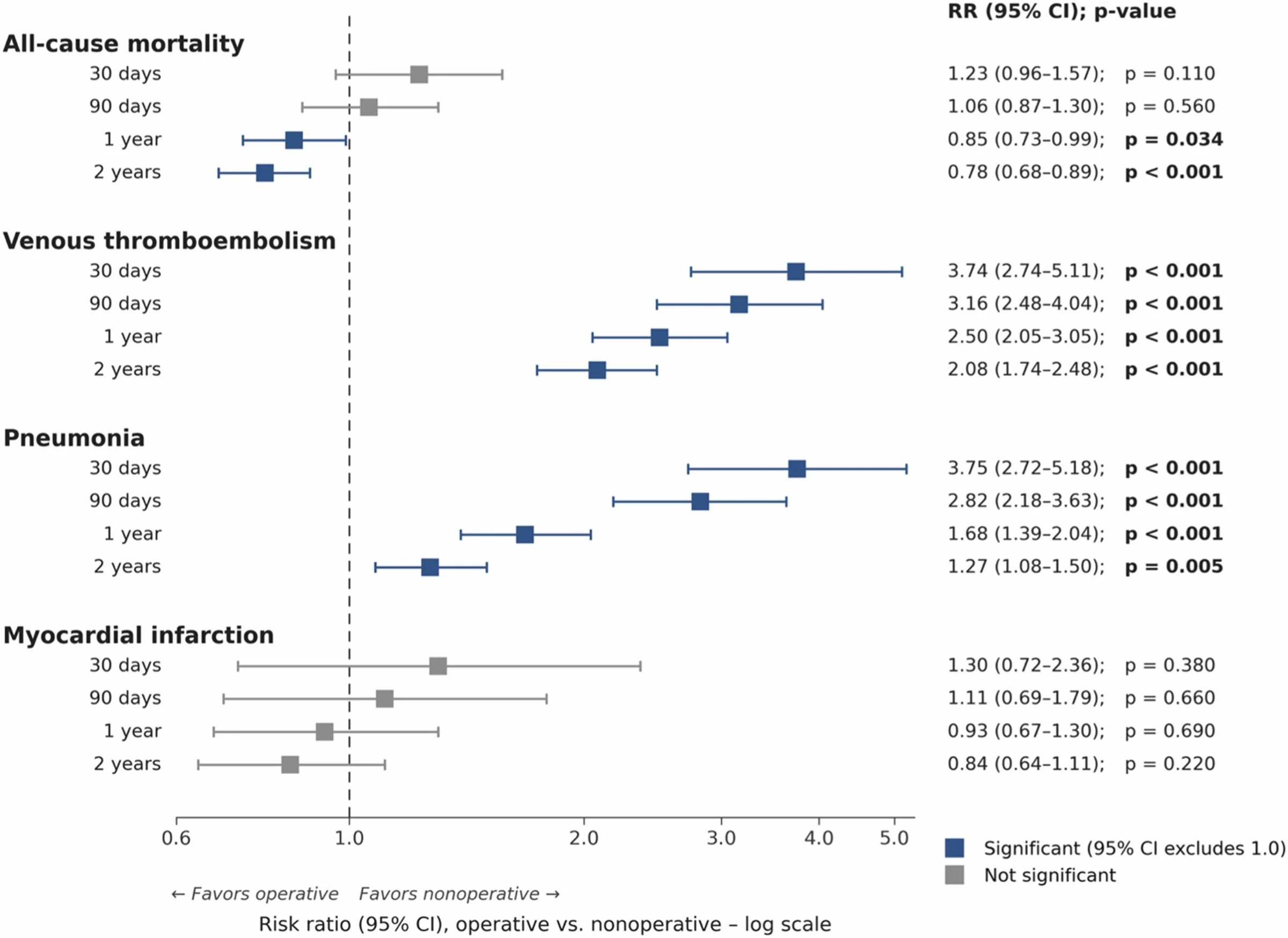
In a retrospective observational study, researchers compared adults aged 55 or older with pelvic ring fractures, breaks in the bony ring of the pelvis. Using the TriNetX database, they matched 5,314 people who had surgery with 5,314 managed without surgery.
Mortality did not differ at 30 or 90 days. Surgery was associated with lower mortality at one and two years. However, the authors reported that neither association persisted after further statistical adjustment. Blood clots in veins and pneumonia were more common in the surgery group at all four time points. Heart attack rates did not differ between groups.
Why it matters
Pelvic ring fractures are increasingly common in aging populations and can bring substantial loss of function. The authors called for prospective trials assessing fracture characteristics, frailty and function to help guide care.
Caveats
This observational comparison cannot establish that surgery caused the differences. Its findings do not establish outcomes for adults younger than 55.
The paper
Virginia Commonwealth University
Injury, Sep 12, 2026


Comments
Be the first to comment.