Blood proteins offer clues to air pollution’s diabetes link
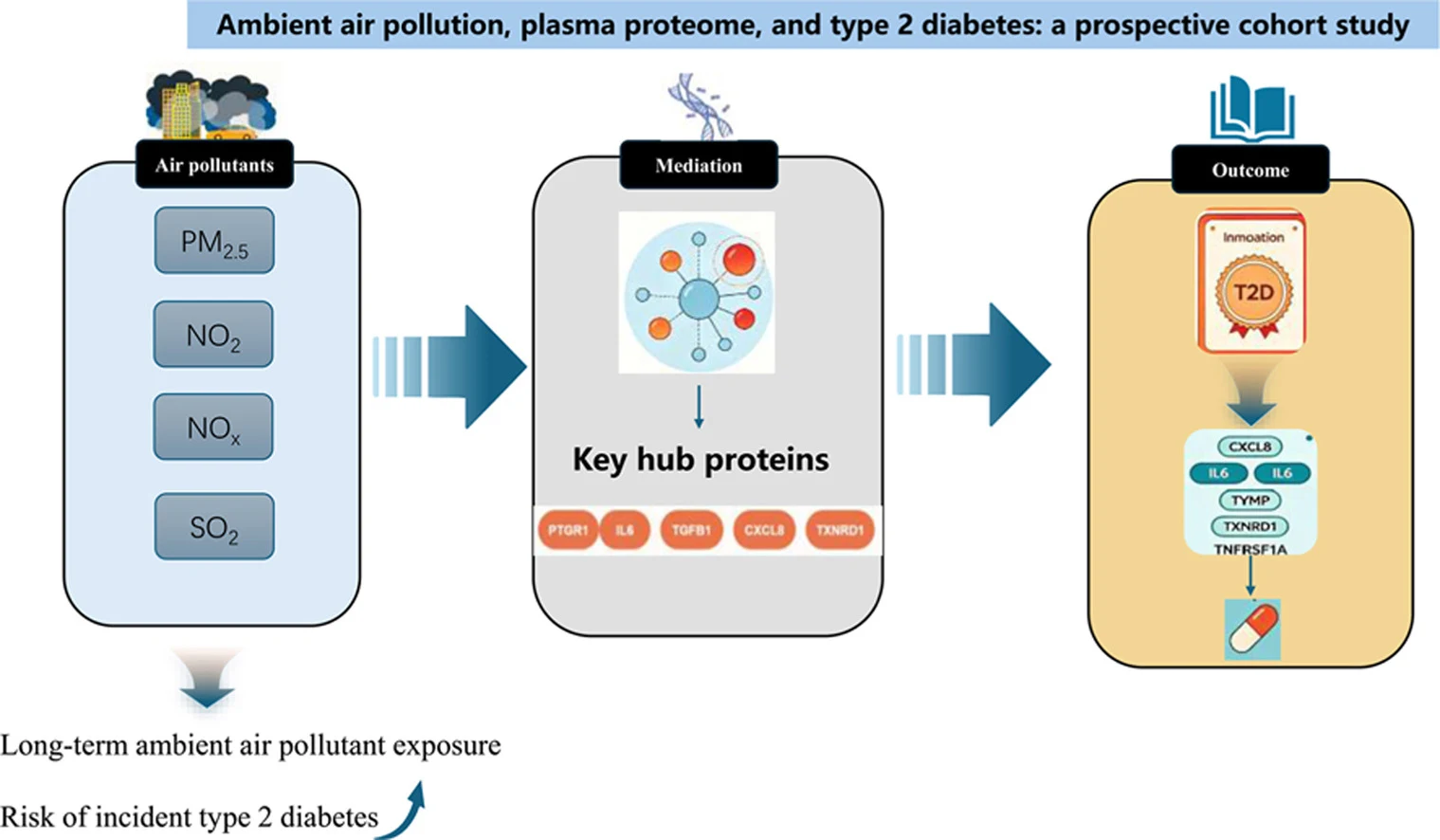
A blood-protein score statistically accounted for 31.69% of the association between fine-particle pollution and type 2 diabetes in a cohort of 44,917 people.
Our read
Mechanisms- Studied:
- Cohort study of 44,917 people (13.64 years)
- In the record:
- The 502nd paper on fine particulate matter with results in people; 693 on record in all.
- Why it’s aging research:
- It bears on staying healthy in midlife and later life.
Editor of record: Boris Djordjevic · AgingResearch.News
Among 44,917 participants in a prospective observational cohort, researchers analyzed 2,911 proteins in plasma, the liquid part of blood. They estimated long-term exposure to fine particles, nitrogen dioxide, nitrogen oxides and sulfur dioxide. Over 13.64 years of follow-up, 3,193 participants developed type 2 diabetes.
For an increase equal to the gap between the 25th and 75th percentiles of exposure, relative diabetes risk was 5%–14% higher, depending on the pollutant. Statistical analyses identified proteins that potentially helped account for these links. A combined protein score accounted for 31.69% of the fine-particle association. The implicated proteins were involved in inflammation and immune activity. Database searches identified 13 candidate protein targets with approved drugs. Computer modeling suggested that five had potential to bind small molecules.
Why it matters
Type 2 diabetes is an aging-related health concern. The candidate proteins offer leads for investigating its links to environmental exposures and possible prevention targets.
Caveats
People exposed to more pollution may also have differed in other diabetes-related ways, so the analyses did not establish that the proteins caused diabetes. Database searches and computer modeling did not test whether targeting these proteins prevents diabetes.



Comments
Be the first to comment.