Flame retardant exposure in male mice shortened offspring lives
After six months of oral exposure in male mice, their first-generation offspring developed aging-like tissue changes and had shorter lifespans.
Our read
Mechanisms- Studied:
- Experiments in offspring of male mice, against offspring of unexposed male mice (Dose-response)
- What changed:
- Offspring of exposed male mice had shorter lifespans than offspring of unexposed males
- The catch:
- Mice received controlled oral doses rather than ordinary environmental exposure
Editor of record: Boris Djordjevic · AgingResearch.News
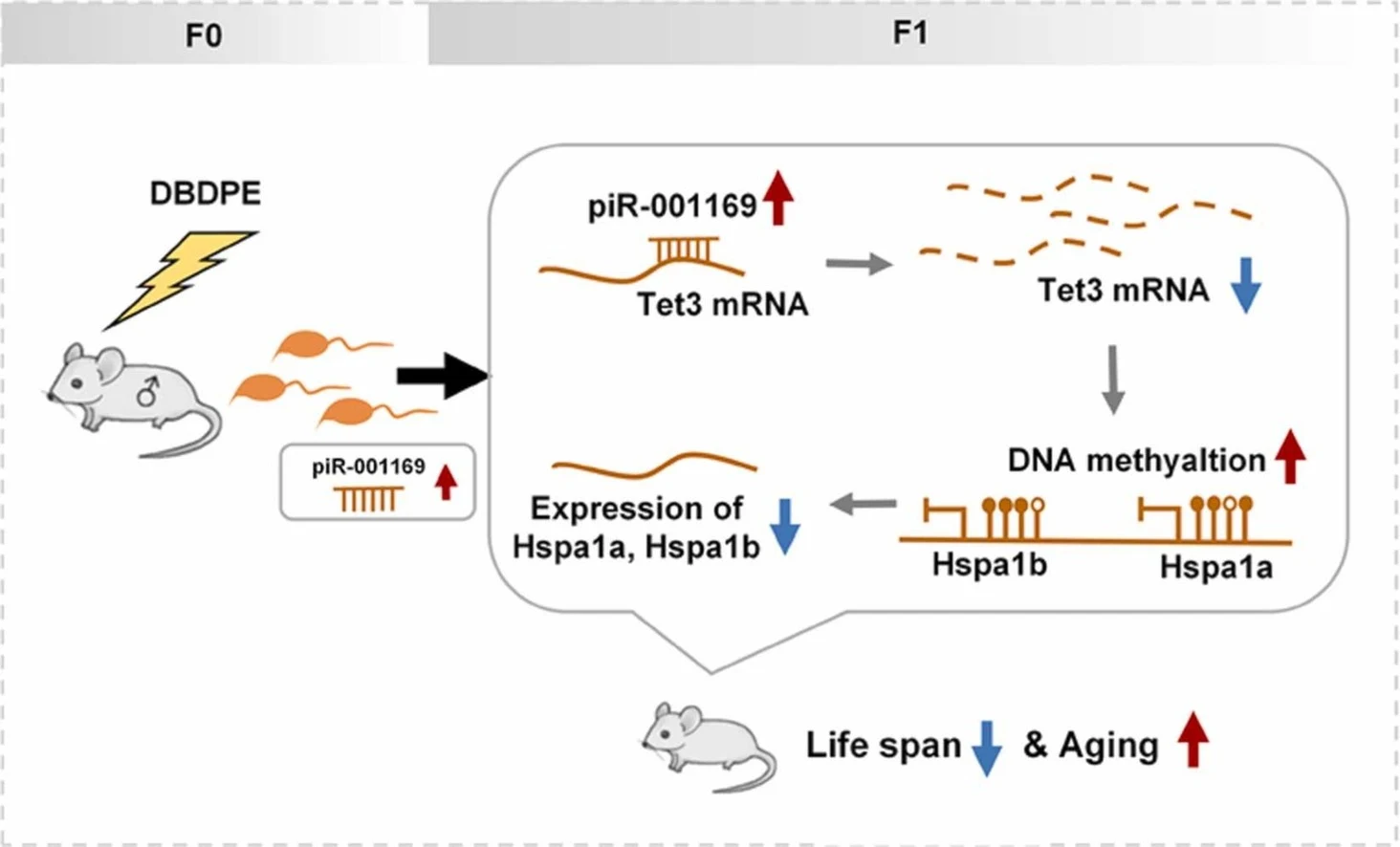
Male mice received decabromodiphenyl ethane, a flame retardant, by mouth for six months in an animal experiment. Doses were 0, 0.01, 0.1, 1 or 10 milligrams per kilogram of body weight per day. Exposure impaired sperm quality and reduced fertilization capacity. Their first-generation offspring developed aging-like tissue changes and had shorter lifespans.
Changes in small RNA molecules in sperm pointed to a potential mechanism involving altered gene activity in early embryos. Offspring tissues produced less heat shock protein 70, which helps cells maintain their proteins, alongside more protein clumping and tissue injury. Restoring this protein partly eased the disruption of protein maintenance and aging-related tissue changes. The aging-related changes were not detectable in the second generation of offspring.
Why it matters
The experiment addresses how a father’s environmental exposure may affect aging-related health in his offspring, including the role of cells’ protein-maintenance systems.
Caveats
The experiment tested controlled oral exposure in mice, so it does not show whether environmental exposure in human fathers would have similar effects in their children.
- Decabromodiphenyl ethane
- DNA methylation
- Epigenetic regulation of gene expression
- Hsp70
- Hspa1a and Hspa1b promoter methylation
- Mice
The paper
Ecotoxicology and Environmental Safety, Nov 2026, CC BY-NC-ND


Comments
Be the first to comment.