PRSS1 gene-linked pancreatitis tied to high pancreatic cancer risk
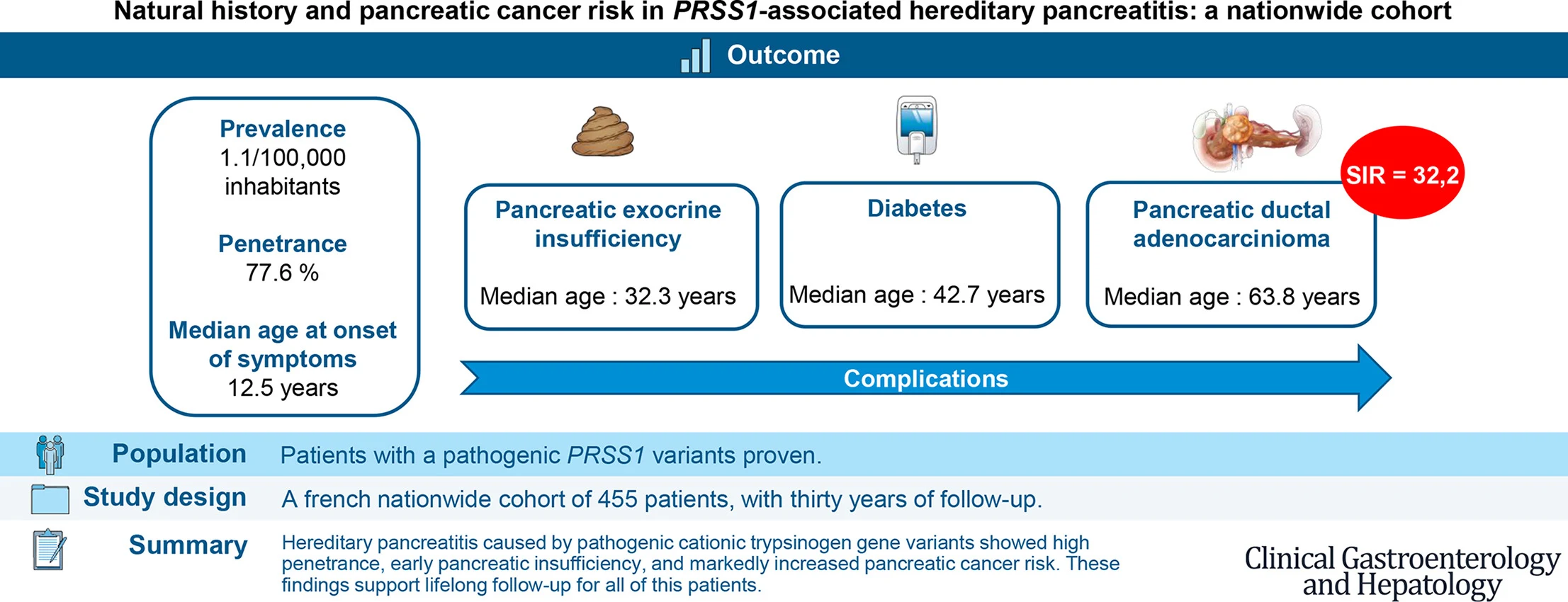
Pancreatic cancer risk reached 2.0% by age 50 and 5.9% by age 60 in a French nationwide cohort.
Our read
Populations- Studied:
- Cohort study of 455 carriers of PRSS1 variants associated with hereditary pancreatitis
- What changed:
- Pancreatic cancer incidence among carriers was 32.2 times the expected national rate after accounting for age and sex
- The catch:
- Cancer risk estimates exclude identified carriers without follow-up
- In the record:
- One of 9 papers on PRSS1 on record: 3 with results in people.
Editor of record: Boris Djordjevic · AgingResearch.News
In France, 455 of 718 carriers of PRSS1 gene variants associated with hereditary pancreatitis, an inherited condition that inflames the pancreas, had follow-up data in a retrospective nationwide cohort study. The carriers were identified between 1996 and 2025. Symptoms began at a median age of 12.5 years.
Twenty-two people developed pancreatic ductal adenocarcinoma, a type of pancreatic cancer, at a median age of 63.8 years. Its incidence was 32.2 times the rate expected from national population data after accounting for age and sex. By age 60, the cumulative risk of the pancreas not supplying enough digestive enzymes reached 36.2%, while diabetes risk reached 27.2%.
Why it matters
For people with PRSS1-associated hereditary pancreatitis, the authors said the findings support lifelong follow-up and pancreatic cancer surveillance that accounts for increasing risk with age and differences in age at diagnosis.
Caveats
Follow-up data were available for 455 of the 718 identified carriers, so the estimates may not represent carriers without follow-up. The findings concern people carrying these hereditary-pancreatitis variants, not the general population.
- Hereditary pancreatitis
- Pancreatic ductal adenocarcinoma
- Pancreatic exocrine insufficiency
- Diabetes mellitus
- Humans
The paper
Clinical Gastroenterology and Hepatology, Nov 2026
Comments
Be the first to comment.