Human brain map finds six zones with distinct gene activity
An observational analysis mapped gene activity in 1.1 million cells from 19 deceased donors, revealing six zones within a region involved in movement, thinking and emotion.
Our read
AI & data- Studied:
- Cross-sectional study of 19 deceased human donors
- What changed:
- The striatum contained six zones with distinct nerve-cell populations
- The catch:
- Only 19 deceased donors contributed to the spatial map
Editor of record: Boris Djordjevic · AgingResearch.News
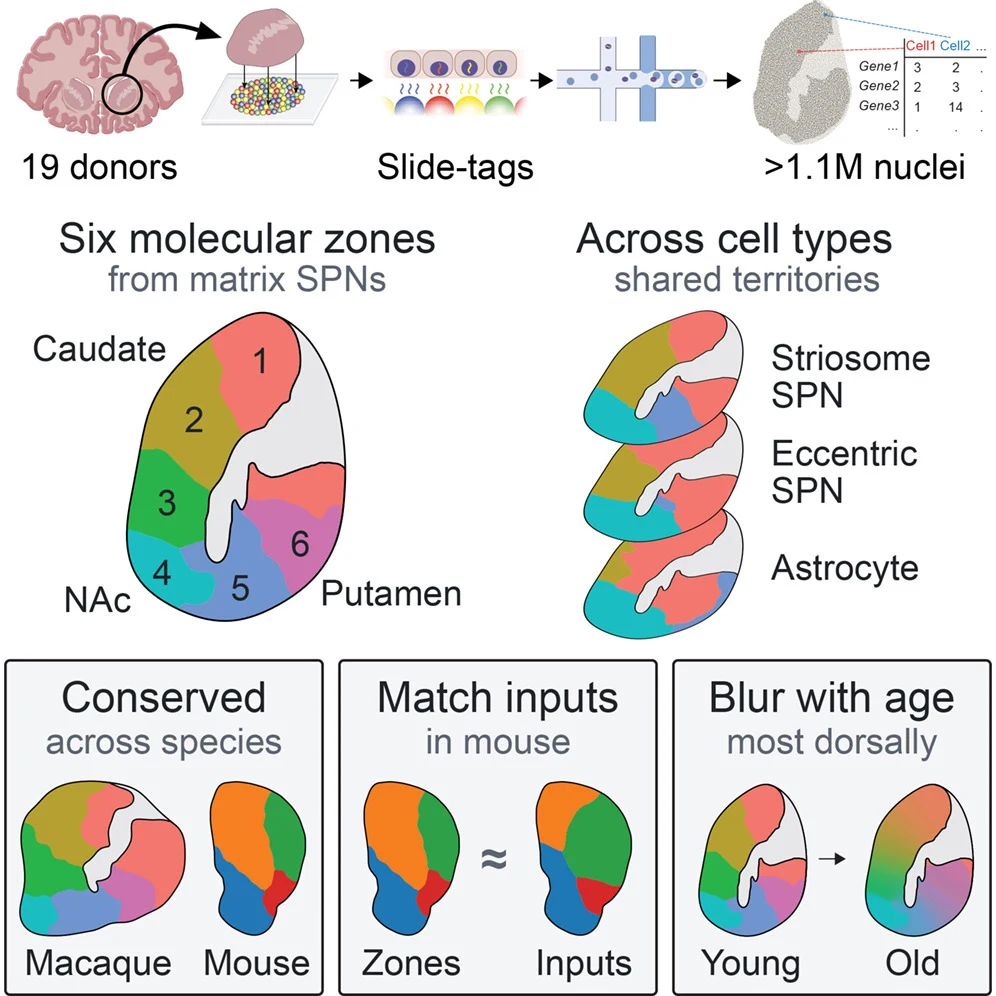
The human striatum, a brain region involved in movement, thinking and emotion, was examined in samples from 19 deceased donors in an observational study. The team mapped gene activity in 1.1 million cells while recording their locations. They identified six zones, each defined by distinct populations of nerve cells.
The team then inferred which zones cells belonged to in a separate gene activity dataset from 131 donors. Dorsal zones, in the upper part of the striatum, showed the greatest age-related changes in gene activity. The differences in gene activity that distinguished the zones also weakened with age.
Why it matters
The striatum’s molecular map offers a framework for investigating how the organization of a region supporting movement, thinking and emotion relates to adult aging.
Caveats
The aging analysis inferred cells’ zones rather than measuring their locations. Comparisons across deceased donors cannot show how the same person’s striatum changed over time.


Comments
Be the first to comment.