Human brain cell makeup and gene activity varied among donors
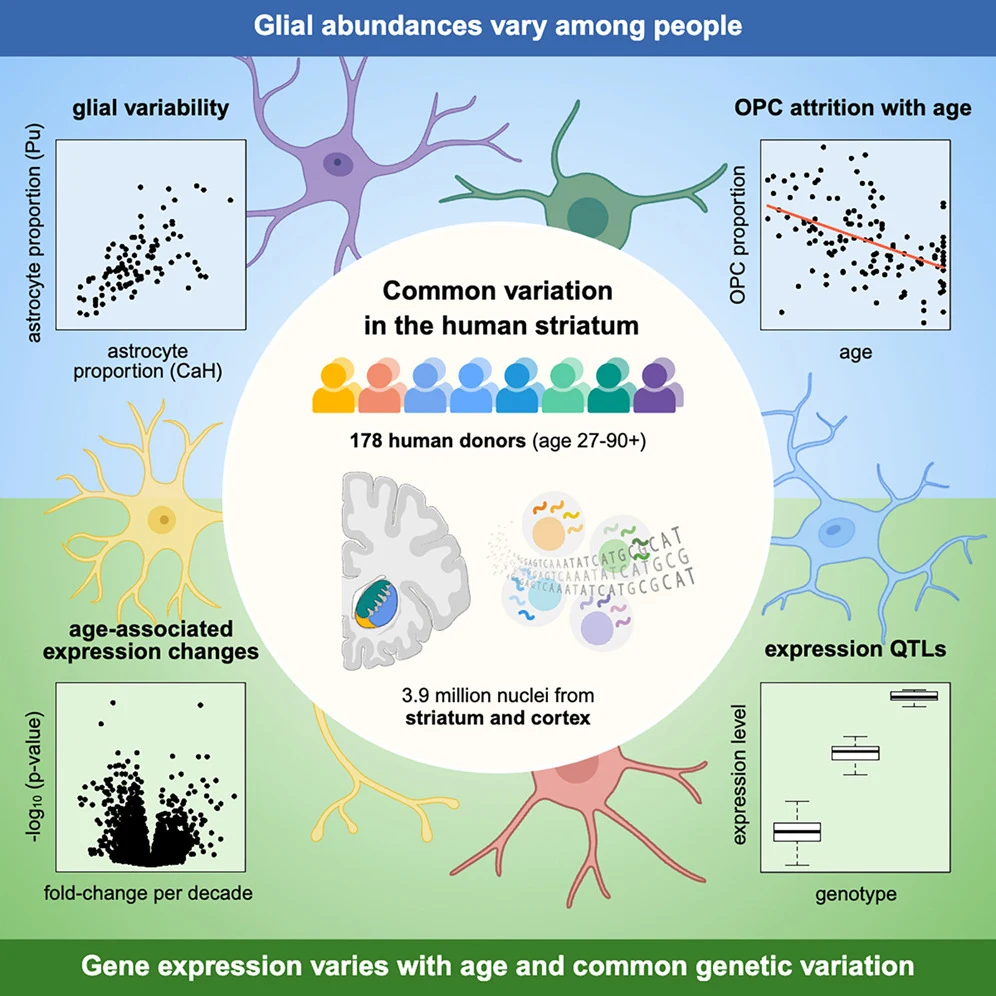
An analysis of 3.9 million cell nuclei from 178 adult brain donors mapped differences between people, brain regions and cell types.
Our read
AI & data- Studied:
- Cross-sectional study of 178 adult brain donors
- What changed:
- The proportion of precursors to nerve-insulating brain cells was 40% lower across ages 30–80
- The catch:
- Cell proportions were not tracked within individual donors over time
- Stake:
- An author founded Curio Bioscience.
Editor of record: Boris Djordjevic · AgingResearch.News
Brain samples from 178 adult donors were studied in an observational analysis that measured gene activity in 3.9 million cell nuclei. The analysis covered the striatum and prefrontal cortex, two brain areas. People with higher proportions of certain types of support cells in one region tended to have higher proportions across all sampled gray-matter regions. Across ages 30–80, older age was linked to a 40% decline in the proportion of oligodendrocyte precursor cells, which can develop into cells that insulate nerve fibers. This pattern appeared in both the cortex and striatum.
Age-associated changes in gene activity differed substantially between cell types. Common genetic variants were associated with the activity of nearly 10,000 genes. Most of these genetic associations were specific to particular cell types.
Why it matters
The open-access data offer a foundation for investigating how brain cells differ with age and what those differences may mean for their vulnerability.
Caveats
The age findings compared different donors, so they do not show how cell proportions changed within an individual over time.

Comments
Be the first to comment.