Macaque brain aging varies by cell type, region and sex
A commentary on macaque brain studies describes context-dependent molecular aging and links to Alzheimer’s disease.
Our read
AI & data- Studied:
- Study of macaque brains
- What changed:
- Gene activity during macaque brain aging varied by cell type, brain region and sex
- The catch:
- The atlas maps gene activity, a proxy for broader brain aging
Editor of record: Boris Djordjevic · AgingResearch.News
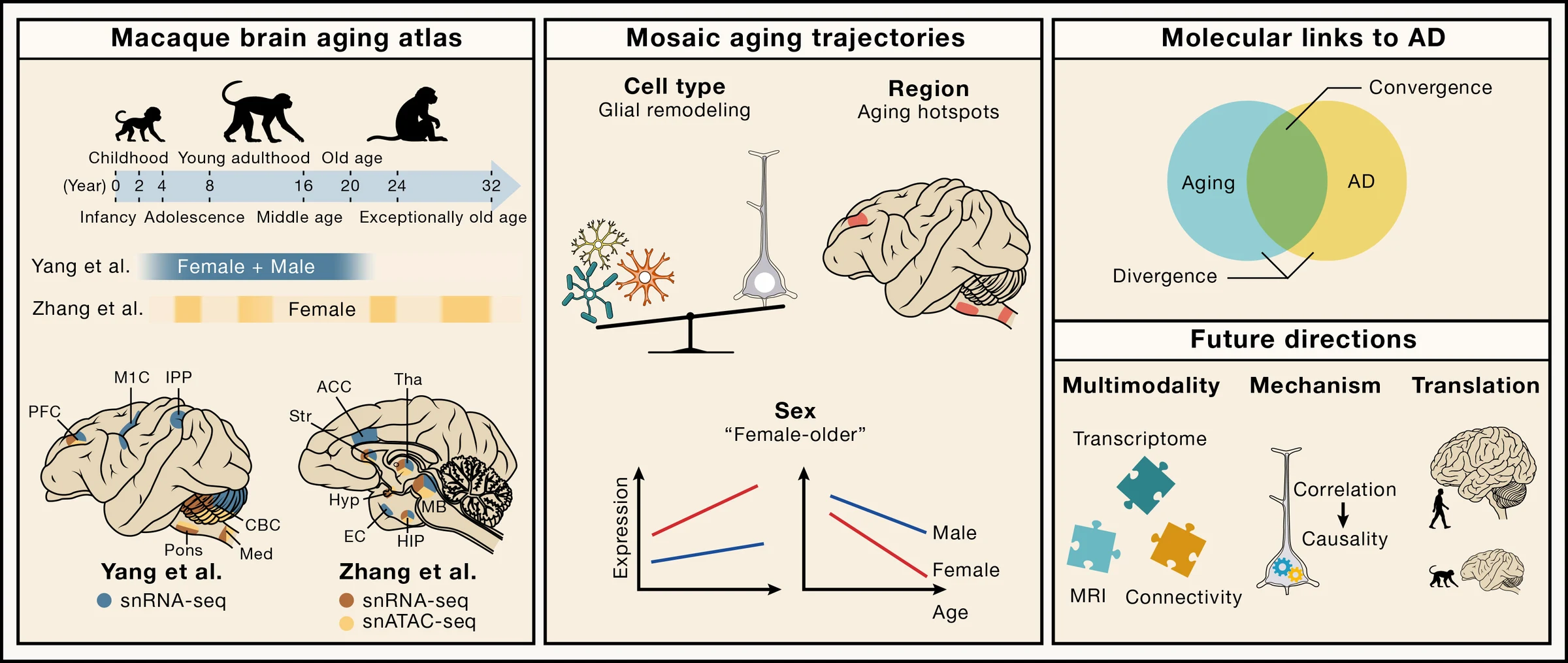
Macaque brains were the focus of a commentary on research mapping aging across cell types, brain regions and sexes. The article discussed an atlas—a detailed map of gene activity in brain cells—by Yang and colleagues, alongside recent work by Zhang and colleagues.
Together, the studies revealed patterns of aging that depended on the biological context. They also identified sex differences in gene activity during aging and molecular links to Alzheimer’s disease. The authors used these findings to consider how aging affects different types of cells in the primate brain.
Why it matters
Aging is the major risk factor for neurodegenerative diseases, which involve progressive damage to nerve cells. Understanding its effects across brain cells may help researchers investigate that connection.
Caveats
Molecular links in macaque brains do not by themselves show how Alzheimer’s disease develops in people.


Comments
Be the first to comment.