Posttraumatic stress disorder linked to older biological age
Greater symptom severity was linked to up to about two years of advanced age on one DNA-based measure among 21,999 US veterans.
Our read
Populations- Studied:
- Cohort study of 21,999 US veterans
- What changed:
- Greater PTSD symptom severity was linked to up to ∼2 years of advanced age on a DNA-based aging measure
- The catch:
- Biological age differences could have preceded PTSD diagnoses
- In the record:
- The 49th paper on posttraumatic stress disorder with results in people; 81 on record in all.
- Why it’s aging research:
- It measures an outcome that worsens with age.
Editor of record: Boris Djordjevic · AgingResearch.News
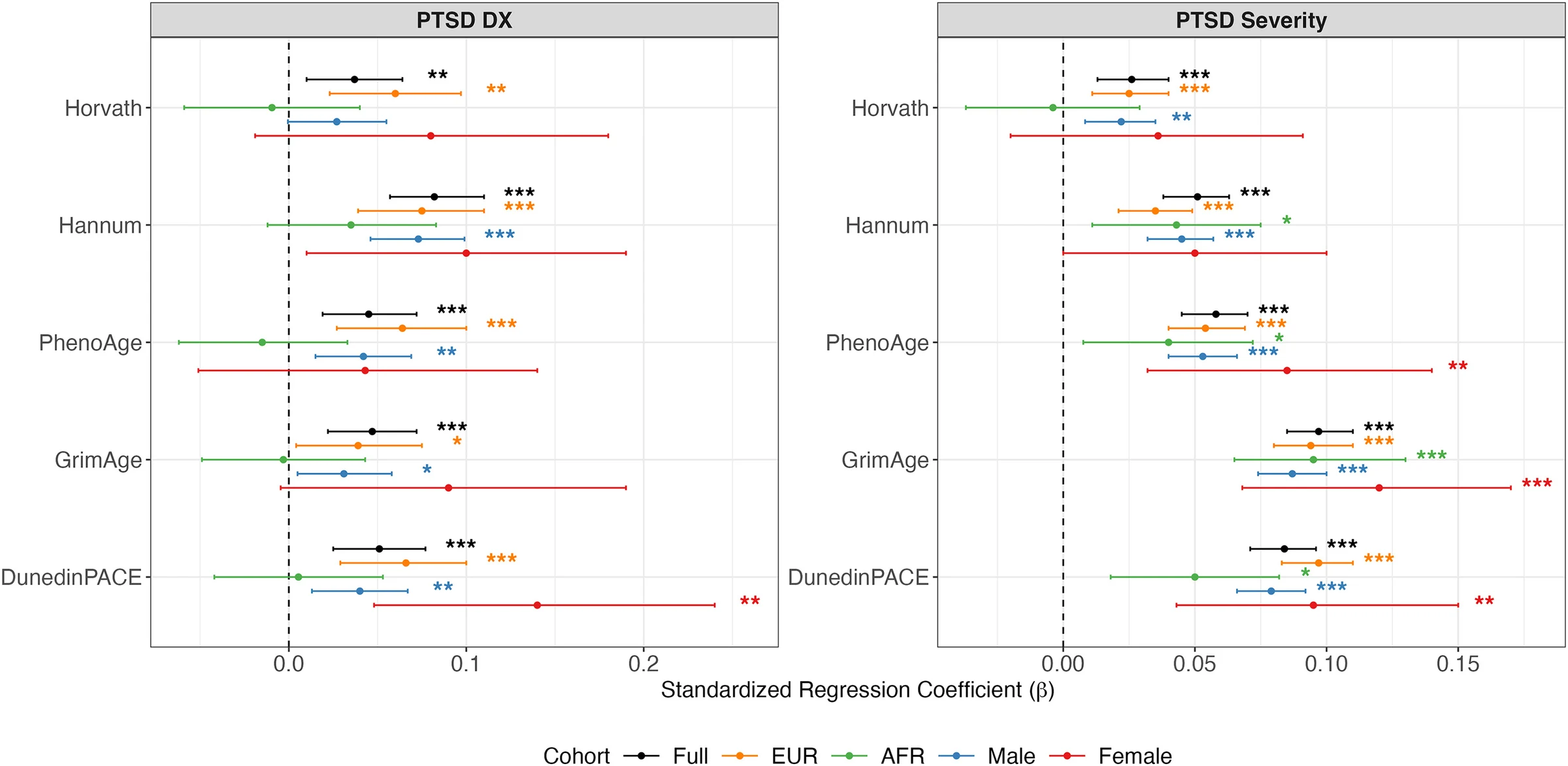
US military veterans—43,155 people, 92.96% male—were studied in an observational analysis of posttraumatic stress disorder (PTSD) and biological age. Researchers used health records, blood DNA data and symptom reports from 21,999 participants. PTSD diagnoses predated blood collection by at least one year.
Diagnosis and symptom severity were associated with more advanced aging across five measures after accounting for chronological age. These measures used DNA methylation, chemical marks on DNA. Symptom severity showed the most consistent associations. Depending on the measure, it was linked to up to about seven months to about two years of advanced age, or an aging pace up to 16 days faster per year. Links with three measures were stronger in younger than older veterans. Associations were similar in males and females.
Why it matters
For the large population of veterans with posttraumatic stress disorder, even small differences in biological aging may have personal and healthcare-system significance, the authors argued.
Caveats
DNA-based aging estimates were the outcome, not illness or lifespan; diagnoses preceding blood sampling do not reveal when the age differences began. Most participants were male US veterans, and fewer associations reached statistical significance among participants of African ancestry.
Where the evidence stands
DNA methylation
- 199 independent labs in 39 countries
- 18 findings against
- Funders: National Institutes of Health and others
- 42 of 401 findings with company ties
Comments
Be the first to comment.