Depression linked to larger brain age gaps, more so with age
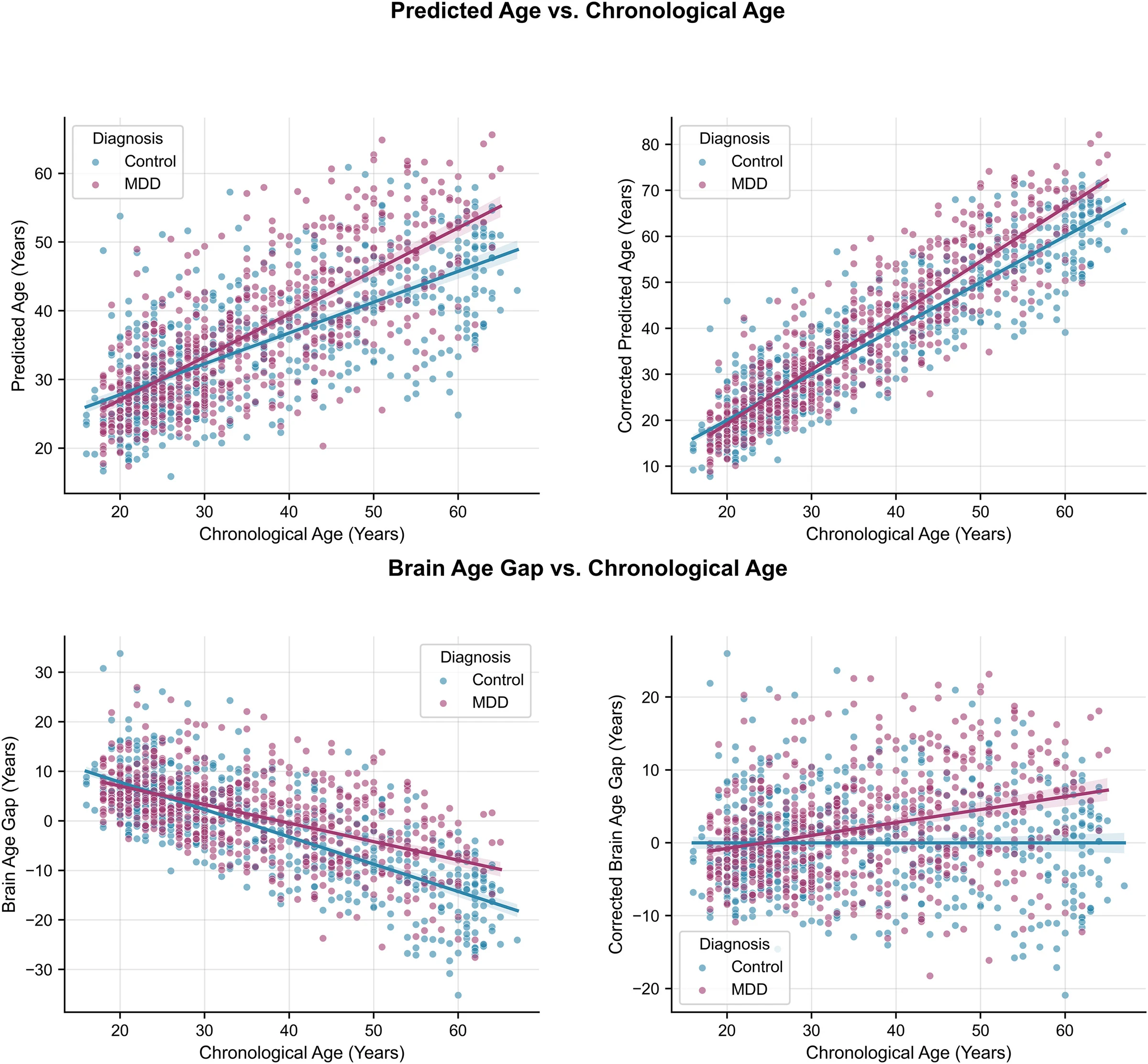
An age-adjusted measure of brain aging was 2.0 years higher in 645 medication-free people with depression than in 645 matched healthy controls.
Our read
Biomarkers- Studied:
- Cross-sectional study of 645 medication-free people with major depressive disorder (Multicenter)
- What changed:
- The estimated brain age gap was 2.0 years higher in people with depression than in matched healthy controls
- The catch:
- Study site partly explained the larger brain age gaps among older participants
- In the record:
- The 169th paper on major depressive disorder with results in people; 429 on record in all.
- Why it’s aging research:
- Biological age, frailty, function, multimorbidity or death.
Editor of record: Boris Djordjevic · AgingResearch.News
People with major depressive disorder—645 who were medication-free and in a current depressive episode—were compared with 645 matched healthy controls in a cross-sectional observational study. Researchers analyzed MRI scans from 11 sites, measuring the volumes of 145 brain regions. A computer model estimated brain age, which they compared with actual age to calculate a gap.
After age correction, this gap was higher in the depression group. Differences were absent before the mid-30s and larger in older age groups. For those aged 55 and older, the difference was 6.8 years before accounting for study site and 4.3 years afterward. The age-corrected gap was most pronounced in people with a previously identified pattern of brain structure associated with poorer key clinical outcomes.
Why it matters
The authors said the age-dependent pattern was consistent with models proposing progressive brain changes over the course of major depression.
Caveats
One-time brain scans estimated brain age rather than tracking changes within individuals, so differences between age groups did not establish progression. All participants with depression were medication-free and in a current depressive episode.


Comments
Be the first to comment.