Blood marker may link depressive symptoms to cognitive decline
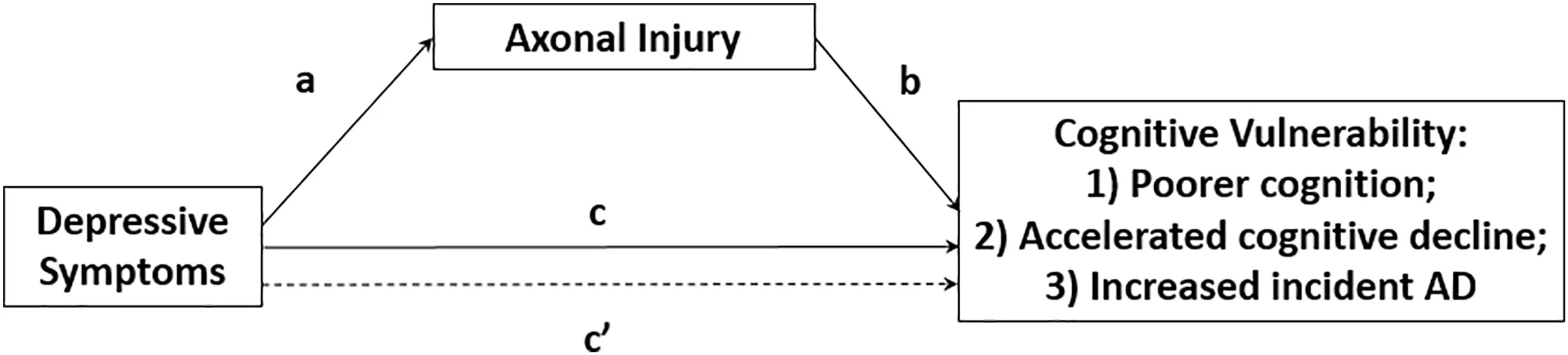
A blood marker of nerve-fiber damage statistically accounted for 18.05% of the link between depressive symptoms and poorer later cognitive performance.
Our read
Mechanisms- Studied:
- Cohort study of 921 Black and White community-dwelling older adults, mean 6.34 years
- What changed:
- The blood marker accounted for 18.05% of the link between depressive symptoms and poorer later thinking skills
- The catch:
- The effects of changing the marker on cognition were not measured
- In the record:
- The 447th paper on NfL with results in people; 961 on record in all.
- Why it’s aging research:
- It measures an outcome that worsens with age.
Editor of record: Boris Djordjevic · AgingResearch.News
Among 921 Black and White older adults living in the community, an observational analysis examined depressive symptoms, nerve-fiber damage and later thinking and memory. Participants came from the Chicago Health and Aging Project. Researchers assessed symptoms first and measured neurofilament light chain, a blood marker of nerve-fiber damage, at the next assessment. They assessed cognition across three waves, with a mean interval of 6.34 years.
Statistical models suggested that the marker accounted for part of the association with poorer later cognition, and 10.49% of the association with faster cognitive decline. These findings persisted after excluding people who already had Alzheimer’s disease. However, the overall association between depressive symptoms and faster decline was not statistically significant after adjustment for all included factors.
Why it matters
Late-life depressive symptoms raise questions about how to identify cognitive vulnerability early. The authors suggest that this marker may help assess that risk.
Caveats
Time-ordered observational measurements could not rule out shared underlying causes of depressive symptoms, nerve-fiber damage and poorer cognition. The analysis did not test whether changing the marker would improve cognition.
The paper
Brain, Behavior, & Immunity - Health, Nov 2026, CC BY-NC-ND
Comments
Be the first to comment.