Middle-aged men had fewer preventive visits in Brazilian cohort
Ten-year overall survival was 74% in men versus 84% in women in a retrospective cohort of 430,374 adults.
Our read
Populations- Studied:
- Cohort study of 153,483 adults aged 40–65 years, mean 10.2 years, against women of the same age
- What changed:
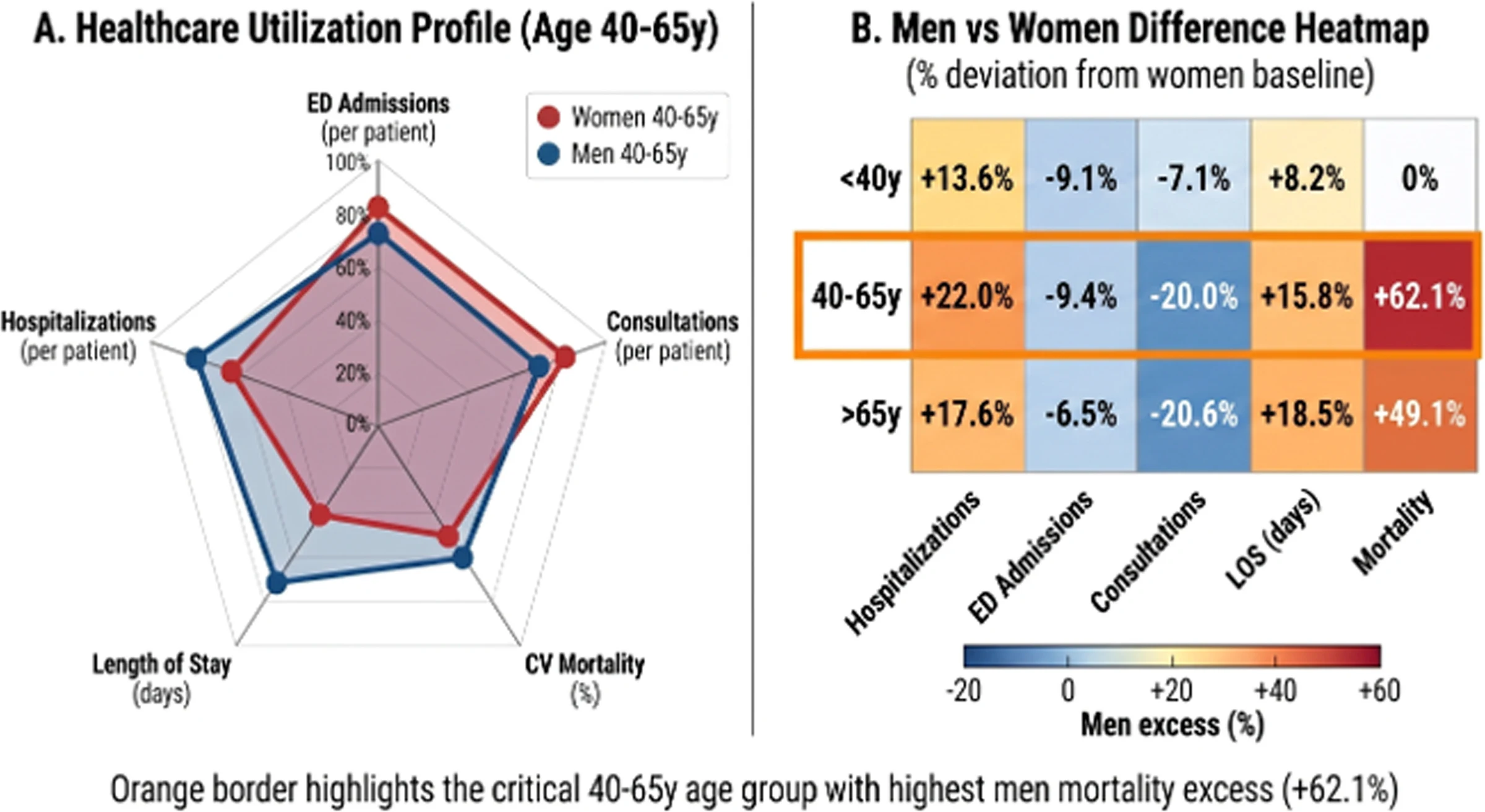
- Men aged 40–65 had 20.0% fewer preventive visits than women of the same age over 10 years
- The catch:
- Underlying health differences could account for links between fewer preventive visits and later outcomes
Editor of record: Boris Djordjevic · AgingResearch.News
In Brazil, 430,374 adults registered with a public-sector provider network were followed for an average of 10.2 years in a retrospective cohort study. Researchers linked their healthcare records to national death records. The cohort included 153,483 people aged 40–65: 63,799 men and 89,684 women.
Compared with women of the same age, men aged 40–65 had 20.0% fewer preventive consultations and 22.0% more hospitalizations over 10 years. They also had higher blood sugar, blood pressure and several blood-fat measures. Healthcare costs were US$18,589 in these men versus US$13,490 in women of the same age. The study reported 10-year overall survival of 74% in men and 84% in women.
Why it matters
Midlife is a period when modifiable risks for cardiovascular disease accumulate. The authors supported targeted screening, risk-factor control and continuity of care for men entering and progressing through these years.
Caveats
People with fewer preventive visits may also have differed in underlying health, which could help account for their later outcomes. The cohort covered one Brazilian public-sector provider network, so the findings may not extend to other healthcare settings.
The paper
Prevention gaps and cardiovascular outcomes in middle-aged men: A Population-Based Cohort Study
American Journal of Preventive Cardiology, Nov 2026, CC BY-NC-ND


Comments
Be the first to comment.