Rapamycin not linked to longer life after kidney transplant
Adjusted median survival age was 64.6 years among recipients prescribed rapamycin and 64.3 years among those not prescribed it.
Our read
Populations- Studied:
- Cohort study of kidney transplant recipients surviving the first year, median 11 years
- What changed:
- Median survival age was similar: 64.6 years with rapamycin against 64.3 years without rapamycin
- The catch:
- Cancer history and infection risk could influence prescribing and survival but were inadequately captured
- In the record:
- The 159th paper on rapamycin with results in people; 1,140 on record in all.
- Why it’s aging research:
- It studies an intervention with evidence of extending healthy life.
Editor of record: Boris Djordjevic · AgingResearch.News
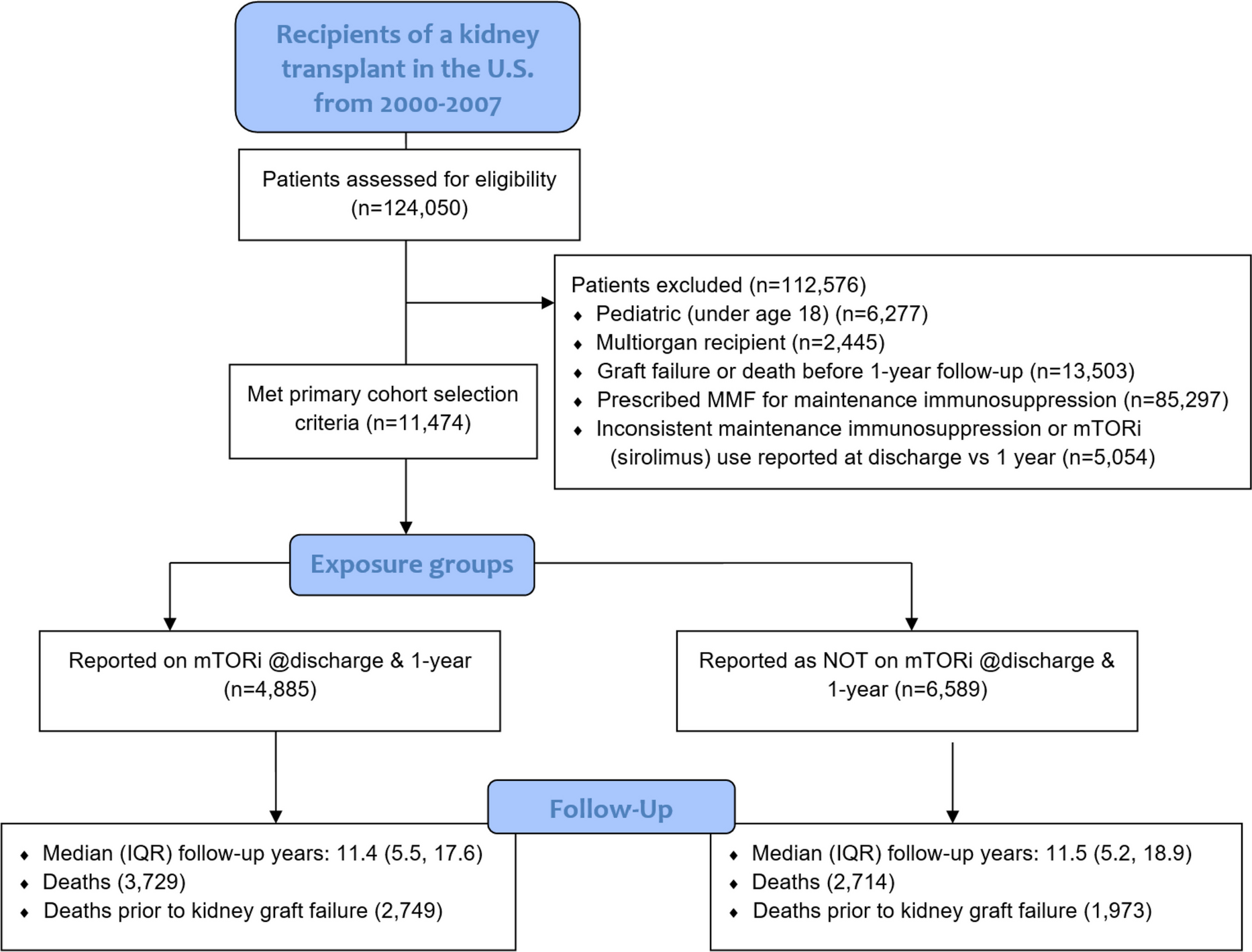
Adult kidney transplant recipients who had survived one year with a functioning transplanted kidney were compared in an observational study using US registry data. It included 4,885 recipients prescribed rapamycin and 6,589 not prescribed it. Their median ages before adjustment were 48.0 and 51.9 years, respectively.
Prescription status matched at hospital discharge and the one-year visit. Median follow-up was 11 years. After adjustment for 18 demographic and clinical factors, median survival age was 64.6 years with rapamycin and 64.3 years without it. The range of likely differences included no difference. The researchers did not observe a meaningful improvement in long-term survival associated with rapamycin.
Why it matters
Long-term rapamycin use in transplant care offers evidence relevant to its proposed longevity benefits in humans, an area with few studies.
Caveats
Recipients prescribed rapamycin may have differed in health in ways the adjustment missed, and drug use changed during follow-up. The findings concern one-year kidney transplant survivors taking other immune-suppressing drugs, not healthy people seeking longer life.
Where the evidence stands
Rapamycin
- 307 independent labs in 47 countries
- 98 findings against
- 538 trials, 174 with no results posted
- Funders: National Institutes of Health and others
- 156 of 1,629 findings with company ties
- 53 of 538 trials sponsored by its developers
MTOR
- 271 independent labs in 41 countries
- 21 findings against
- 93 trials, 23 with no results posted
- Funders: National Institutes of Health and others
- 44 of 594 findings with company ties
- 89 of 93 trials sponsored by developers of drugs aimed at it


Comments
Be the first to comment.