Compounds boost a protein’s two gene-control roles in cells
Laboratory screening identified compounds that enhanced a protein’s ability both to suppress gene activity and to activate it.
Limit: Engineered reporter assays supplied the evidence for boosting both gene-control roles
Edited by Boris Djordjevic · AgingResearch.News
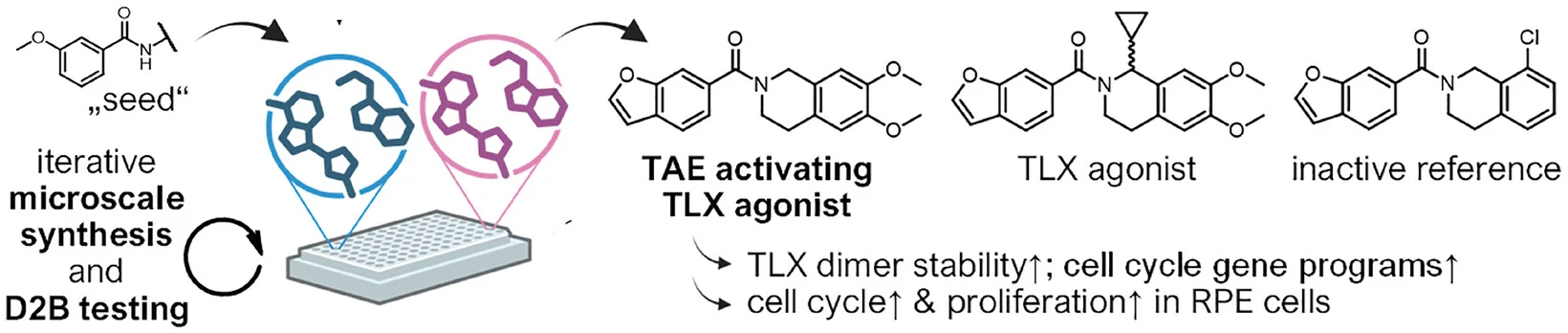
Experiments included fully specialized retinal pigment epithelial cells, cells in the eye studied outside the body. Researchers developed compounds targeting TLX, a protein that can suppress or activate gene activity. They combined chemical synthesis on a very small scale with biological screening to identify compounds that strengthened both functions.
Compounds favoring the different functions affected TLX’s interactions with other proteins differently. Studies of gene activity found that activating a DNA element responsive to TLX induced groups of genes involved in the cell cycle—the sequence through which cells prepare to divide and divide. This activation also promoted entry into the cell cycle in the fully specialized retinal cells. The authors said the results supported the regenerative potential of compounds that activate TLX.
Why it matters
The authors suggested that controlling TLX may offer a way to influence nerve-cell formation and retinal cell development, with therapeutic potential in degenerative diseases.
Caveats
Entry into the cell cycle does not itself establish completed cell division or tissue regeneration. These were cell experiments, including retinal cells studied outside the body, not tests in people.
The paper
Ludwig-Maximilians-Universität München; Goethe University Frankfurt
Angewandte Chemie Novit, Oct 25, 2026, Open access, CC BY-NC


Comments
Be the first to comment.