Nanoparticles enable selective protein removal in animals
Proof-of-concept animal experiments used DNA-carrying particles for tumor- and brain-targeted gene delivery, with encouraging signals in selected cancer and neurodegeneration models.
Our read
Interventions- Studied:
- Experiments in animals in preclinical models
- What changed:
- Systemically administered nanoparticles depleted target proteins in preclinical animal models
- The catch:
- Off-target transcriptional changes are a proxy for unintended protein depletion
- Why it’s aging research:
- Repairing, replacing or regenerating the aging body.
Editor of record: Boris Djordjevic · AgingResearch.News
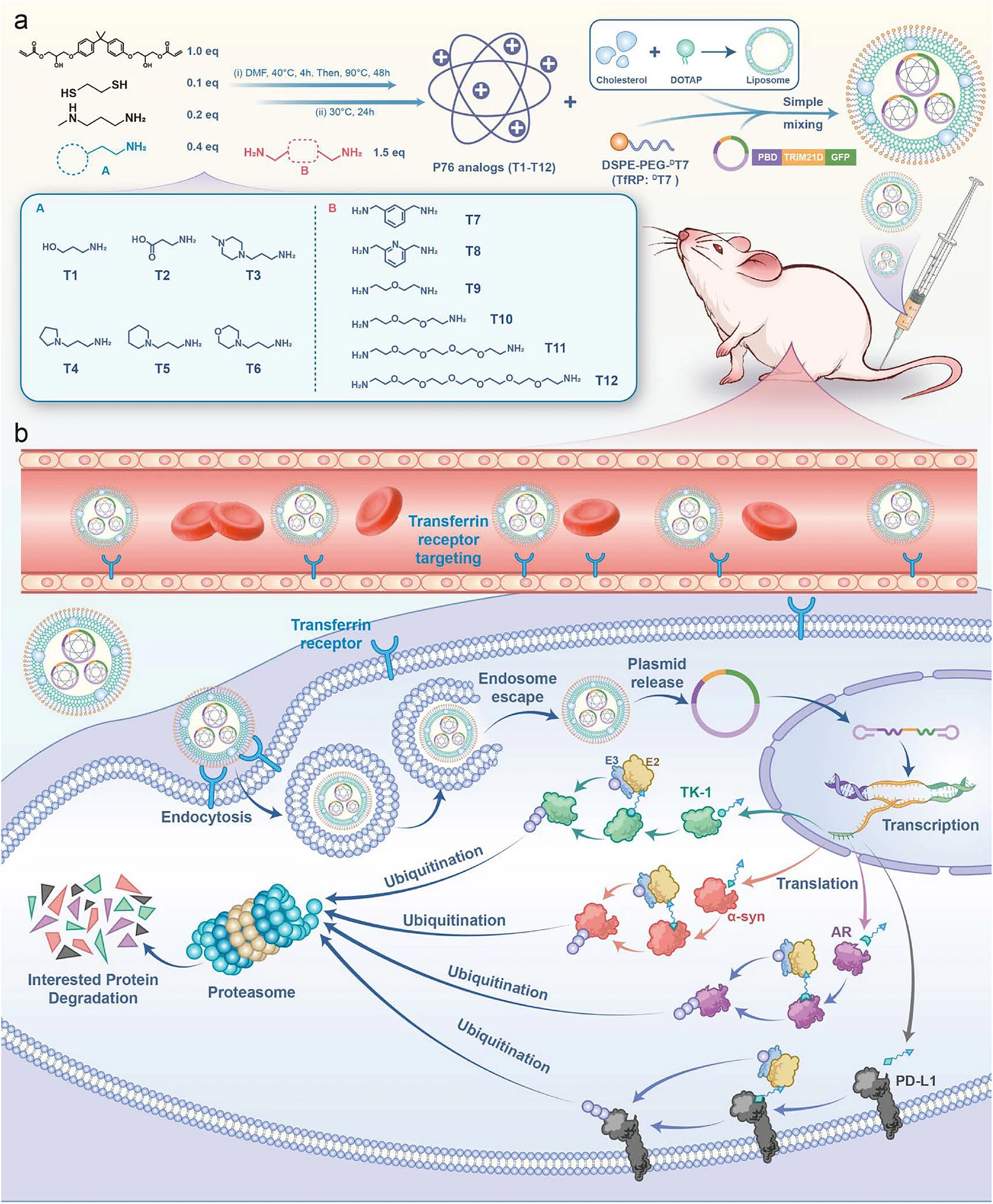
Preclinical animal models were used in proof-of-concept experiments testing nanoparticles designed to deliver DNA instructions for selective protein removal. The particles combined lipid and polymer materials and carried plasmids, small circular pieces of DNA. These instructed cells to make engineered proteins that direct selected proteins to the cell’s disposal machinery. The approach did not require changing the genes encoding the target proteins or delivering ready-made proteins into cells.
Administration throughout the body enabled gene delivery targeted to tumors and the brain, along with depletion of target proteins in preclinical models. The researchers also reported encouraging therapeutic signals in selected cancer and neurodegeneration models.
Why it matters
Age-related neurodegeneration is one potential application for therapies that remove selected proteins. The authors present their platform as a blueprint for developing protein-degradation therapies.
Caveats
The animal experiments provided proof of concept, not evidence of benefit in people. The abstract does not identify the animal species or quantify the therapeutic signals.

Comments
Be the first to comment.