Tests back predicted gene links in aging human skin cells
Experiments confirmed 53.8% of testable gene interactions predicted in human skin cells, a higher share than other methods or random predictions.
Limit: Only testable predicted links contributed to the confirmation rate, excluding untestable links
Edited by Boris Djordjevic · AgingResearch.News
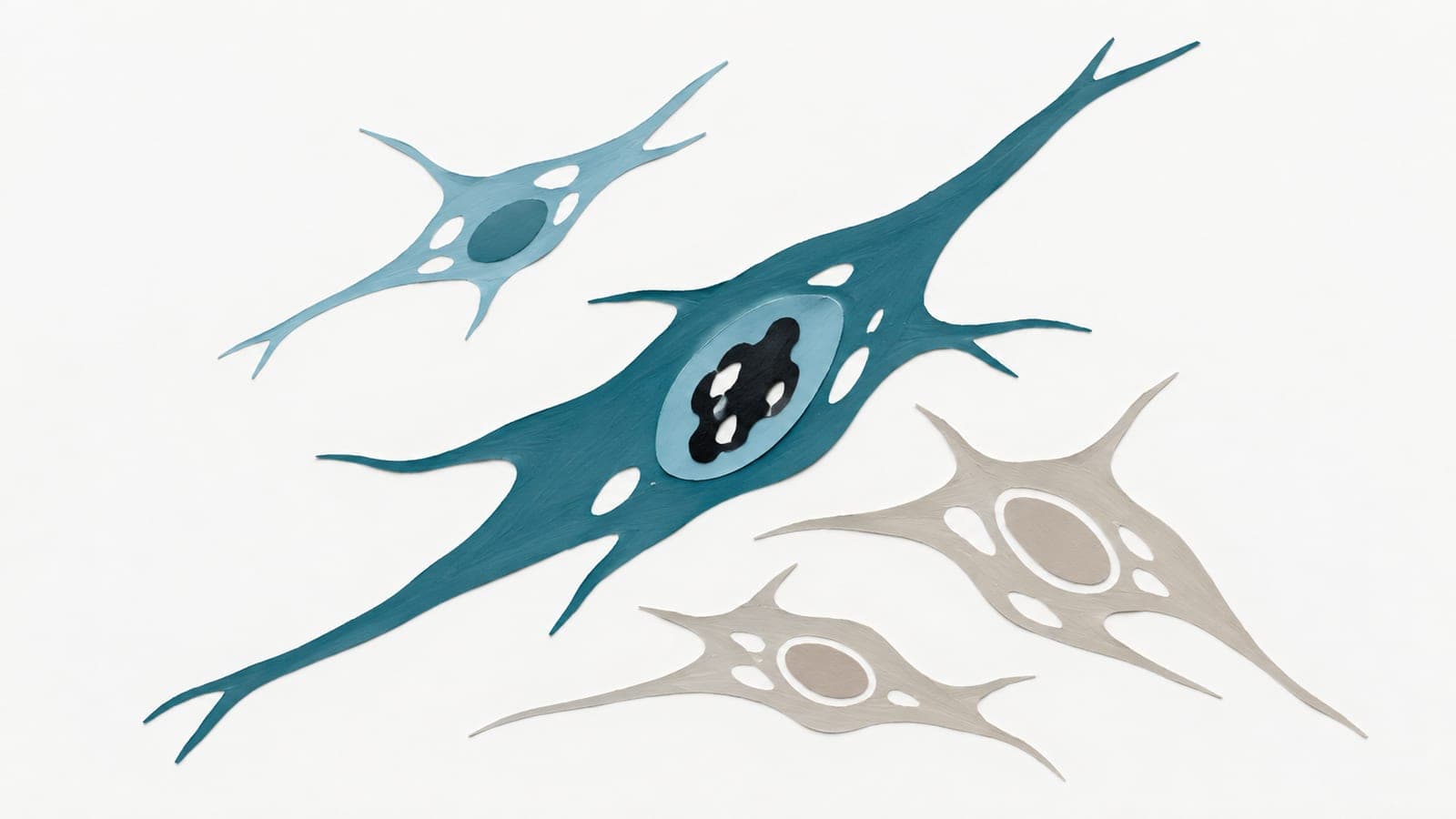
In a cross-sectional analysis, researchers studied gene activity in human skin fibroblasts—cells that help maintain connective tissue—from 490 donors. A computational method called convergent cross mapping used data ordered by donor age to predict links between genes.
The researchers tested predictions in lab experiments by increasing the activity of individual genes in fibroblasts from 55-year-old donors. Measurements of gene activity in individual cells confirmed 53.8% of testable predicted interactions, exceeding results from comparison methods and random predictions. Separate measurements of gene activity and cell appearance showed that selected interventions shifted older cells toward profiles characteristic of younger cells. With the strongest interventions, a majority of cells from 55-year-old donors resembled cells from 25-year-old donors.
Why it matters
Genes that change with age are not necessarily responsible for those changes. Distinguishing the two could help researchers choose targets for experiments on cellular aging.
Caveats
The network was inferred from cross-sectional data, not by following individuals as they aged. The experiments tested cells grown in the lab, not aging in people, and the preprint has not been peer-reviewed.
The paper
Inference and validation of causal genetic interactions in aging human fibroblasts
Medici Therapeutics
bioRxiv, Oct 23, 2026, Open access, CC BY-NC, Preprint, not peer-reviewed


