Forward-looking brain activity linked to learning by repetition
An observational study of 418 people aged 36 to 100 linked brain activity anticipating the next event to memory gains, with no detectable age dependence.

Cross-sectional study
Limit: Learning the sequences could drive anticipatory activity, rather than anticipatory activity driving memory gains
Edited by Boris Djordjevic · AgingResearch.News
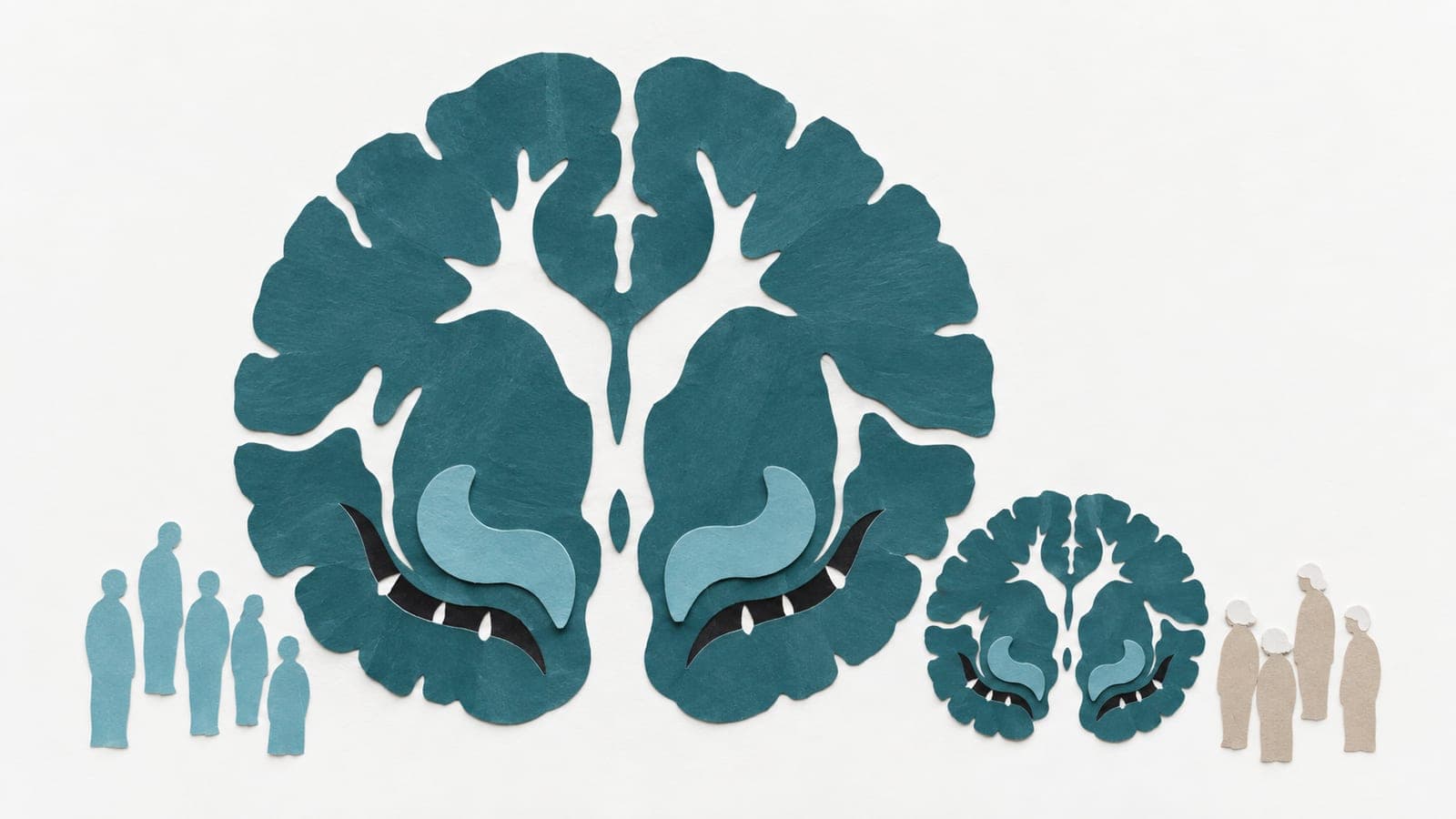
An observational study of 418 people aged 36 to 100 tracked brain activity as they twice studied two fixed sequences of face–name pairs. Researchers used high-resolution brain scans to compare activity patterns in the hippocampus, a brain region involved in memory.
During repeated exposure, patterns in several hippocampal areas anticipated the next item without instructions to do so. This forward-looking activity, but not activity reactivating earlier items, predicted memory gains from repetition. Forward-looking activity showed no detectable relationship with age. Only activity in CA1, a part of the hippocampus, predicted memory gains after researchers accounted for reactivation in other brain regions involved in memory.
Why it matters
Repetition helps strengthen memory for events. The study addresses whether the brain processes supporting those gains remain available well into old age.
Caveats
The observational design cannot establish that anticipatory brain activity caused memory gains. The study covered ages 36 to 100, not younger adults, and the preprint has not been peer-reviewed.
- Repetition learning
- Forward reactivation
- Memory gains
- Backward reactivation
- CA1 forward reactivation
- Humans
The paper
Stanford University School of Medicine
bioRxiv, Oct 24, 2026, Open access, CC BY-NC, Preprint, not peer-reviewed