Muscle aging patterns differ by sex across six species
Across all six species, researchers identified four female-biased and 18 male-biased aging markers, plus three markers shared by both sexes.
Limit: Gene activity was measured, rather than muscle performance or lifespan
Edited by Boris Djordjevic · AgingResearch.News
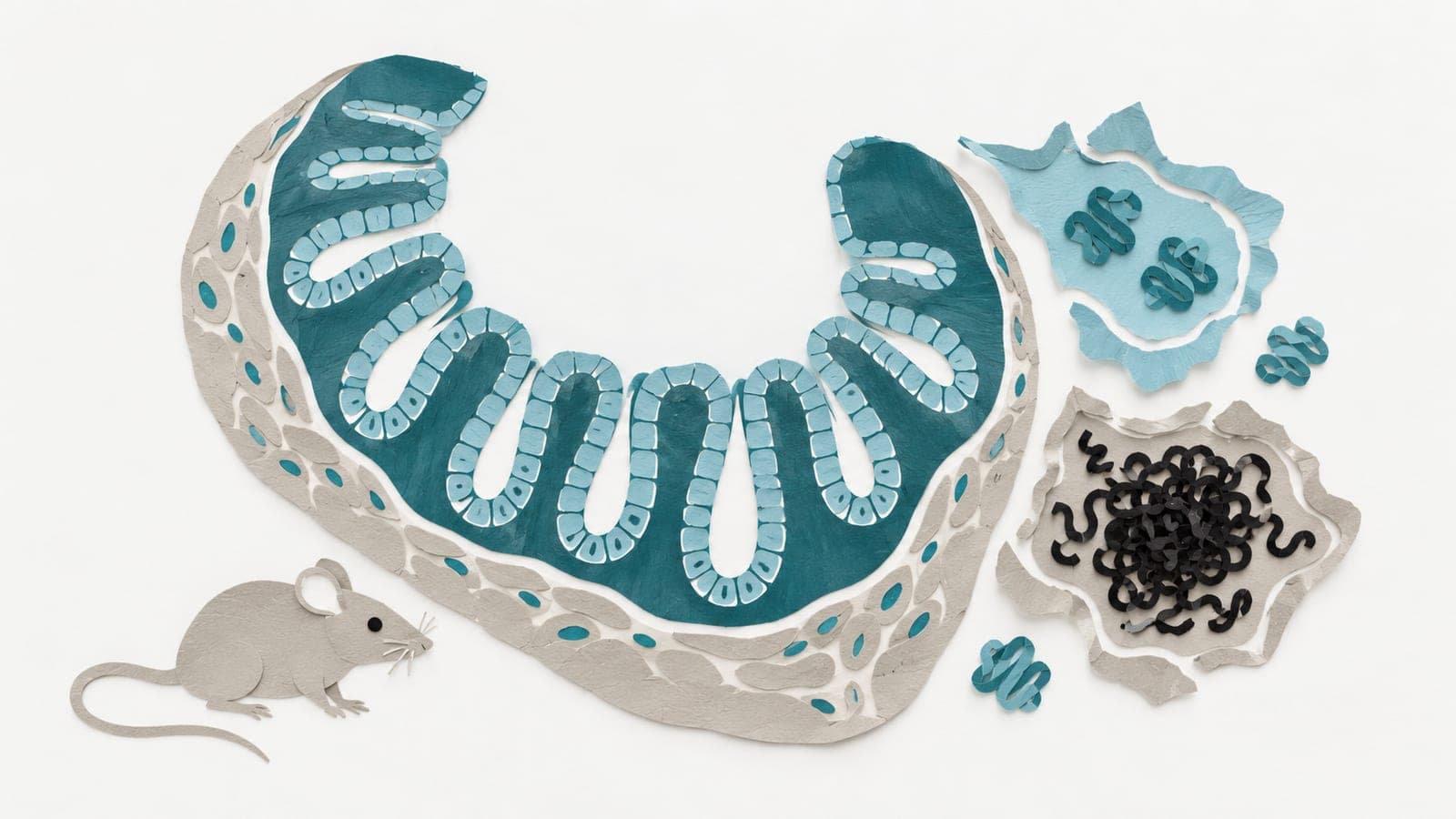
Researchers compared skeletal muscle gene activity in young and old males and females of six species spanning major evolutionary lineages. The observational analysis searched for molecular markers associated with aging, including patterns that differed by sex.
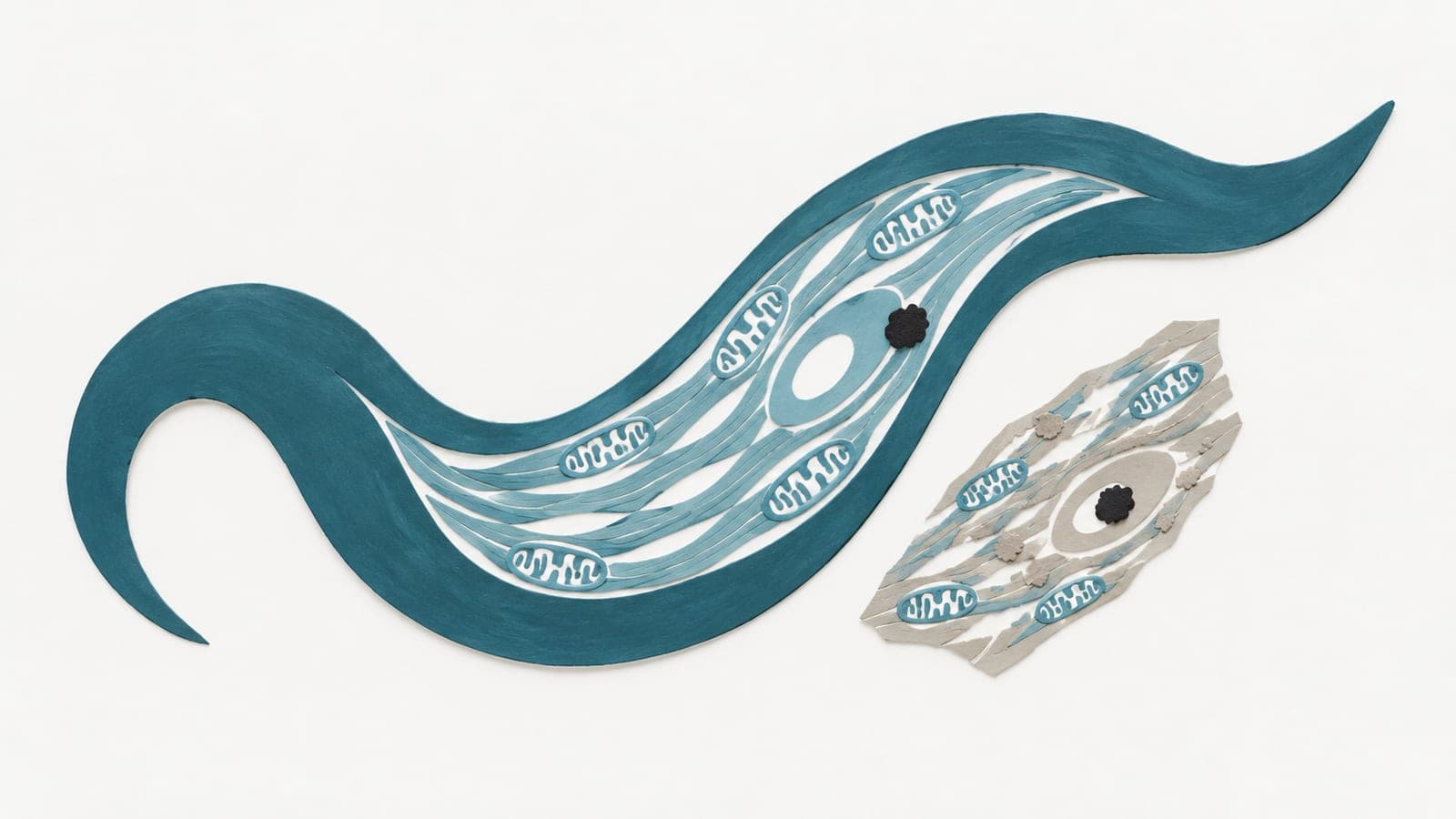
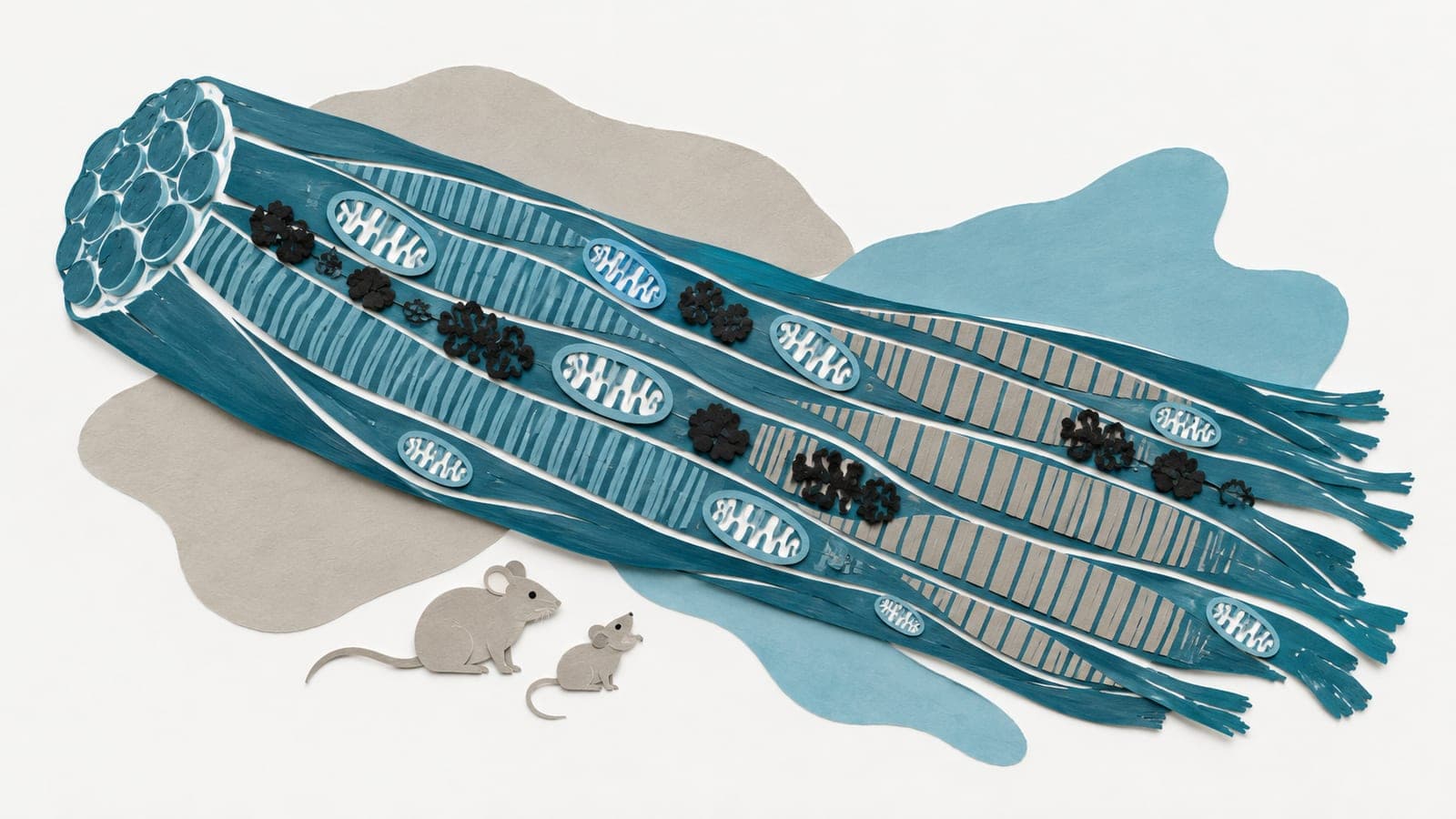
The team identified both shared and sex-biased aging markers across all six species. Age-associated changes in gene activity for the heat shock protein 70 family, which helps keep other proteins working, suggested a shared decline in protein maintenance. Female-biased groups of related genes showed age-associated changes involving muscle structure and function. Male-biased groups predominantly showed changes involving metabolism and mitochondria, the structures that supply cells with energy.
Why it matters
Muscle aging raises the question of which molecular processes are shared across species and which differ between sexes. These signatures offer clues to those common and divergent processes.
Caveats
The findings concern age-associated gene activity, not demonstrated changes in muscle performance or lifespan. The paper is a preprint and has not yet been peer-reviewed.
- Transcriptomics
- Expression of shared aging biomarkers
- Hsp70
- Na Channel
- Skeletal muscle transcriptional aging signatures
- SPARC
The paper
Common and Sex-Biased Muscle Transcriptomic Aging Signatures Across Diverse Species
Cornell University
bioRxiv, Oct 22, 2026, Open access, CC BY-NC-ND, Preprint, not peer-reviewed