Health-record model predicted diagnoses across health systems
At a threshold that left 95% of disease-free patients unflagged, flagged patients were up to eight times more likely than unselected patients to receive diagnoses within a year.
Limit: Care outside UC was missing from records, potentially leaving diagnoses unrecorded
Edited by Boris Djordjevic · AgingResearch.News
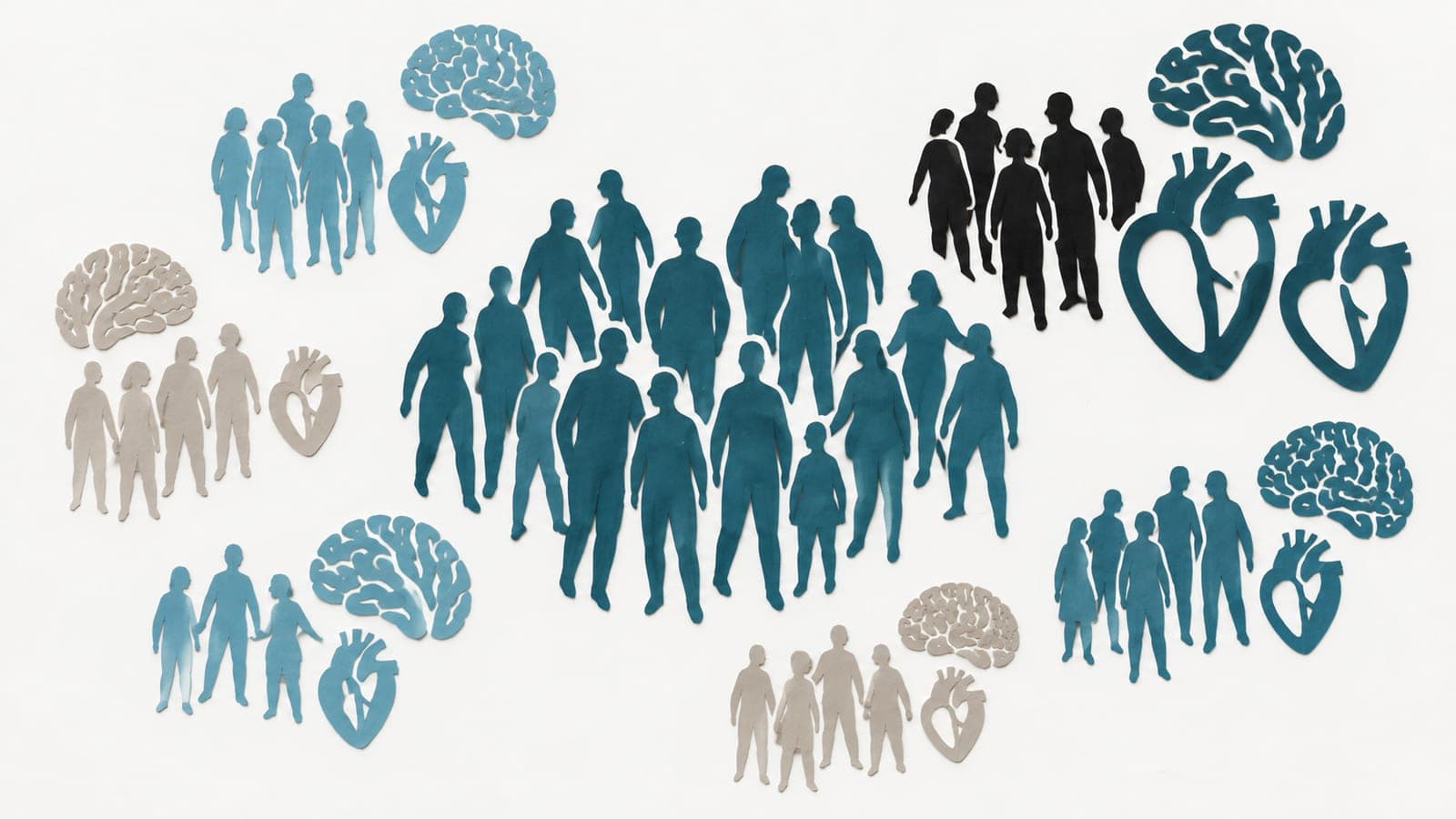
In a computational study, researchers tested a health-record model in more than 2 million patients from two University of California health systems. They had trained it using records from over 4.5 million patients at four other systems. The evaluation covered 16 diseases at one, two and five years, including Alzheimer’s disease and heart failure.
The model largely retained its ability to distinguish patients who would receive diagnoses from those who would not. Researchers set alert thresholds separately within each health system. The share of future cases detected and the burden of false alerts varied across diseases and systems, even when overall prediction scores appeared stable.
Why it matters
For age-related diseases such as Alzheimer’s, the work addresses whether existing health records could help target screening.
Caveats
This computational evaluation did not test whether using the model improved patients’ health. The preprint has not been peer-reviewed; evaluation covered only University of California systems and excluded patients with less than one year of health-record history.
From the paper
- Limitation
TRACER used structured EHR events and did not incorporate free-text notes, imaging, pathology, genomics, or other modalities that can contain important predictive information for selected diseases.
Quoted word for word from the full text on arXiv.
The paper
TRACER, a time-to-event EHR foundation model for disease detection across health systems
arXiv, Oct 29, 2026, Open access, Preprint, not peer-reviewed


Comments
Be the first to comment.