Early sugar rationing linked to signs of slower aging
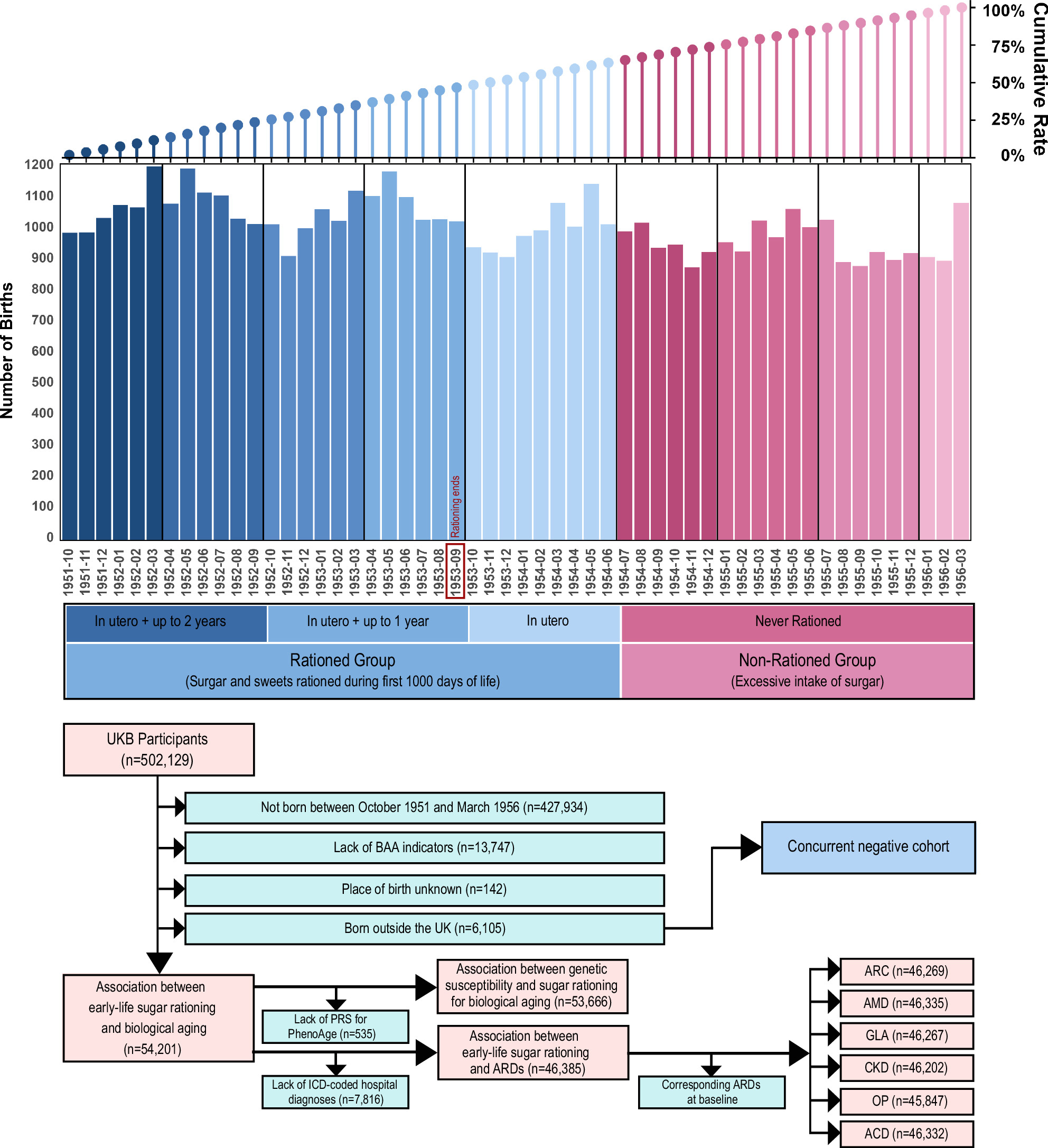
The natural experiment included 54,201 UK Biobank participants, with stronger associations among those exposed to rationing for longer during early life.
Our read
Populations- Studied:
- Cohort study of 54,201 UK Biobank participants, against people unexposed to sugar rationing
- What changed:
- Estimated biological age relative to age in years was lower among people exposed to early-life sugar rationing than unexposed people
- The catch:
- Estimated biological age was a stand-in measure for aging
- In the record:
- One of 5 papers on sugar rationing on record: 5 with results in people.
Editor of record: Boris Djordjevic · AgingResearch.News
Among 54,201 UK Biobank participants, a natural experiment used the abrupt end of postwar sugar rationing to examine associations between early-life exposure and later health. Exposure during the first 1,000 days of life was associated with lower biological age acceleration—a lower estimated biological age relative to age in years. The association was stronger with longer exposure and more pronounced in females.
The link remained consistent across groups with different genetic susceptibility. Early-life exposure to rationing was also associated with lower risks of age-related cataract, a clouding of the eye’s lens, and chronic kidney disease. It was not associated with several other age-related diseases examined.
Why it matters
Early-life nutritional environments may have long-term relevance for healthy aging. The findings highlight population-wide nutritional policy as one possible contributor to these environments.
Caveats
The natural experiment could not rule out other early-life differences between people exposed and unexposed to rationing that might have influenced their later health.


Comments
Be the first to comment.