Human ovaries showed age-linked changes after menopause
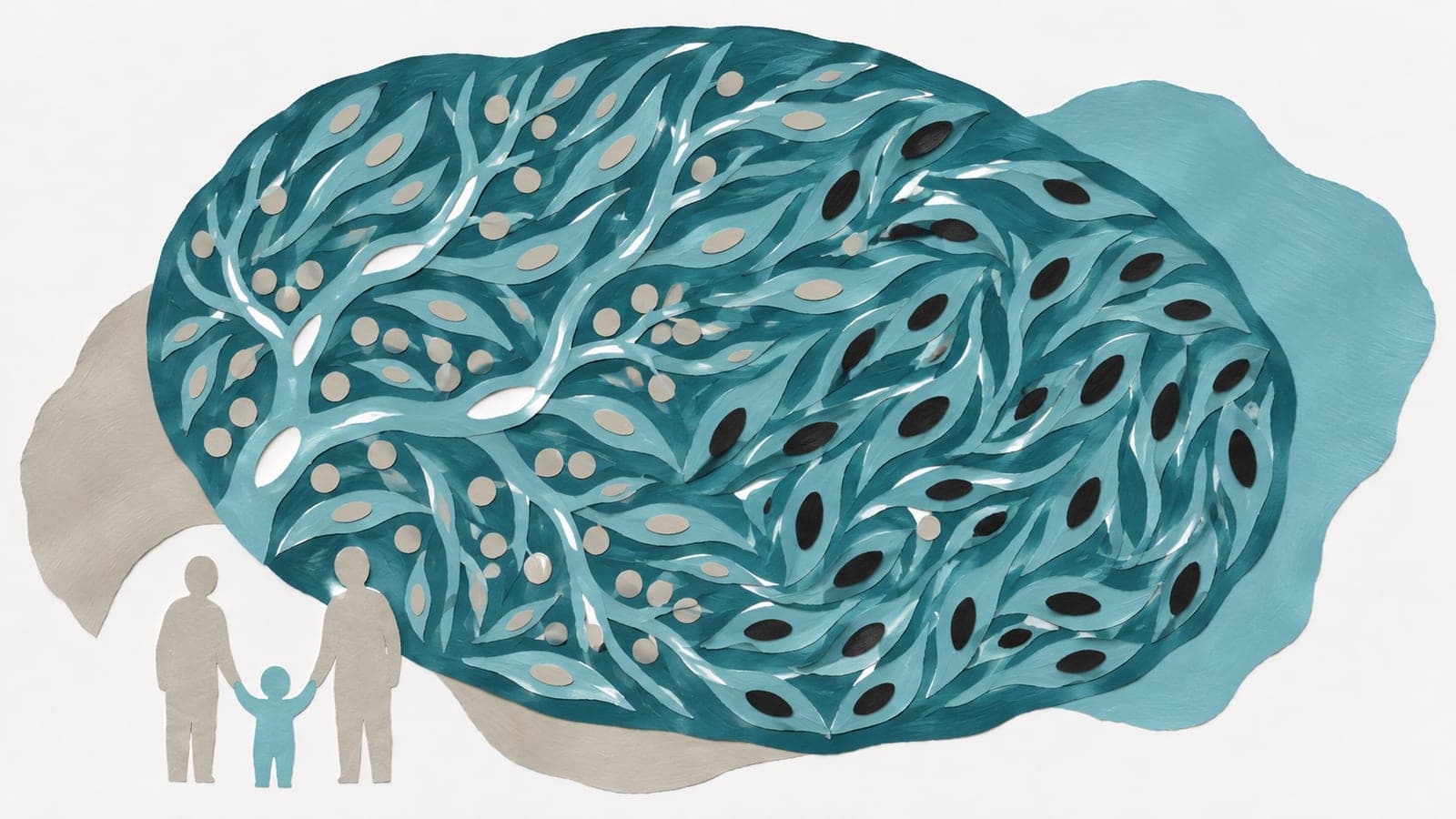
An observational study of 28 donors linked one to three live births, compared with none, to ovarian patterns broadly opposing age-associated changes.
Our read
AI & data- Studied:
- Preprint: cross-sectional study of 28 postmenopausal human donors
- What changed:
- Older ovaries had higher shares of stress-associated support cells and lower shares of blood-vessel and immune cells
- The catch:
- Only 28 donors supplied the ovarian samples
- In the record:
- The 79th paper on parity with results in people; 128 on record in all.
Editor of record: Boris Djordjevic · AgingResearch.News
Sixty-four ovarian samples from 28 postmenopausal human donors were analyzed in an observational study. The researchers measured gene activity in 439,011 individual cell nuclei and identified 37 cell states, or distinct patterns of cell activity.
Older age was associated with a larger share of stress-associated states among tissue-supporting cells and smaller shares of blood-vessel and immune cells. Gene activity also shifted toward steroid hormone production and responses to androgens, a group of sex hormones. Several major age-linked shifts in cell composition were supported by a separate set of ovarian gene-activity data. Having one to three live births, compared with none, was associated with patterns of gene activity and cell composition that broadly opposed those linked to aging.
Why it matters
The postmenopausal ovary is often viewed as largely inactive. Mapping its cell states offers a way to study how this tissue changes with age.
Caveats
Other differences between donors who had live births and those who had none may account for the linked ovarian patterns. The findings concern postmenopausal ovaries and come from a preprint that has not been peer-reviewed.
- Parity
- Resources: datasets, atlases and tools
- Single-cell omics
- Sex hormone signaling (estrogen, androgen)
- Humans
The paper
Buck Institute for Research on Aging; Northwestern University
Research Square, Nov 13, 2026, Open access, Preprint, not yet peer-reviewed

Comments
Be the first to comment.