Short survey reliably measured physical function in older adults
The 10-question scale halved administration time compared with the 25-question version and was tested in an independent sample of 263 older adults.
519 participants, cohort study, dose-response, independent replication
Limit: Ceiling scores limit discrimination among highly functioning older adults
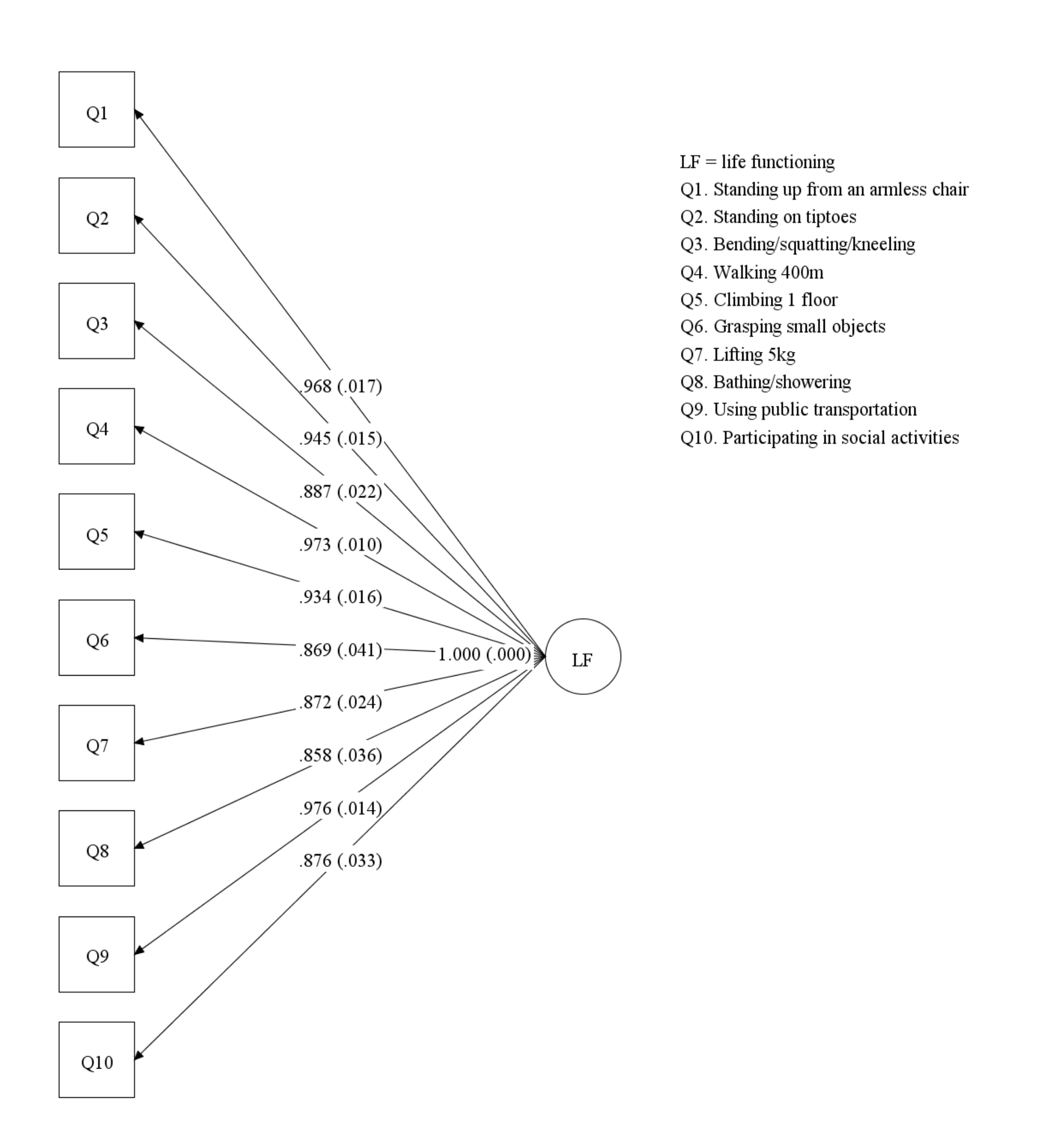
In an observational study of 519 adults aged 50 years and older, researchers developed a shorter questionnaire to assess physical functioning. They selected 10 questions from the 25-item Life Functioning scale using statistical analysis and a review of what the questions covered. They then tested the shorter scale in an independent sample of 263 older adults.
The short scale assessed physical functioning, or the ability to carry out physical activities. Scores were strongly associated with those from the original questionnaire and another physical functioning scale. It showed strong consistency across questions and when people completed it again. Baseline scores were associated with physical functioning and self-rated health six months later in a follow-up subsample.
Why it matters
The work addressed how national health surveys can assess older adults’ physical functioning while reducing the burden of lengthy questionnaires.
Caveats
The six-month findings were observational associations, not evidence of cause and effect, and the abstract did not report the follow-up subsample’s size. The study is a preprint and has not been peer-reviewed.
From the paper
- Result
Baseline LF-10 scores were prospectively associated with SRH at six months (Wald = 3.937, p < 0.05), although the association was modest (estimate = 0.054, 95% CI: 0.001, 0.107).
- Limitation
First, item thresholds were concentrated below the mean (− 2.39 to − 0.60), so the LF-10 measures less precisely at higher functioning levels (θ > 0); future revisions should consider adding higher-demand physical tasks to extend the measurement range.
Quoted word for word from the full text on researchsquare.com.
The paper
Ajou University; Korea Disease Control and Prevention Agency
Research Square, 15 Oct 2026, Open access, Preprint, not peer-reviewed