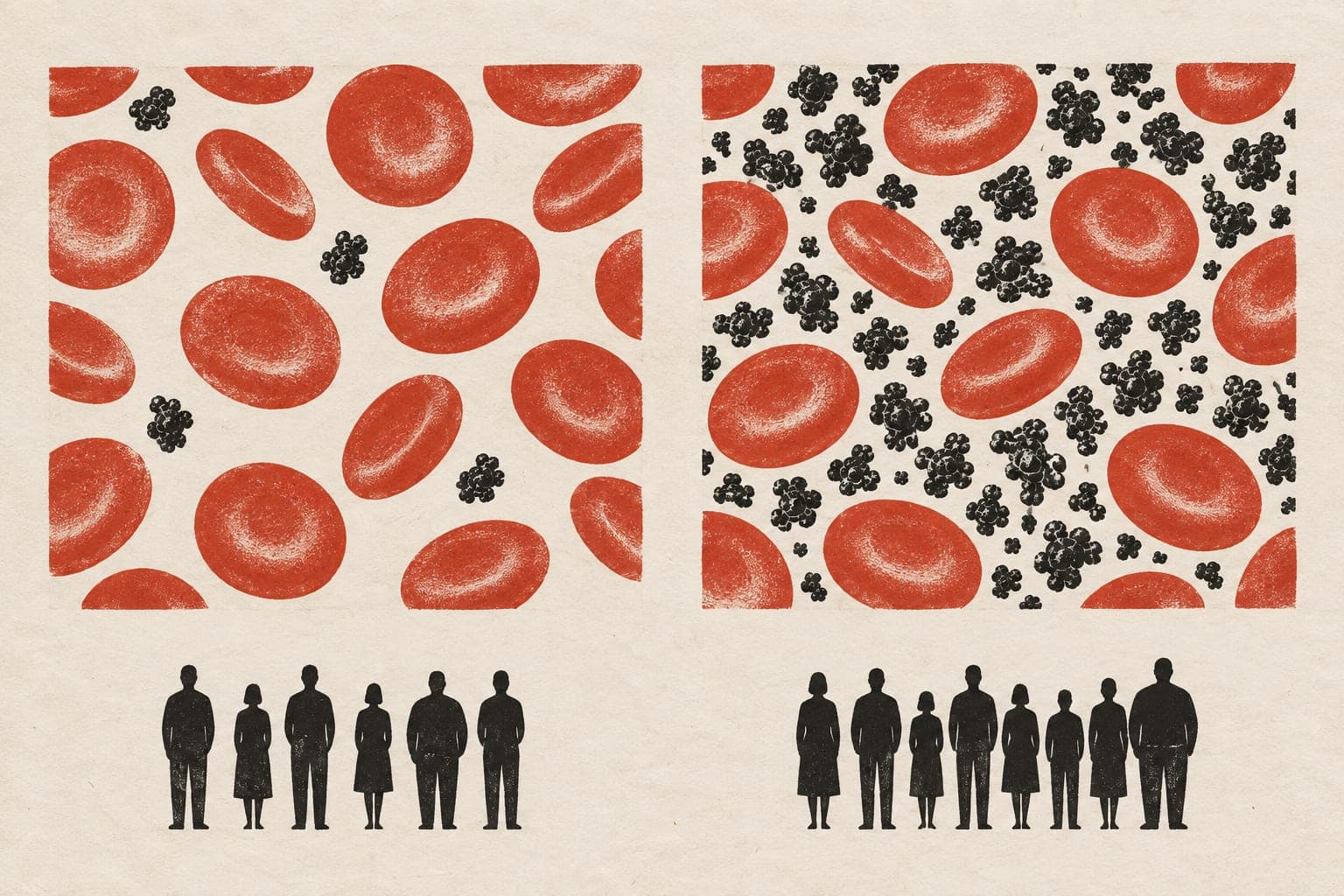
Intersectional Inequalities in Multimorbidity Burden Among Older Adults: A Population-Based Multilevel Analysis of Individual Heterogeneity and Discriminatory Accuracy (MAIHDA)
Abstract
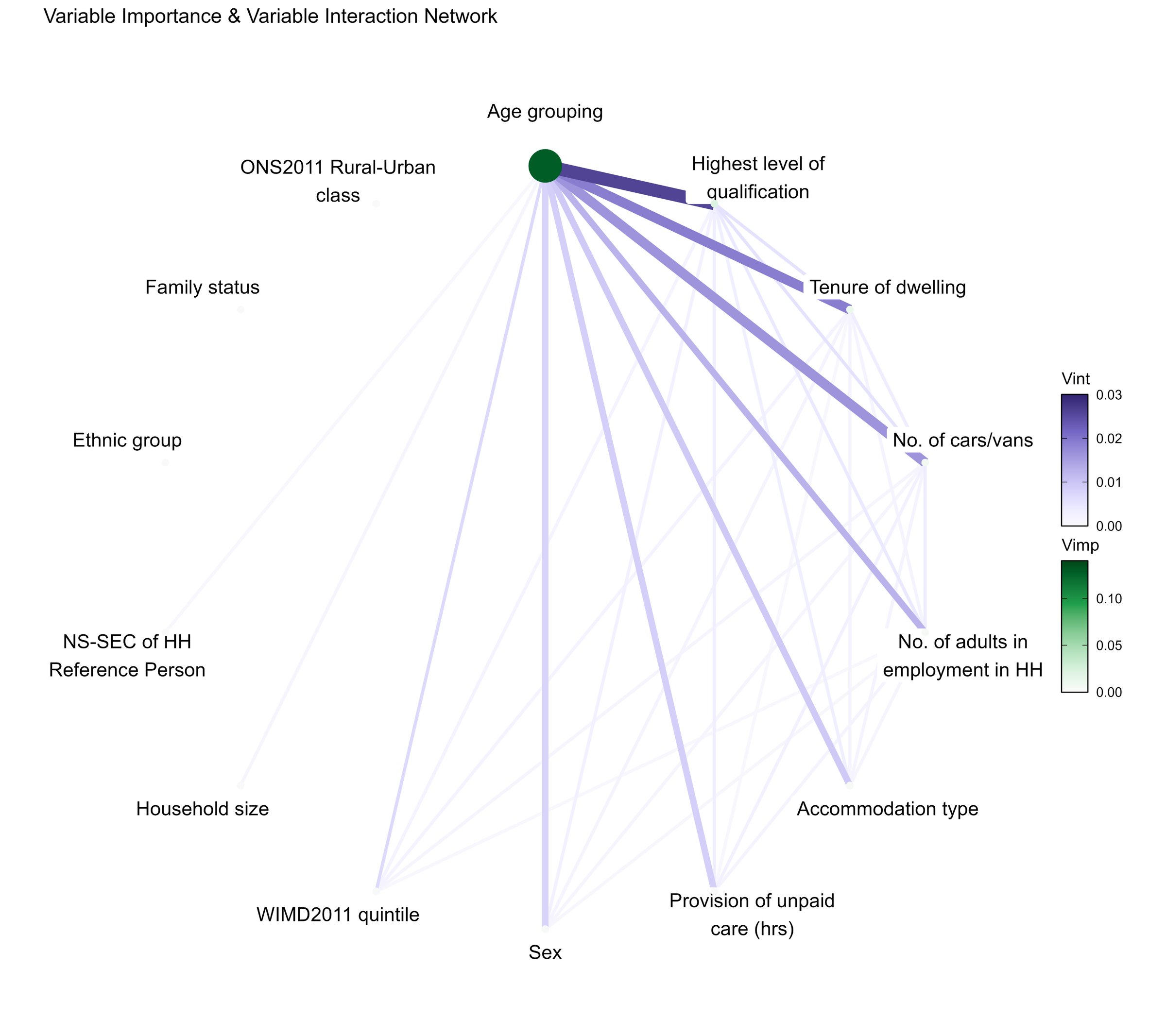
Multimorbidity in later life follows well-established social gradients yet analysing socioeconomic characteristics in isolation risks obscuring the points at which disadvantages and resources converge. To capture this complexity, we analysed linked census, area and health records for 375,070 adults aged 65 years or older in Wales. We screened 14 theoretically relevant personal, household and area factors using Variable Importance and Variable Interaction methods, identifying 15 five-way combinations of characteristics. Multilevel analysis of individual heterogeneity and discriminatory accuracy (MAIHDA) quantified overall intersectional inequality, the intersectional interaction component, and the contribution of each constituent factor. The five-way intersection of age, educational qualification, housing tenure, vehicle access and household employment produces the highest discriminatory accuracy (12.4%). Educational qualification consistently made the greatest contribution to intersectional inequalities, while household employment, vehicle access and housing tenure were also prominent. Common high-burden intersectional positions combined advanced age or no educational qualifications with social renting, no vehicle and limited household employment. Intersectional inequalities in multimorbidity burden in this study were predominantly additive rather than strongly supra-additive. These findings are consistent with resource multiplication; whereby educational advantage more readily translates into better health when accompanied by material and household resources. We describe the preponderance of poor outcomes in intersectional positions composed of multiple adverse circumstances as ‘concentrated jeopardy’. These results carry direct implications for service design: multimorbidity services should be universally delivered with greater intensity and improved accessibility in communities where older age, low education and constrained household resources coincide.
From the paper
- Participants
The cohort comprised 375,070 adults aged 65 years or older; 54.72% were women, 51.16% were aged 65–74 years and 13.76% were aged at least 85 years (Table 1).
- Result
… owned or shared-ownership housing, no vehicle and one employed adult (4.74, 95% CI 4.70–4.79; n = 12,969; 3.46%), and adults aged 75–84 years with no qualifications, social rented housing, no vehicle and one employed adult (4.68, 95% CI 4.62–4.74; n = 8,437; 2.25%).
Results, Intersectional inequalities in multimorbidity burden
- Limitation
Social circumstances and multimorbidity burden were assessed cross-sectionally at one index date, so the models cannot establish whether current tenure, vehicle access, household employment or household composition preceded disease accumulation.
Quoted word for word from the full text on researchsquare.com.
The paper
University of Liverpool; University of Edinburgh
Research Square, 24 Sep 2026, Preprint, not peer-reviewed