Entropy of Age Distribution as a Causal Driver of System Dysfunction: A Bristlebot Swarm Model of Mosaic Aging
Abstract
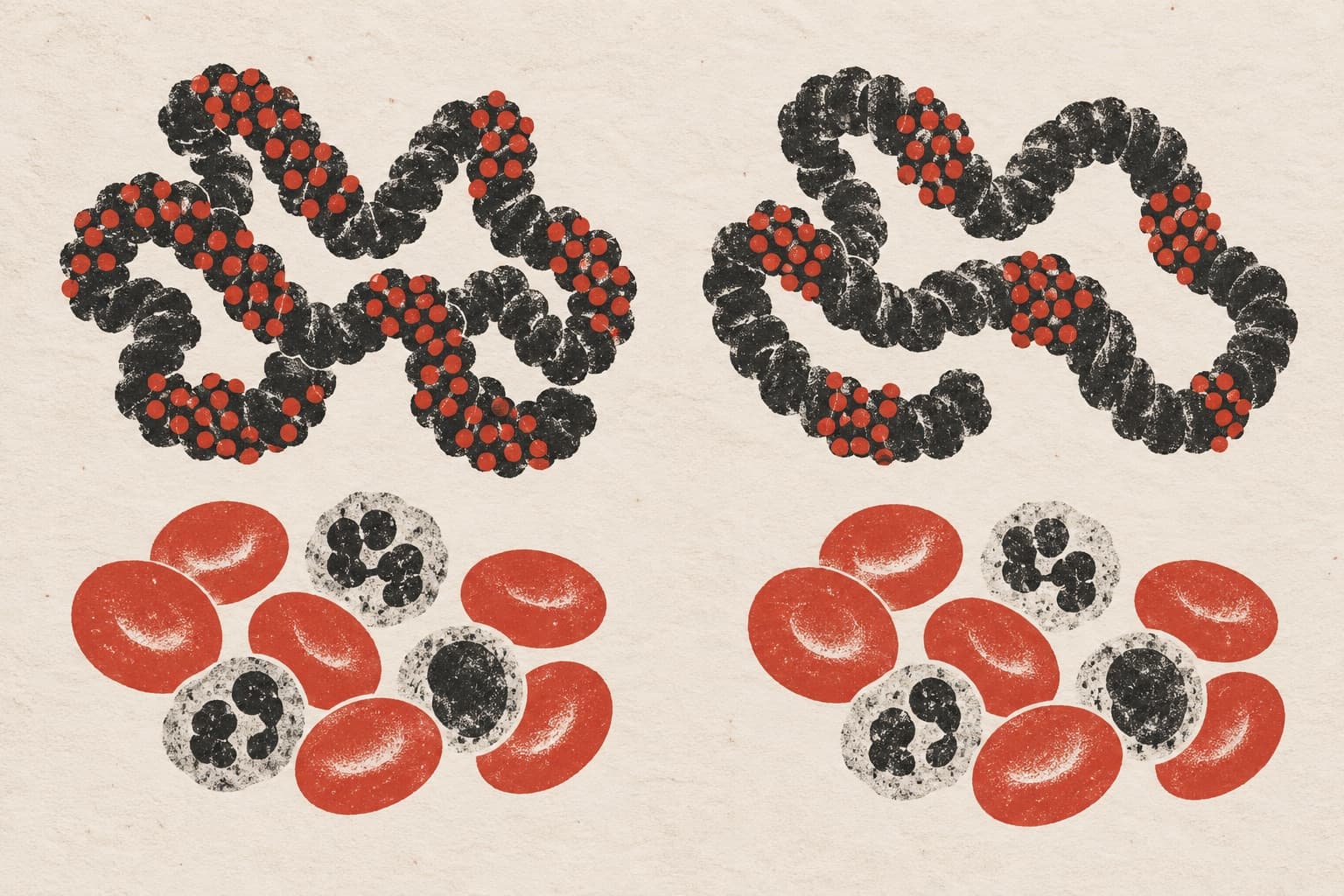
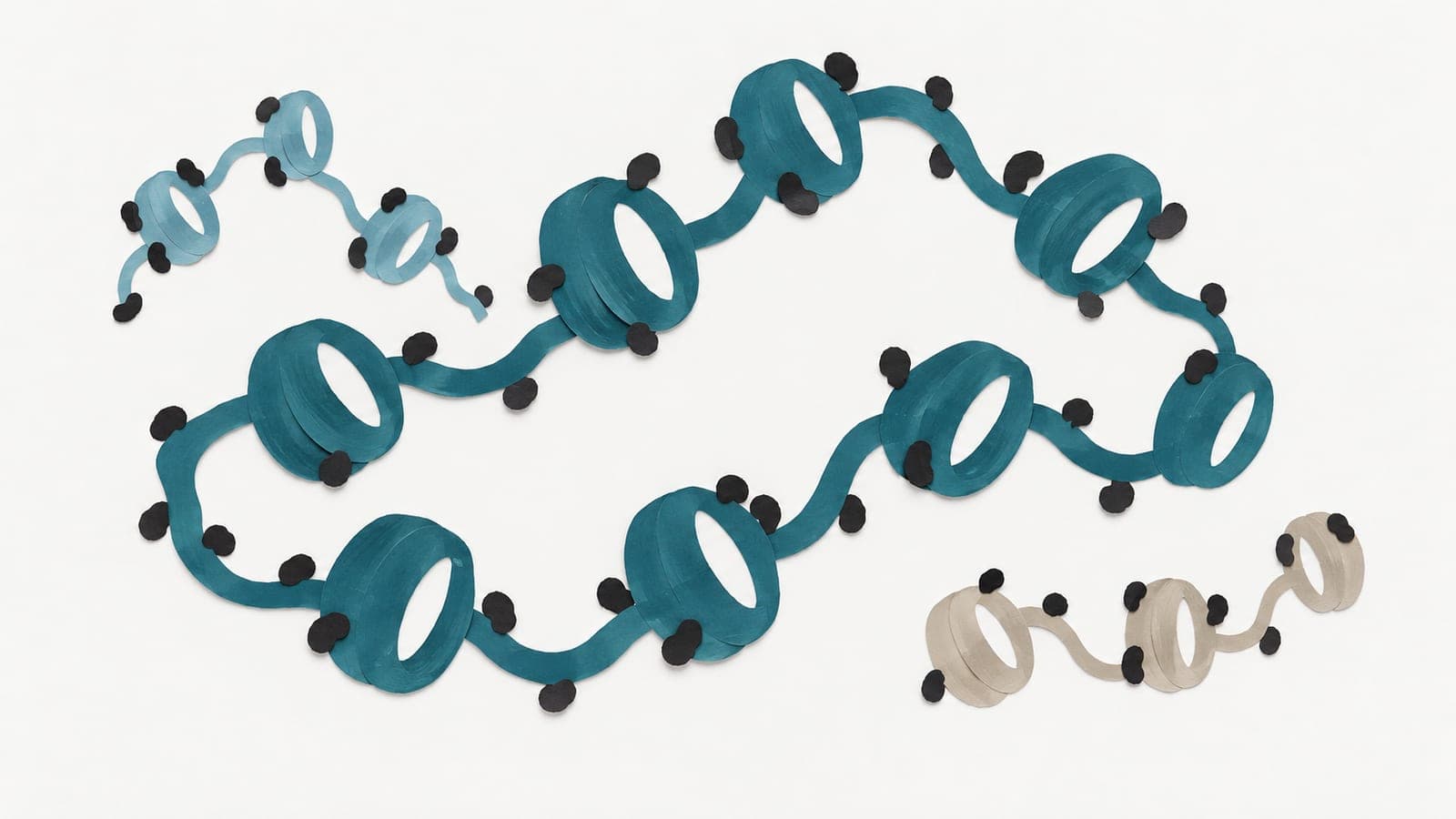
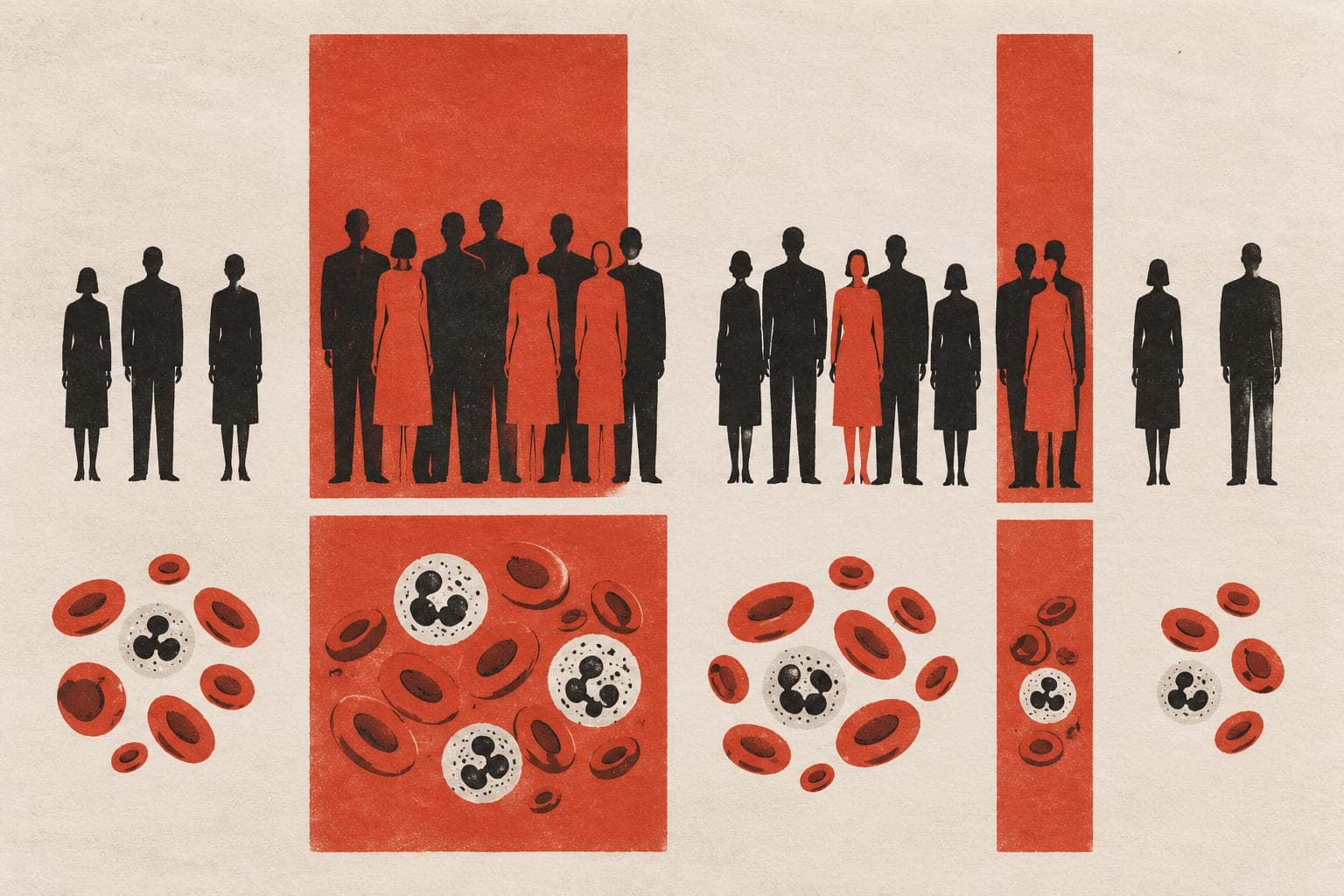
In aging biology, mosaic aging — differential tissue aging within a single organism — is well-established, but whether age heterogeneity causes dysfunction or merely marks underlying damage remains an open question. We propose a bristlebot (vibrating robot) swarm as a controlled physical model to test this causal direction. Each robot carries seven critical components with independent manufacturing dates. Component age mismatch is quantified as τ_sick — the normalized Shannon entropy of the component age distribution, H(τ) = −Σ p_i log₂ p_i (0 = identical ages; 1 = maximally heterogeneous). Collective swarm behavior is measured by the Hierarchy Index (HI). We hypothesize that increasing τ_sick degrades collective order, analogous to how intra-individual epigenetic age variance (IEAV). The biological basis of this variability has been partially elucidated: Shahal et al. (2022, PMID: 35255955) demonstrated that specific CpG sites — notably in secretagogin (SCGN) and malin (NHLRC1) — contribute significantly to inter-personal differences in epigenetic aging patterns. While IEAV measures variability within an individual across tissues, Shahal et al. quantify variability between individuals, together suggesting that epigenetic age heterogeneity operates at multiple scales. Twin studies demonstrate that 50–68% of inter-individual epigenetic variability is attributable to unique environmental factors (Fraga et al., 2005, PMID: 16009939), consistent with a model of cumulative epigenetic divergence. While Fraga et al. demonstrate divergence (not necessarily purely stochastic drift), the pattern – increasing differences between genetically identical individuals over time – is consistent with the component aging framework where identical initial conditions diverge due to differential environmental exposure and stochastic degradation predicts mortality. We specify a 9-test falsifiable matrix (Cohen’s d = 0.3, α = 0.05, β = 0.80, n = 60/group) isolating three temporal layers: calendar age (τ_create), component micro-aging (τ_micro), and age entropy (τ_sick). If confirmed, the experiment provides the first proof-of-principle evidence that age heterogeneity as a physical parameter is sufficient to disrupt collective order in a multicomponent system. While this does not establish causality in biological organisms (which possess repair mechanisms absent in robots), it provides a controlled physical platform for testing the entropy-dysfunction hypothesis and constraining the conditions under which age heterogeneity alone can degrade system-level function, applicable to both biological aging and engineered distributed systems (IoT, autonomous swarms). Structured heterogeneity. Shahal et al. [28] [36] demonstrated that epigenetic age is not a uniform scalar: different CpG sites contribute unequally to age estimation, with certain loci (SCGN, NHLRC1) contributing up to ~ 9–12 years each to inter-personal differences. This reveals that aging is a structured, multidimensional process – different elements of the system age at different rates and with different weights. In our system, ANOVA (Section 4.8) tests a parallel hypothesis: do certain components contribute more to tau_sick-driven hierarchy disruption than others? The analogy is conceptual, not mechanistic: both biological and physical aging exhibit structured heterogeneity rather than uniform degradation.
The paper
Free University of Tbilisi
Research Square, Aug 14, 2026, Open access, CC BY, Preprint, not peer-reviewed