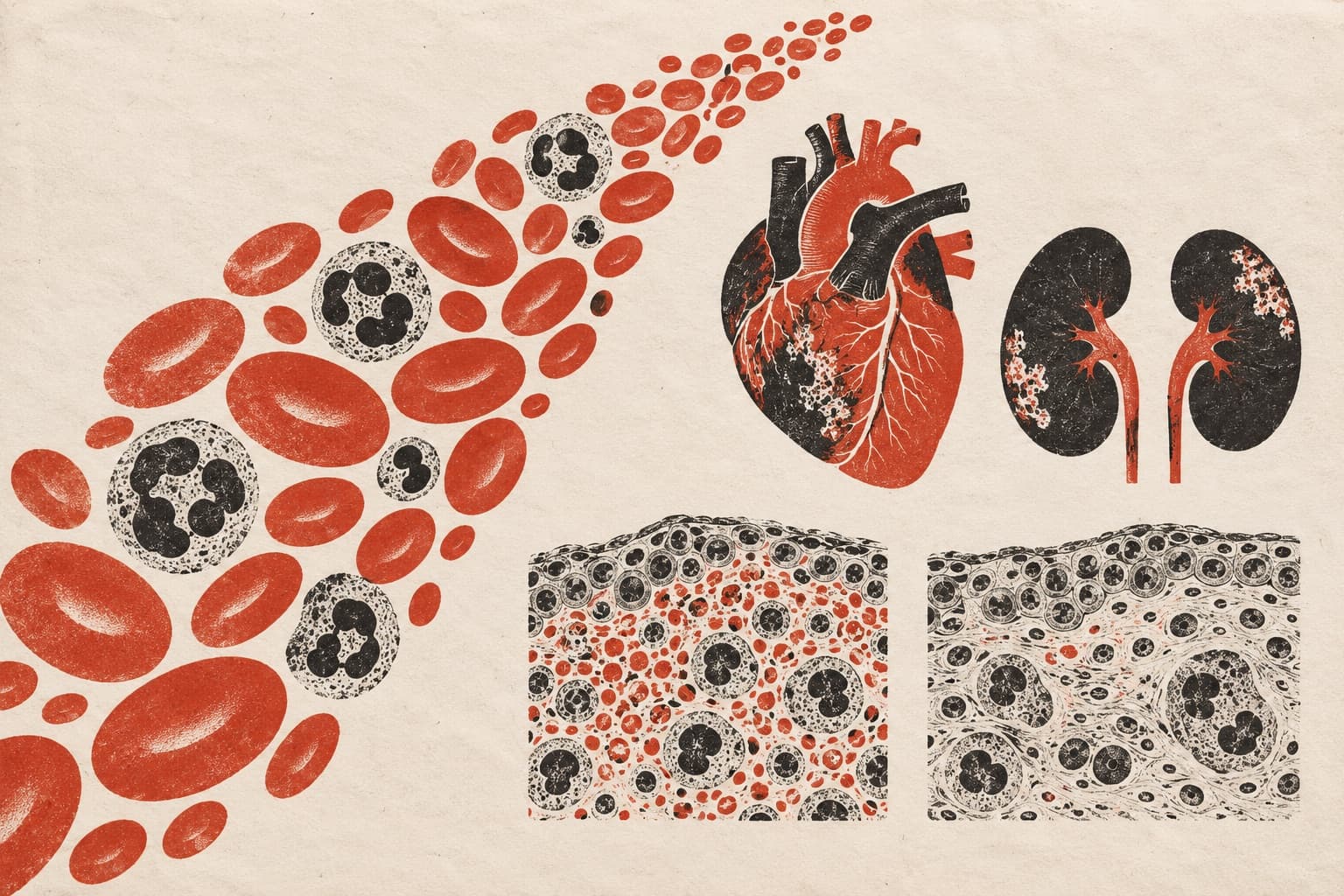
DE-SWAN analysis of aging rates is unreliable in simulations
Simulations show DE-SWAN is sensitive to age distribution and window size, questioning reported peaks in aging rates across the life course.
bioRxiv
In a preprint using computational simulations, researchers evaluated DE-SWAN, a method used to study how large ensembles of omics biomarkers change across the life course. Earlier studies using DE-SWAN reported apparent repeated accelerations and decelerations of aging rates, including two to three peaks of aging-related changes. The authors modeled how robust the technique is to the age distribution of a sample and to the chosen window size. Under many realistic scenarios, DE-SWAN was highly sensitive to factors unrelated to underlying rates of change in aging biology. The authors conclude that the method is unreliable for studying rates of change across the life course under most circumstances, casting doubt on prior findings attributing biomarker peaks to biological shifts in aging rates.
Why it matters
The findings suggest that reported waves or bursts of biological aging across the human lifespan may stem from analytical artifacts rather than true biological mechanisms.
Caveats
The study evaluates the method using simulated data rather than empirical re-analyses of original cohort datasets. The work is a preprint and has not yet been peer-reviewed.
The paper
Robert N. Butler Columbia Aging Center, Mailman School of Public Health, Columbia University
bioRxiv · 5 Oct 2026 · CC BY-NC-ND · Preprint, not peer-reviewed